
VOCSO Website

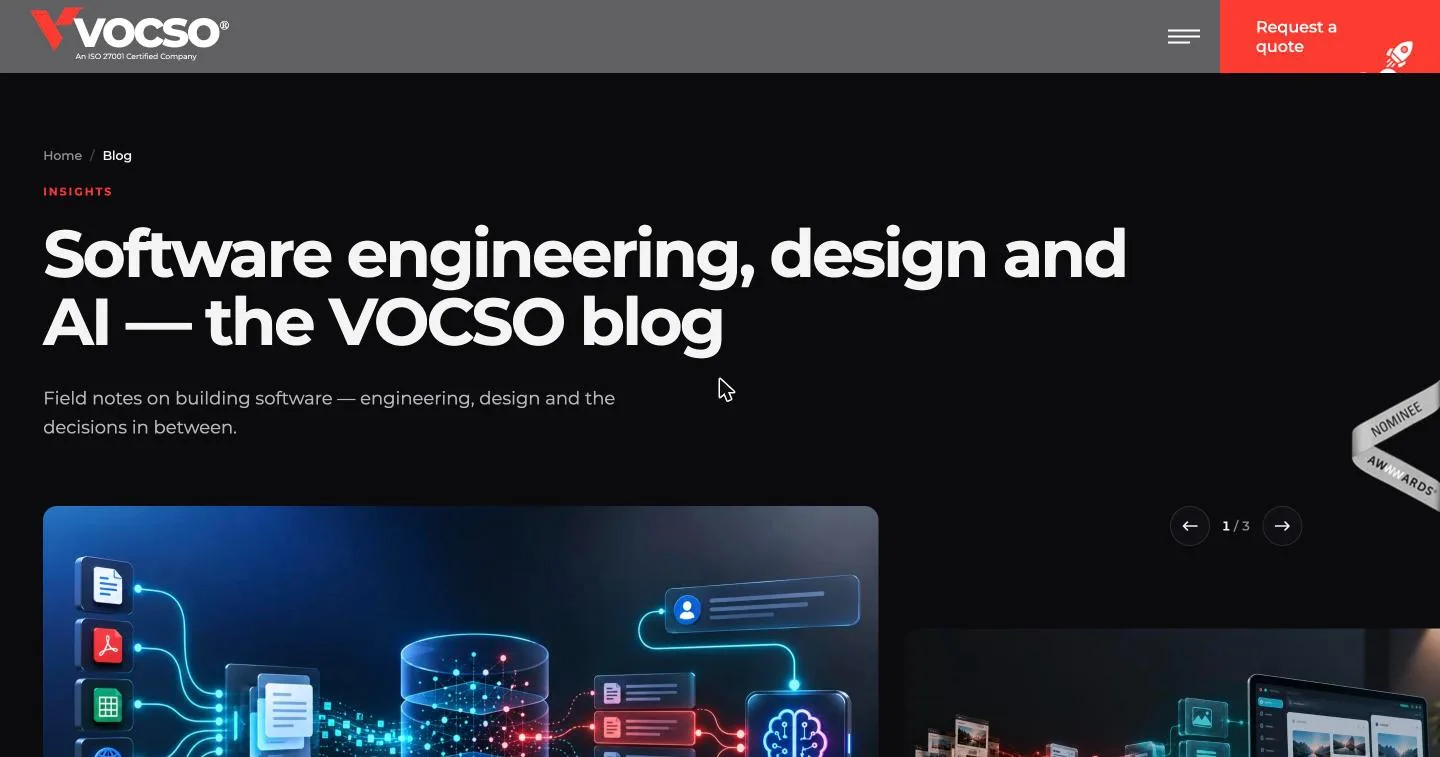
vocso.com is the website of VOCSO, a software development company building AI, web and mobile products since 2009.
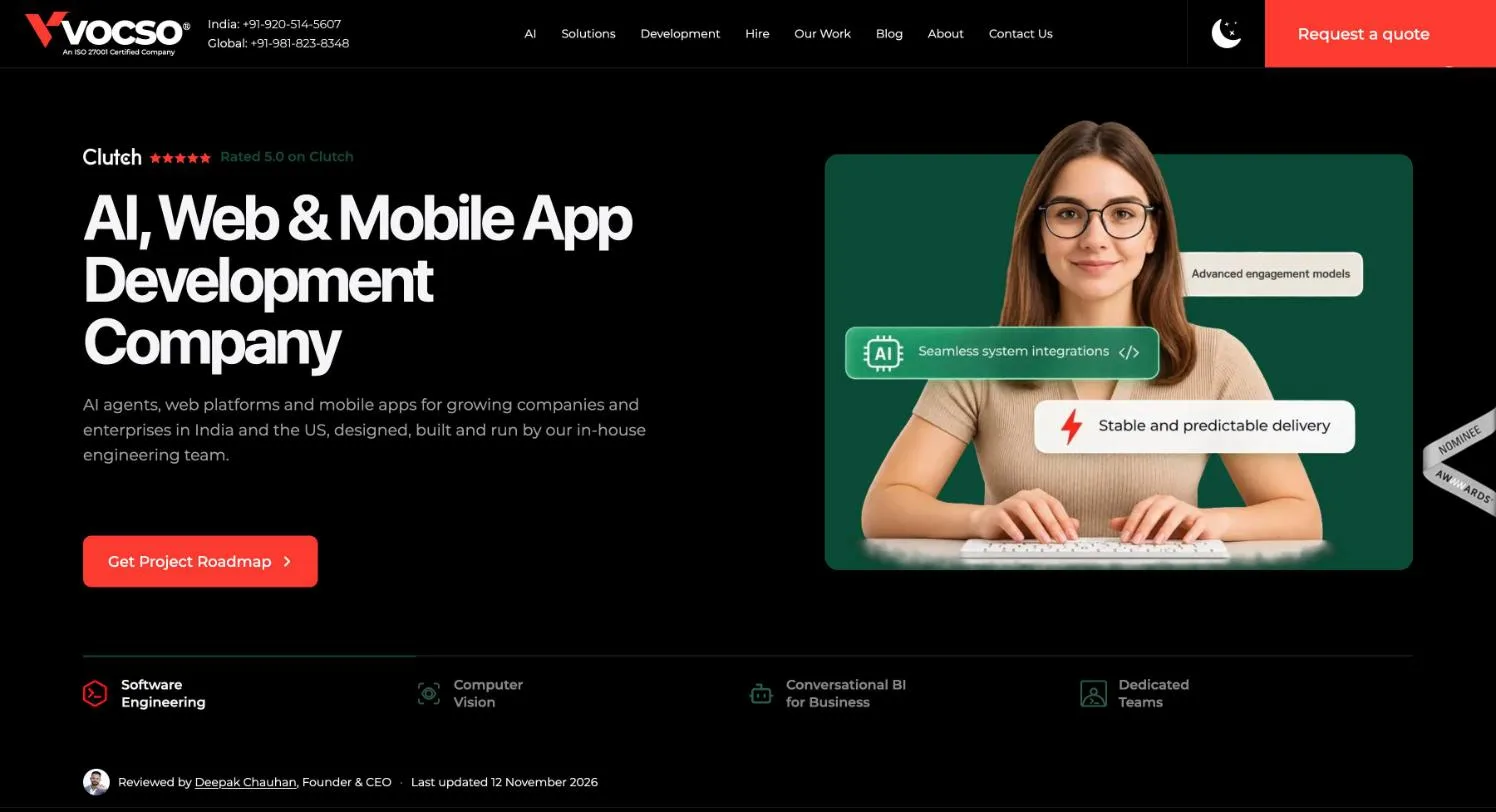
It carries the whole business: more than 100 service, hire and product pages, 248 blog posts and 107 portfolio projects, and it is where most new client enquiries begin.
Until November 2026 it ran on WordPress and PHP on a single Lightsail server. Every change went through a theme and a stack of plugins, pages rendered on each request, and adding a well-built service page took a developer.
VOCSO rebuilt it on Astro 7 and Cloudflare in about five weeks, between 25 September and 1 November 2026: every page pre-rendered as static HTML at the edge, content in Git with a visual editor, and every old URL carried across.
Project summary
 Astro
 TypeScriptKeystaticCloudflare PagesCloudflare Workers
 Cloudflare R2Cloudflare D1JSON-LD
 Responsive
 UX/UI
01The challenge
What stood in the way
The hard part was not the new design; it was moving 15 years of content and URLs without breaking anything Google or visitors relied on. The old site had hundreds of posts, retired service pages, old portfolio URLs and images linked from other websites.
Every URL was inventoried and given one of three outcomes: kept as it was, redirected to the closest new page, or retired with a 410. Media moved to R2 under its original paths, so not one image URL changed. After launch, a crawl of the live site and a build-time validator found the remaining leaks, such as internal links pointing at redirects, and they were fixed in the content rather than left to redirect chains.
The new site had to be faster to run and faster to change, without losing the search traffic the old one had earned over 15 years.
- Keep every URL that mattered, with redirects for the rest and clean 410s for retired content
- A page system that lets non-developers build consistent service pages
- Content stored in Git, reviewed before it goes live
- No servers or plugins to patch
- Structured data and machine-readable files for search engines and AI assistants
- Forms that capture, enrich and route leads without a third-party form tool
02The work
What we shipped
03The build
Key features
Each feature removes a reason the old site was slow to change or slow to load.
04The stack
Tech and integrations
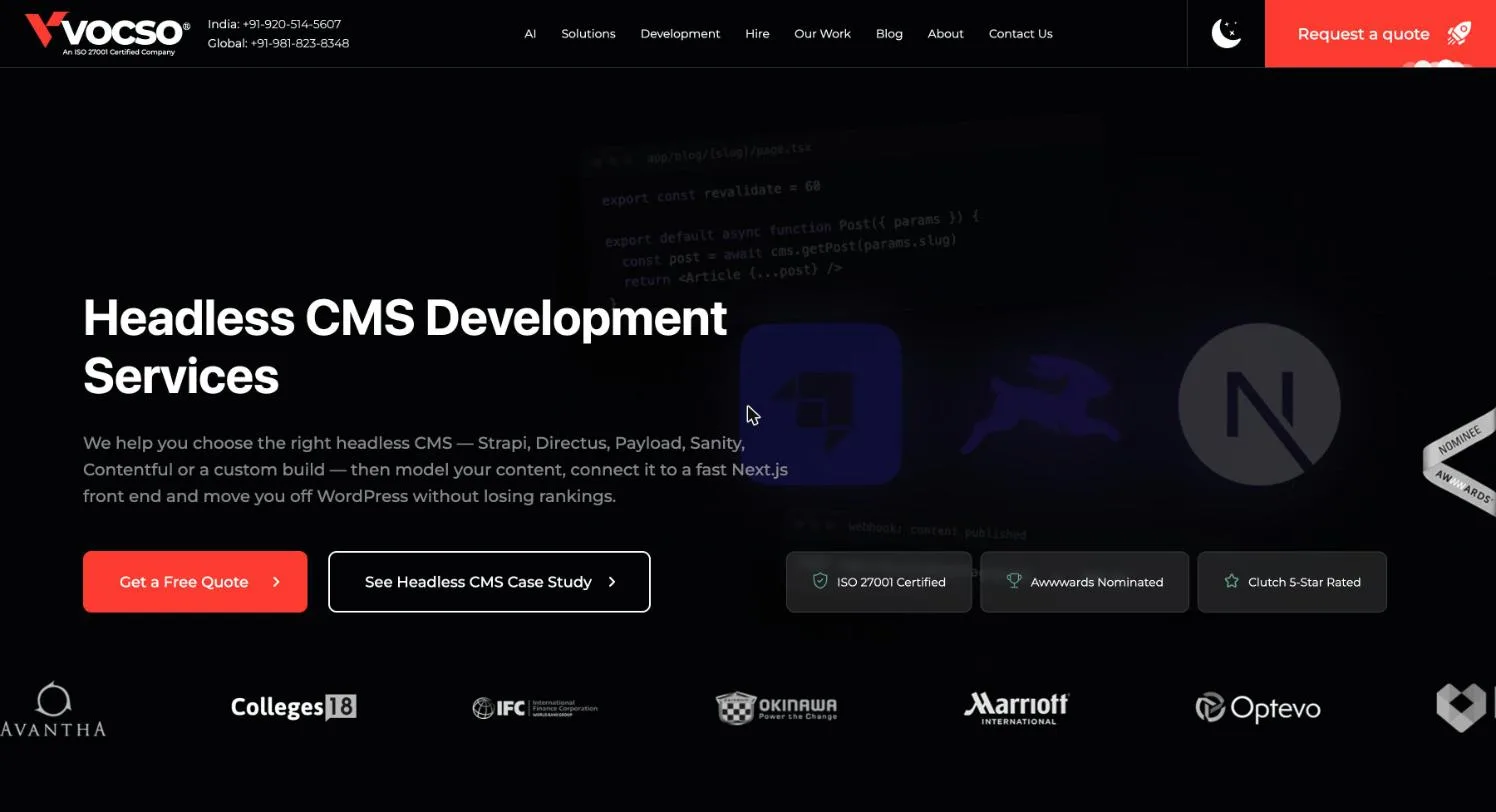
The site is an Astro 7 project deployed on Cloudflare Pages. Pages are pre-rendered at build time from JSON content in the repository; Cloudflare Pages Functions handle redirects, forms and media; Cloudflare R2 stores media; Cloudflare D1 stores form submissions; and the Keystatic editor runs as its own Cloudflare Worker.
Key technical highlights:
- Astro 7 static output: 718 pages, full build in about 7 seconds
- Section-based page model with typed schemas shared by the site and the editor
- Keystatic in GitHub mode: edits become pull requests with preview URLs
- Edge redirects: 140 permanent 301s and 201 deliberate 410s
- 636 MB of media on Cloudflare R2 at unchanged URLs, cached at the edge
- One JSON-LD entity graph across every page
- Generated XML sitemaps, llms.txt and llms-full.txt
- IndexNow ping on every publish
- Pre-deploy content validation in the build command
- Forms with enrichment and lead scoring on Cloudflare D1
The next optimisation step is replacing the jQuery and Bootstrap scripts carried over from the old theme with Astro components that ship less JavaScript.
Tech stack used for VOCSO Website
Astro
TypeScript
Keystatic
Cloudflare Pages
Cloudflare Workers
Cloudflare R2
Cloudflare D1
JSON-LD
Responsive
UX/UI
Astro
TypeScript
Keystatic
Cloudflare Pages
Cloudflare Workers
Cloudflare R2
Cloudflare D1
JSON-LD
Responsive
UX/UI
Astro
TypeScript
Keystatic
Cloudflare Pages
Cloudflare Workers
Cloudflare R2
Cloudflare D1
JSON-LD
Responsive
UX/UI
Astro
TypeScript
Keystatic
Cloudflare Pages
Cloudflare Workers
Cloudflare R2
Cloudflare D1
JSON-LD
Responsive
UX/UI
05Capabilities
Services in this project
06Questions
Questions about this project
01Why did VOCSO choose Astro instead of WordPress or Next.js for its website?
A company website is mostly content that changes a few times a day and is read thousands of times. Astro pre-renders that content as static HTML and serves it from the edge, with no database or PHP runtime to keep fast and secure. Next.js is a strong choice for applications with logged-in users and live data, and VOCSO builds those too; for a content-led marketing site, Astro gives the same speed with fewer moving parts.
02How were search rankings protected during the migration?
Every old URL was mapped before launch. Pages that mattered kept their URLs, 140 others got permanent 301 redirects to the closest new page, and 201 retired URLs return a deliberate 410. Media kept its original paths on Cloudflare R2. After launch, a crawl of the live site found internal links still pointing at redirects, and those were updated in the content.
03How do editors update the site without a developer?
Pages are built from typed sections in Keystatic, a visual editor that stores content in Git. An editor changes text, reorders sections or adds a page; Keystatic opens a pull request with a preview link, and merging it publishes the change. The design system controls the look, so new pages stay consistent.
04Is the site ready for AI search and answer engines?
Yes. AI crawlers are allowed in robots.txt, every page carries JSON-LD from one entity graph, FAQ answers are in the HTML, and the build generates llms.txt and llms-full.txt, a plain-text copy of the key pages for AI assistants. Each publish also notifies search engines through IndexNow.
05Can VOCSO move my website to Astro the same way?
Yes. The same process applies: inventory and map every URL, model the content as reusable sections, choose an editor (Keystatic, Strapi, Payload or another headless CMS), migrate the content and redirects, and launch on static hosting. See our Astro development and website redesign services for scope and pricing.