Since 2009
Enterprise software delivery — a track record built across technology cycles, not just the current AI wave.

End-to-end AI development for large organisations — built to your security, governance, and compliance standards, integrated with the systems you already run, and accountable from strategy through production. The full AI capability — agents, LLM apps, RAG, computer vision, and ML — delivered by a partner who passes your security review and stays accountable for outcomes.













Building software since 2009, validated in numbers

Map your highest-value AI use cases, assess readiness, model the ROI, and sequence a costed roadmap — so the programme starts with evidence, not a vendor's wishlist.
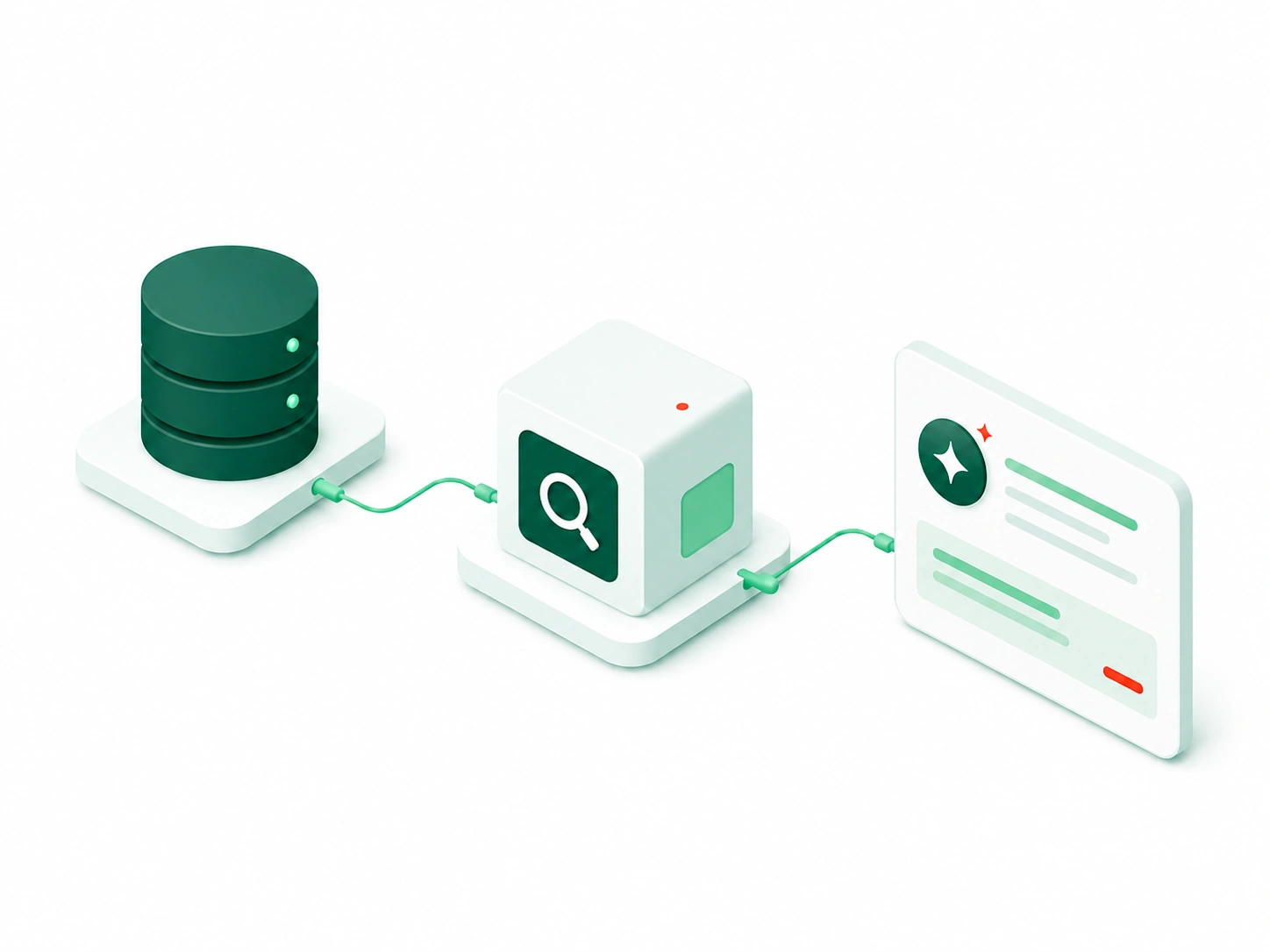
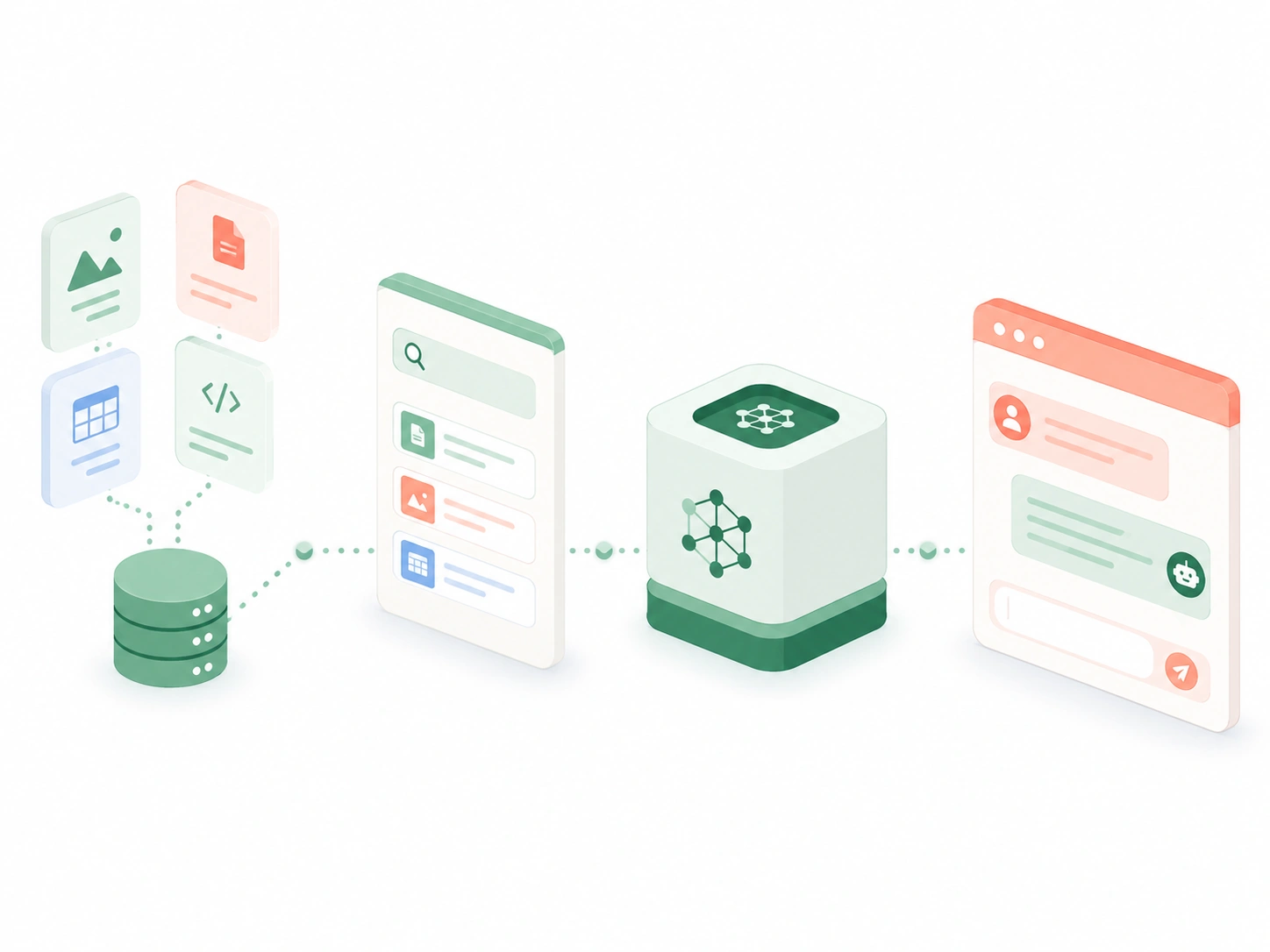
Make your enterprise knowledge usable by AI — retrieval-augmented systems that answer from your documents and data with citations, governed by who's allowed to see what.

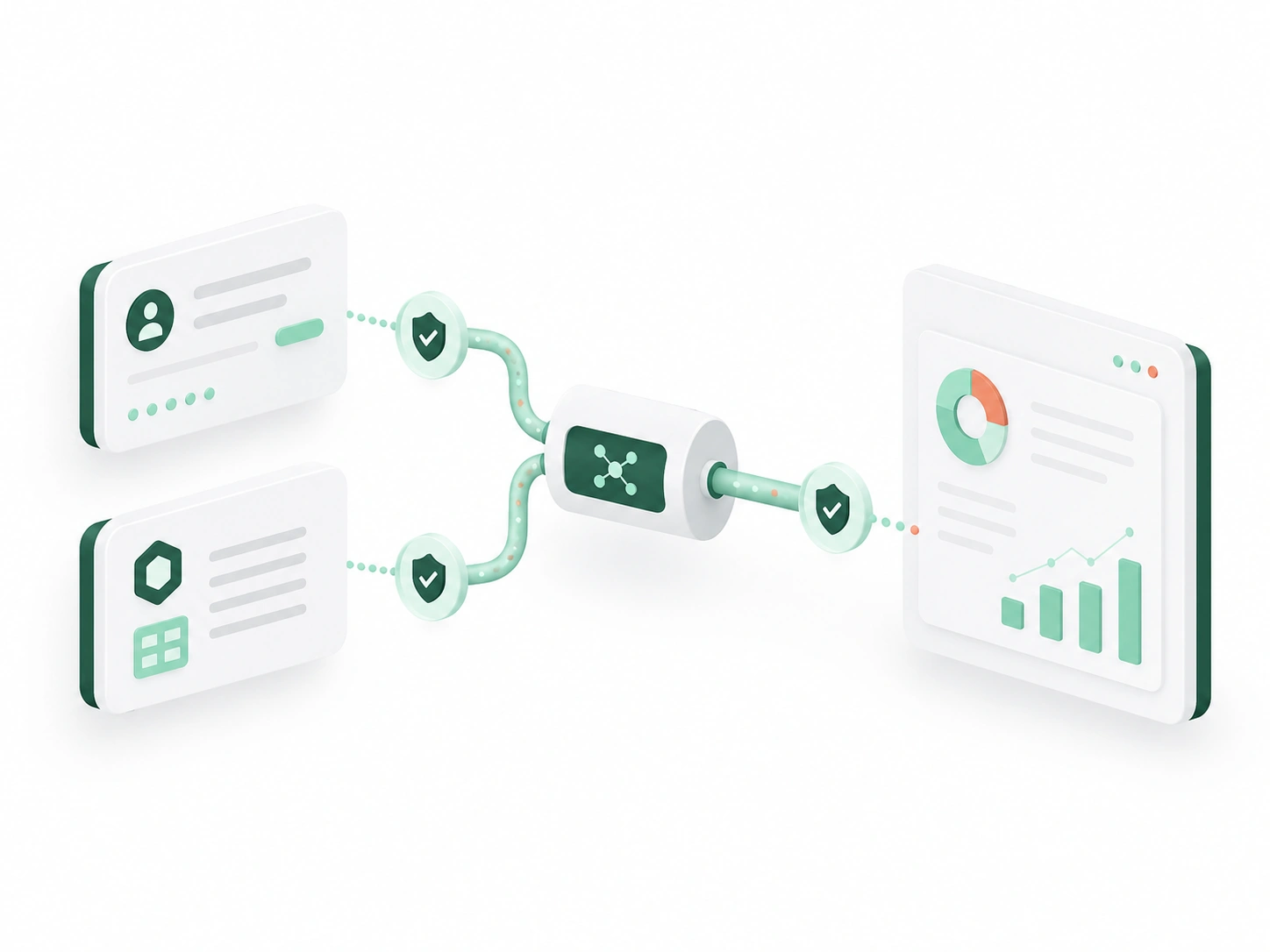
Connect AI to the systems your enterprise runs on — Salesforce, SAP, Oracle, ServiceNow, SharePoint, and legacy platforms — securely, and without ripping anything out.

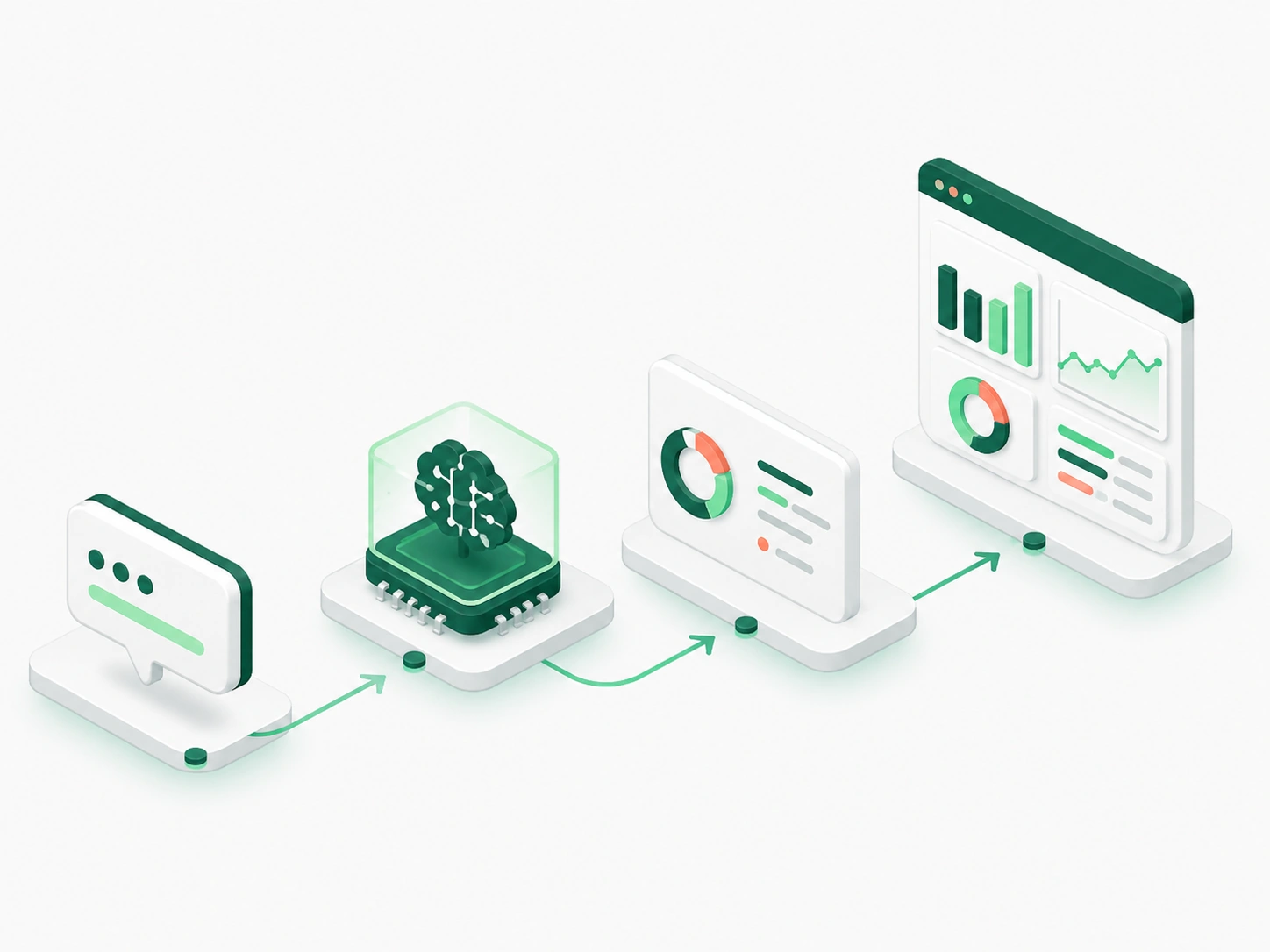
Governed agents and copilots that automate workflows and assist your people — embedded in the tools they already use, with the controls an enterprise requires.

Production applications powered by large language models — copilots, document intelligence, and generation — engineered with evaluation, guardrails, and cost control.
The data foundation AI depends on — pipelines, warehouses, feature stores, and custom ML models — because most enterprise AI fails on data, not on the model.
Custom generative AI built to enterprise standards — content, drafting, and document generation with the guardrails and governance production demands.

Vision where it fits the portfolio — inspection, document AI, and image understanding, delivered to the same enterprise security and governance bar as the rest.

Authority scopes, human-in-the-loop checkpoints, audit trails, bias and model-risk controls — the governance framework that lets enterprise AI clear audit and regulatory review.

Zero Trust access, data residency, encryption, and audit trails — engineered in from day one so your AI passes the security questionnaire instead of stalling in it.

We keep AI working after launch — monitoring, drift detection, retraining, and model updates — so your systems stay accurate and accountable, not abandoned at go-live.
Our enterprise AI is tailored to the systems, data, and regulatory requirements of each industry.
Consulting & Advisory Enterprise AI across proposal, knowledge, and delivery workflows for multi-practice firms — governed and integrated.
Trusted by Rodic Consultants
 Knowledge & proposal AI (DocSense)2,100+ projects indexed at Rodic ConsultantsGoverned, firm-wide deployment
SaaS & Digital Platforms. Embed enterprise-grade AI into your product and operations — built to scale with your users and pass their security reviews.
In-product AI features at scaleSecurity-reviewed architectureUsage analytics & MLEngineering & Infrastructure. AI across project knowledge, inspection, and document workflows — integrated with the systems engineering firms run on.
Project knowledge & document AI
Inspection & vision systemsLegacy-system integrationFinancial Services. Governed, auditable AI for document, compliance, and risk workflows — built to the standards regulators and security teams demand.
Compliant document & risk AIFull audit trails & model governanceSelf-hosted / data-residency optionsSupply Chain & Logistics. AI across forecasting, document, and operations workflows — integrated with ERP and WMS at enterprise scale.
Forecasting & operations AIERP / WMS integrationHigh-volume document processingHealthcare & Research. HIPAA-aware enterprise AI for document, research, and operational workflows — with strict governance and human oversight on every output.
CleanTech & Mobility. AI across telemetry, inspection, and reporting — built to scale across distributed energy and mobility operations.
Telemetry & inspection AIESG & compliance reportingEdge & cloud deploymentEdTech Platforms. Enterprise AI for learning, content, and operations — built to scale across your platform with the right governance.
Learning & content AIPlatform-scale deploymentData privacy & governanceNon-Profits & Foundations Cost-efficient enterprise AI for grants, donor, and impact workflows that fits constrained budgets.
Grants & donor AICost-efficient deploymentImpact reporting & analytics


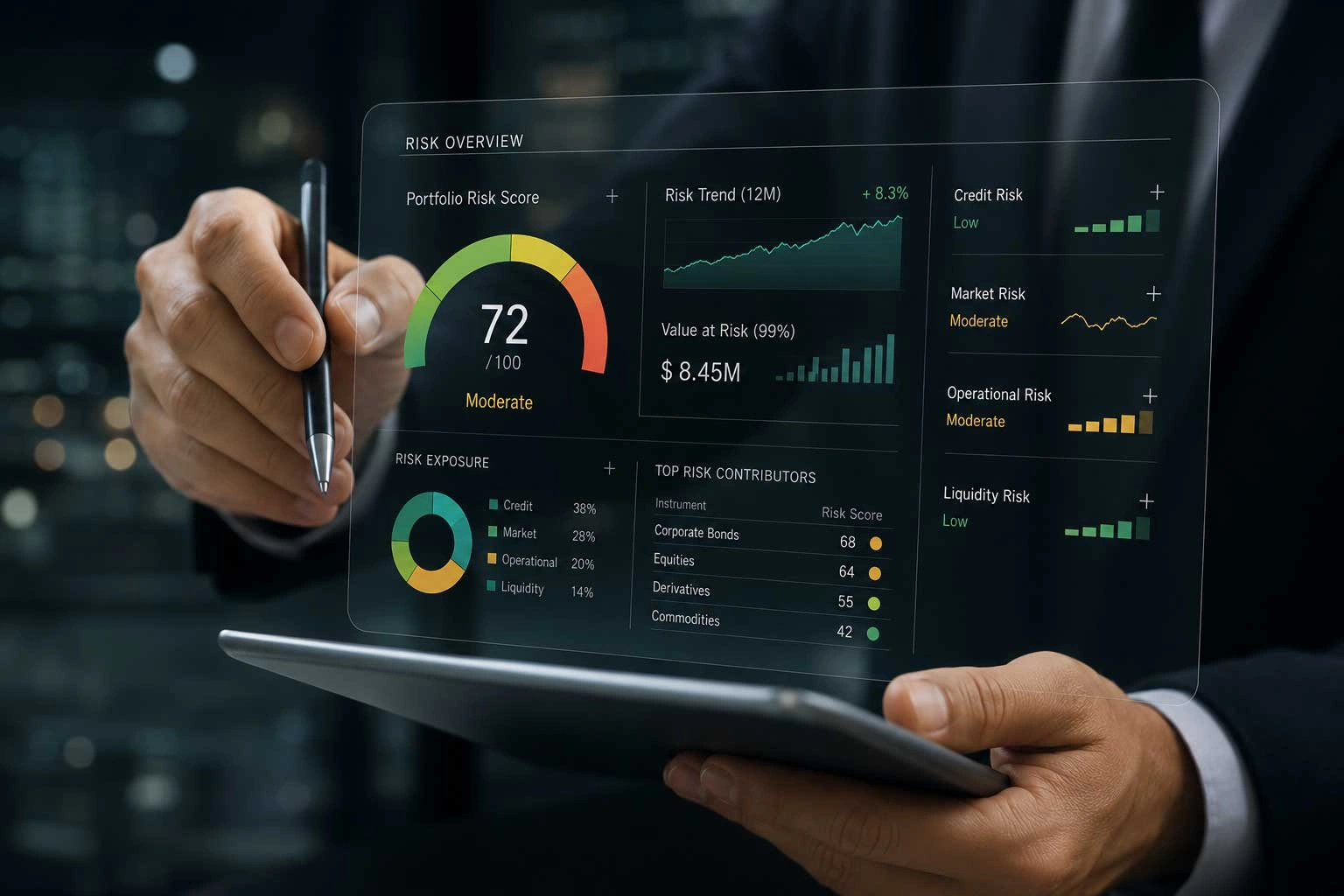
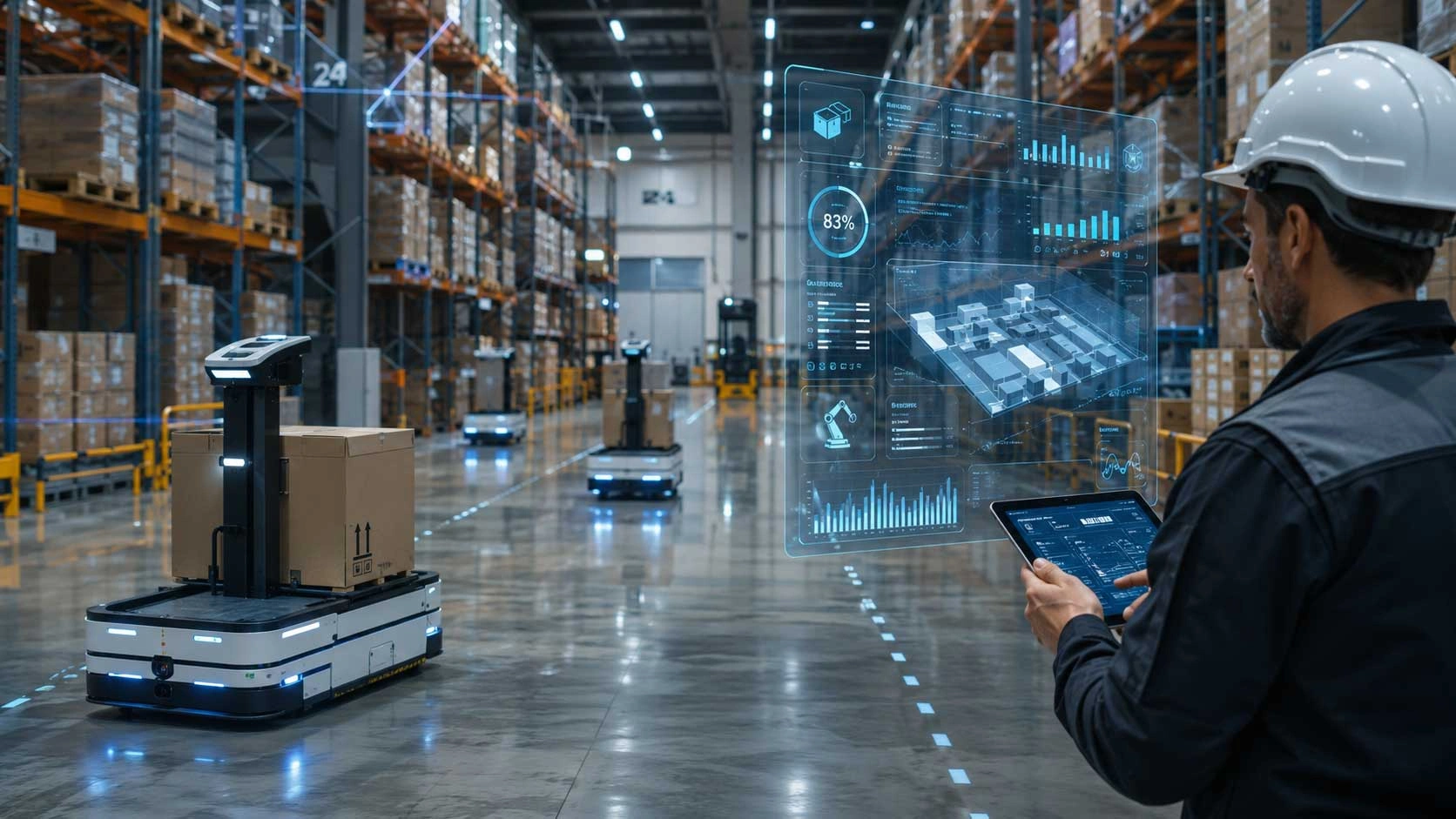


We combine the full AI capability with enterprise delivery practices — governance, security, and accountability — to ship AI that passes your review and performs in production.
Enterprise software delivery — a track record built across technology cycles, not just the current AI wave.

Independently certified, annually audited — meets the security baseline enterprise procurement actually checks.

Nine in ten enterprise clients return for follow-on work — the only measure of delivery quality that cannot be faked.

Verified client reviews, independently collected — real feedback from real enterprise engagements.

Certified cloud partnerships with AWS and Microsoft Azure — enterprise infrastructure standards from day one.

DataSense, DocSense, BidSense — proprietary pre-built AI products that go live in weeks, not months of custom build.
IP, data, and strategy protected before the first discovery call ends — not after contracts are signed.

Post-deployment optimisation included in every engagement — we stay accountable until the system is performing.
 The Real Reason Enterprise AI Doesn't Reach Production
Enterprises don't lack AI ideas, models, or vendors — they lack AI in production. Here are the honest reasons the gap between a board mandate to 'do AI' and a live, governed, trusted system is where most programmes quietly stall.
Access to models stopped being the differentiator — everyone has that. The real divide is between organisations with AI live, governed, and trusted inside the perimeter, and the many more with a promising demo that never left the innovation lab.

The production wins are concrete and unglamorous: governed copilots and knowledge systems, document AI cutting manual processing, integrated agents handling routine workflows. They run inside enterprise security perimeters, wired into core systems, with audit trails — not standalone experiments parked in a sandbox no business unit relies on.
The graveyard is full of pilots that dazzled in a demo and died at security review, integration, or scale. The cause is rarely the model — it's the absence of governance, the integration that was harder than anyone scoped, and a vendor who handed over a prototype and left. The enterprises that ship build for production from day one, not after the demo lands.
Enterprises treating AI as core engineering — with governance, security, and data foundations built in — move from pilot to production while competitors are still running proofs of concept. The advantage isn't a better model; it's the discipline to clear the bar production actually demands, and that discipline compounds across every use case after the first.
A working model is maybe a fifth of an enterprise AI system. The integration, security, governance, monitoring, and change management around it are the other 80% — and that's exactly where enterprise projects fail, not on the model.

Getting AI to produce a good answer in a demo is the easy part. Getting it to do so reliably, for thousands of users, on live data, every day, inside your enterprise — that's the engineering problem. The challenge was never whether AI can do the task; it's whether the system around it holds up in production.
Connecting AI to legacy enterprise systems — your data sources, identity provider, core platforms — is consistently the most underestimated part of the work, and the most common place a project quietly stalls. We map the integration surface in week one and prove the hardest connection early, not in the final sprint.
Production AI needs access controls, logging, drift monitoring, and an audit trail of what it did and why — the unglamorous infrastructure that lets you trust it and answer for it. None of this shows up in a demo, and all of it decides whether the system survives its first real incident.
A perfect system nobody adopts returns nothing. The 80% includes the human side: an executive sponsor, a named owner, training, and a rollout plan. Enterprise AI fails on organisation as often as on technology, so we treat adoption as part of the build, not an afterthought left to chance.
In an enterprise, the most capable AI in the world is worthless if it can't clear security and procurement. Governance isn't a constraint bolted on at the end — it's a first-class design input, or the project dies at review no matter how good the model is.
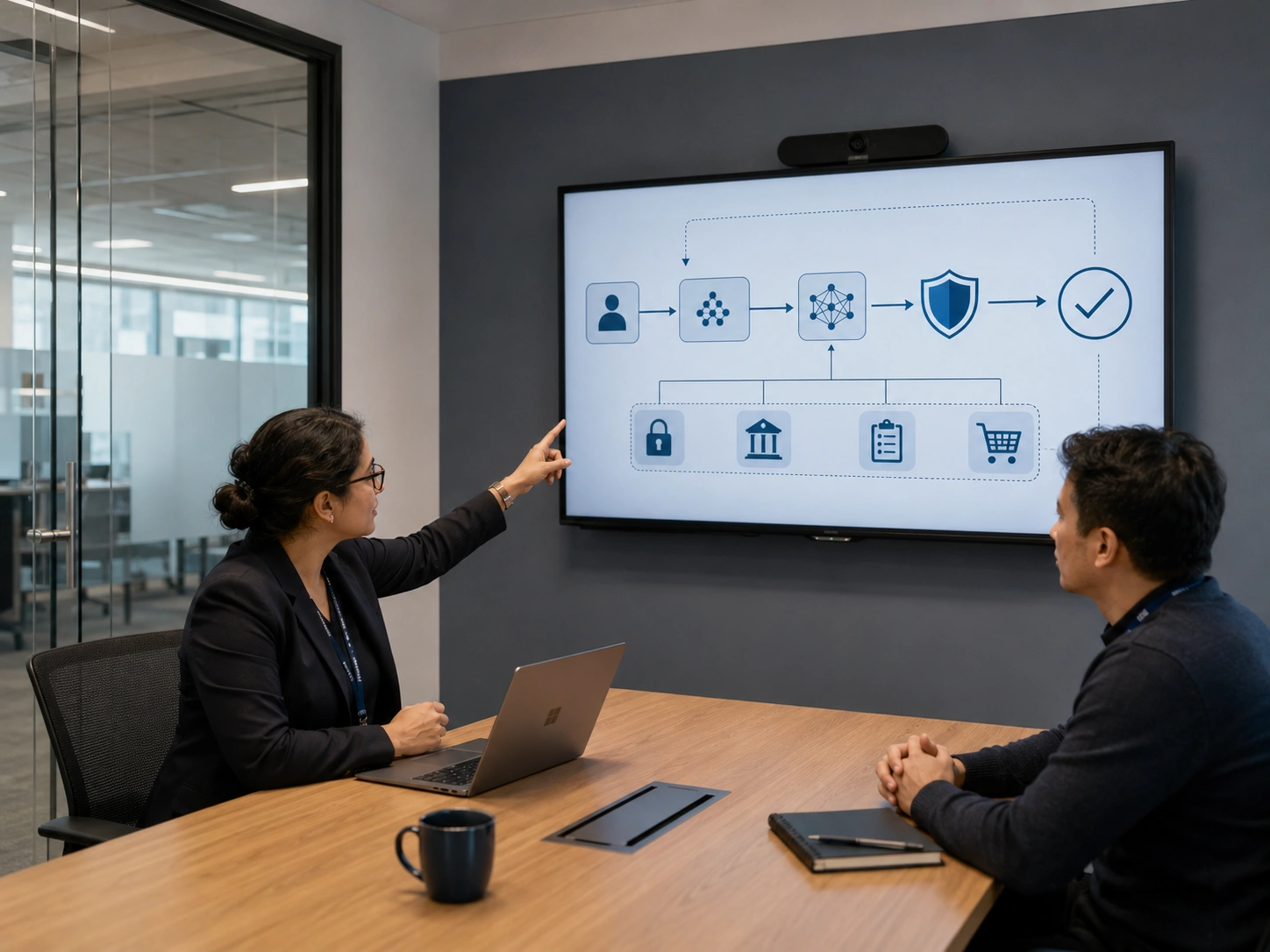
An AI-native team that doesn't know what your security function will ask builds something that fails the questionnaire and never recovers. We engineer for that review from the first design decision, so it becomes a checkpoint you pass rather than a wall you hit after months of work.
The controls your security team scrutinises — least-privilege access tied to identity, full audit logging, encryption, and data-residency guarantees — are designed in, not retrofitted. For regulated or sensitive workloads we can keep everything inside your perimeter so data never leaves it.
However impressive the capability, if you can't show who can access it, what it did, and how it's controlled, it will not pass an enterprise review — full stop. We make governability a property of the system itself, so 'is it secure?' has a documented answer before anyone asks.
A firm that can demonstrate a documented, auditable, controlled AI process moves faster than one improvising it — and increasingly wins trust with clients, regulators, and insurers. Getting governance right early isn't only protection; it's what lets you say yes to use cases competitors can't touch.
Different teams buying different AI tools — none integrated, none governed the same way — is how enterprises end up with duplicated spend and risk nobody can see. Coherence across the portfolio is worth more than any single clever tool.
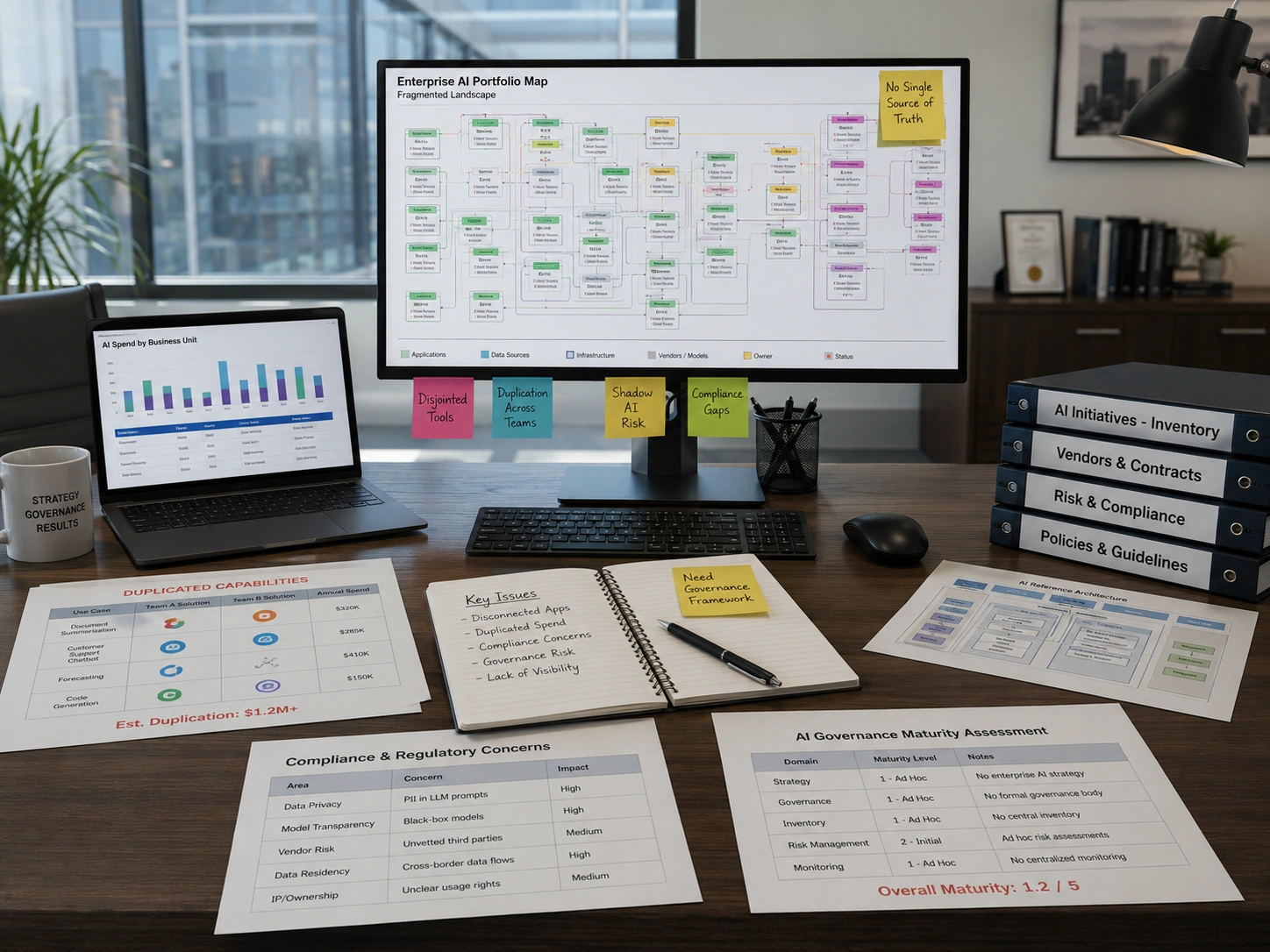
When every department procures its own AI, you get overlapping tools, scattered data flows, and a security surface no one fully understands. Each pilot looks cheap in isolation; together they're a governance and cost problem that lands on the CISO and CFO at the same time.
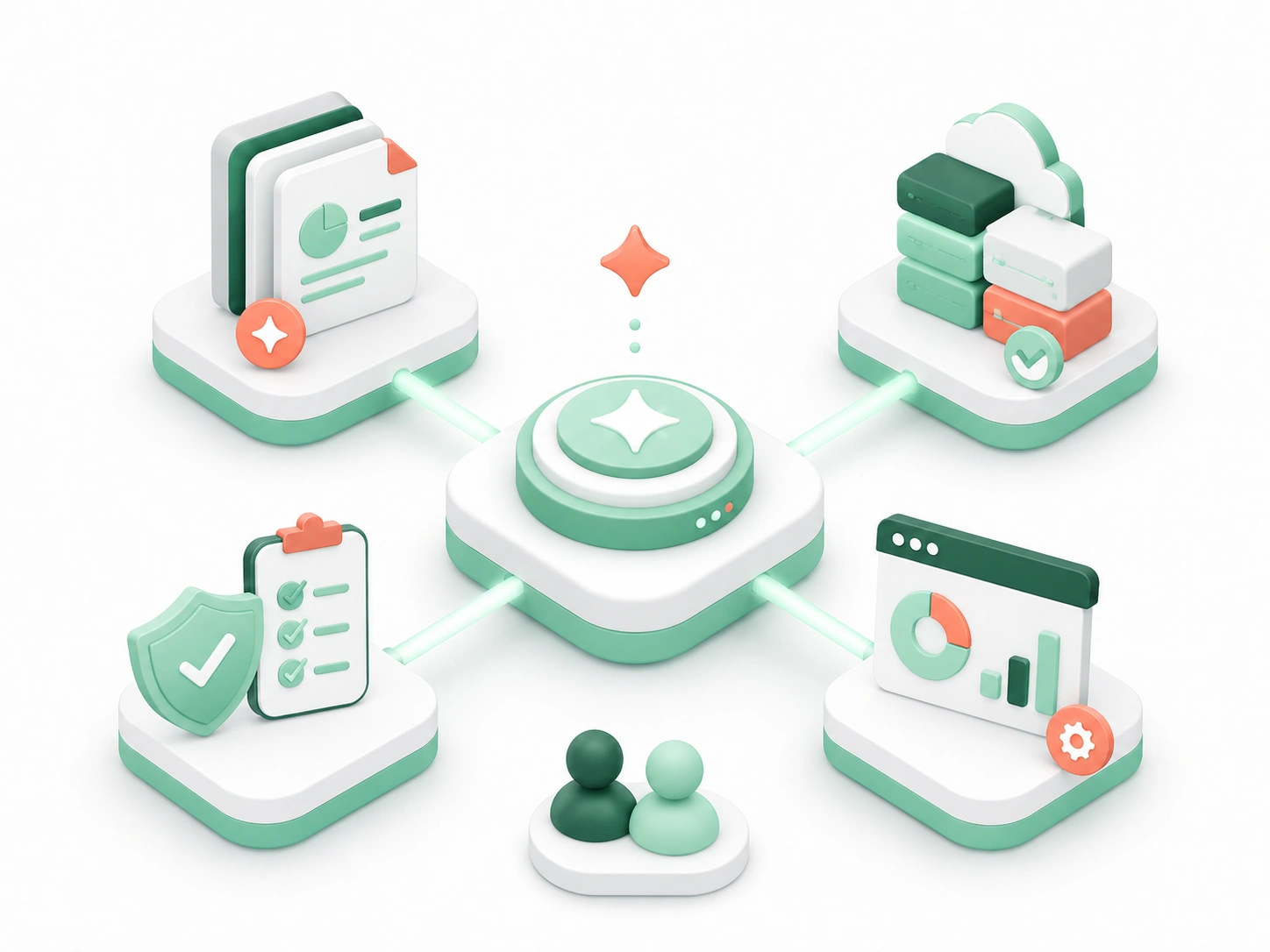
A coherent enterprise AI capability is built on shared foundations — common data access, identity, guardrails, and deployment patterns — that every use case draws on. One accountable architecture replaces a sprawl of one-offs, and it's the difference between a platform and a pile of tools.
When the foundations are shared, each new AI use case reuses the integration, governance, and infrastructure already built — so it ships faster and costs less than the last. Sprawl gives you the opposite: every project starts from zero and re-solves the same problems badly.
A single accountable approach means everything is governed, monitored, and secured the same way — so the board can actually answer 'how are we using AI, and is it safe?'. That coherence is what turns scattered experiments into a capability you can scale with confidence.
The demo that impresses and the team that disappears is the classic enterprise AI trap — you inherit a prototype that was never built to last, with no one accountable when it breaks. Accountability through production is what separates a partner from a vendor.
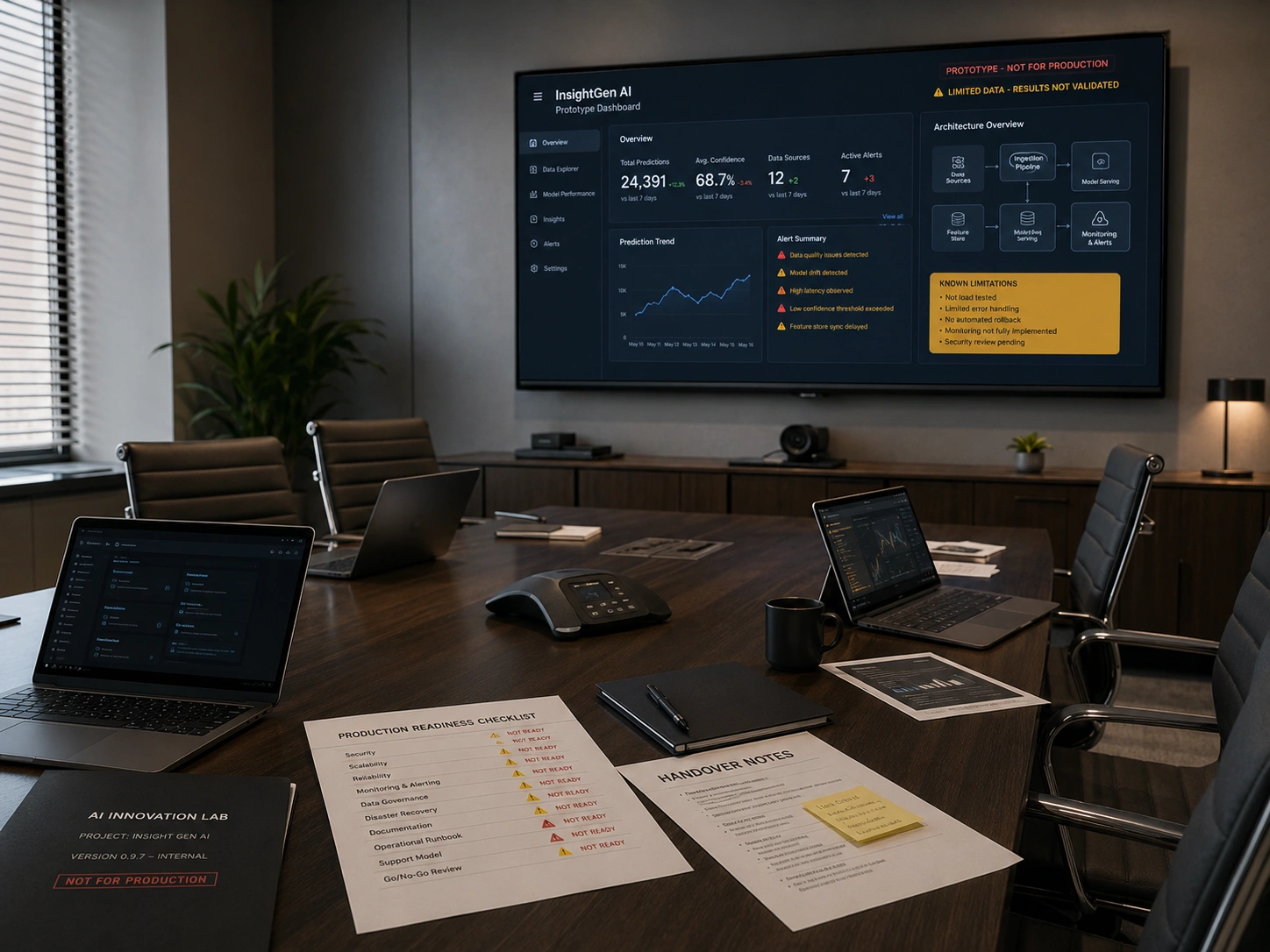
It's the sharpest question you can put to any AI vendor, and the answer tells you everything. A prototype-and-leave shop leaves that risk with you; a serious partner owns the outcome through review, rework, and the messy reality of getting a system past your enterprise bar.
We stay accountable for outcomes through production, security review, and the first months of operation — when the real problems surface. A named team that understands your context over time, answerable for results, is what a board can actually rely on, not an anonymous ticket queue.
The goal isn't to make you dependent on us. We transfer knowledge deliberately — documentation, runbooks, pairing — so your team can operate and extend the system once it's live. You end an engagement with capability, not a black box only the vendor understands.
You don't need every data and governance gap closed to begin. We start with one high-value use case scoped as a governed PoC with the security-review path defined upfront — proving both the value and that AI can clear your enterprise bar, which is what unlocks the wider programme.
Most enterprise AI failure isn't dramatic — it's a pilot that quietly never reaches production. The reasons are consistent, and every one of them is avoidable with the right approach.

A pilot built without enterprise security in mind fails the questionnaire and never recovers. De-risk it by engineering Zero Trust access, audit trails, and data residency from day one — so review is a checkpoint, not a wall.
Teams build the model and discover the data feeding it is scattered, dirty, or ungoverned. De-risk it by assessing and fixing the data foundation first — most enterprise AI failure traces back here, not to the model.
Connecting AI to legacy enterprise systems is consistently underestimated, and the project stalls in the gap. De-risk it by mapping the integration surface in week one and proving the hardest connection early, not last.
A prototype with no owner, no adoption plan, and a vendor who left drifts into irrelevance. De-risk it with a named accountable team, an executive sponsor, and managed operations — so the system is run, not abandoned.
Weeks 1–2
We map the highest-value use cases, assess data and readiness, and define the architecture and security approach — before any build.
Stakeholder & use-case discoveryData & readiness assessmentSecurity & governance requirementsArchitecture & approach selectionRoadmap & success metrics sign-offWeeks 3–5
We design the architecture and build the data, model, and security foundations the AI will run on.
Reference architecture designData pipeline & foundationModel / approach selectionSecurity & access designSandbox prototype for stakeholder reviewWeeks 5–8
We build the AI and integrate it with your enterprise systems and data.
Core AI / application buildEnterprise system integrationData & retrieval pipelinesWorkflow & interface embeddingIntegration test suiteWeeks 8–9
We add governance, access controls, and audit, and take the system through your security review.
Access controls & audit trailsModel-risk & responsible-AI controlsEvaluation & guardrailsSecurity & compliance reviewMonitoring & observabilityWeeks 9–12
We launch a controlled pilot, iterate, and move into production with managed operations, knowledge transfer, and support.
Controlled pilot with real usersStructured feedback & iterationProduction deploymentKnowledge transfer & documentation90-day post-launch support (included)Book a free 30-minute discovery call with a senior AI engineer — no slide deck, just questions about your systems, your data, and your goals.










Enabled users to retrieve operational, financial, and project insights through natural language queries, transforming complex data analysis into instant, self-service intelligence.
See case study
 <12 Seconds
  10+ Systems
  Days → Minutes
  95%+
95%+ We build on a full enterprise AI stack — frontier and open models, orchestration and data frameworks, vector and data platforms, MLOps, and secure cloud or on-prem infrastructure — selecting the right combination for your architecture, scale, and security requirements.
State-of-the-art models for reasoning, generation, and tool use.
 OpenAI GPT-4
 Claude
 Google Gemini
 Cohere
 Mistral
Coordinate agents, tools, and workflows with reliability and control.
 LangChain
 LangGraph
 AutoGen
 CrewAI
High-performance vector databases for semantic search and retrieval.
 Pinecone
 Weaviate
 Milvus
 Qdrant
 Chroma
Store, recall, and manage agent memory and long-term state.
 Redis
Redis
 PostgreSQL
 Zep
Zep
 LangMem
Modern languages and runtimes for building AI applications.
 Python
 TypeScript
 Node.js
 FastAPI
Connect to tools, APIs, and external systems seamlessly.
 MCP
MCP
 REST APIs
 GraphQL
 n8n
n8n
 Zapier
 Webhooks
 Databricks
 MLflow
Monitor, trace, and evaluate AI systems in production.
LangSmith
 Langfuse
 OpenTelemetry
 Grafana
 Prometheus
Enterprise-grade cloud services and infrastructure foundations.
 AWS Bedrock
 Azure OpenAI
 GCP Vertex AI
 Docker
 Kubernetes
Enterprises trust VOCSO for AI built to scale securely and meet regulatory standards. We engineer governance, security, and compliance into every system from day one — across AWS, Azure, Google Cloud, and on-prem.

General Data Protection Regulation

Information Security Management Systems

System and Organization Controls

For AI applications in healthcare
Responsible AI principles and implementation
AI Risk Management

Principles and implementations

India’s personal data protection framework

Auditability frameworks

Standards and evaluation practices
 Fixed-Price POC
Validate an AI agent use case with a low-risk, fixed-scope engagement designed to prove value, feasibility, and ROI before committing to a full build.
4–6 week delivery timeline Defined scope & success criteria Low commitment, fixed budget Executive-ready ROI assessment Dedicated AI Team
A cross-functional AI agent team embedded into your environment — working within your processes, security requirements, and communication tools.
AI, Data & MLOps specialists Named delivery lead Works within your NDA & security policies Scalable team composition Project-Based
End-to-end delivery of a defined AI agent capability with fixed scope, timeline, and commercial terms. Full knowledge transfer and documentation included.
Fixed scope & pricing Defined milestones & deliverables Dedicated project management Knowledge transfer & documentationLet's discuss the right engagement model for your project?
Book a call
First-hand experiences from enterprises that built AI with us, scaled intelligently, and achieved measurable results.
View all client testimonials“Vocso team has really creative folks and is very co-operative to implement client project expectations. MicroSave Consulting had great experience working with Anju and Prem.”

“Working with Deepak and his team at Vocso is always a pleasure. They employ talented staff and deliver professional quality work every time.”

“We love how our website turned out! Thank you so much VOCSO Digital Agency for all your hard work and dedication.”

“VOCSO SEO & SEM services helped me find new customers in a small budget. Their advanced SEO strategies made us visible to everyone.”

“Vocso team has really creative folks and is very co-operative to implement client project expectations. MicroSave Consulting had great experience working with Anju and Prem.”
“Working with Deepak and his team at Vocso is always a pleasure. They employ talented staff and deliver professional quality work every time.”
“We love how our website turned out! Thank you so much VOCSO Digital Agency for all your hard work and dedication.”
“VOCSO SEO & SEM services helped me find new customers in a small budget. Their advanced SEO strategies made us visible to everyone.”
The most common place enterprise AI dies isn't development — it's the security review. A brilliant pilot that can't answer the security questionnaire never reaches production.
Security review isn't a hurdle to clear at the end; it's a set of requirements to build for from the start. We engineer to your security team's checklist before they ever see the system.
Identity-first access — AI authenticates through your identity provider with least-privilege scopes — no shared keys, no standing credentials, no access it doesn't need.
Data residency & isolation — Sensitive data stays within your perimeter, including fully self-hosted deployments, so 'where does our data go?' has a clean answer.
Full audit trail — Every action and data access is logged and attributable, so the system can answer a security or compliance question with evidence.
Documented for review — We produce the architecture, data-flow, and control documentation your security team needs, so the review is a confirmation rather than an investigation.
At VOCSO, security review is designed for from day one — because the fastest enterprise AI is the one that doesn't get sent back by your security team.
Most enterprise AI governance lives in a slide deck. The gap between a responsible-AI policy and a system that actually enforces it is where the real risk hides.
Governance only counts when it's wired into the system — when the rules are enforced in code at runtime, not described in a document nobody can audit against. We translate your policies into controls the platform applies automatically.
Policy as enforced controls — Data-access rules, approved use cases, and prohibited actions become runtime checks the AI cannot bypass — not guidelines it's trusted to follow.
Human-in-the-loop by risk — High-impact actions route to defined approval gates, while low-risk ones run autonomously — so oversight scales without becoming a bottleneck.
Transparency & explainability — Outputs carry their sources and reasoning context, so a reviewer, auditor, or regulator can understand why the system produced a given result.
Model & data lineage — We track which model version, prompt, and data produced each output — the foundation for incident response, audits, and continuous improvement.
VOCSO builds governance into the orchestration layer, so the rules hold no matter which model runs underneath or how a user phrases a request — policy you can prove, not just promise.
Enterprise AI lives or dies on integration. A model that can't reach your ERP, CRM, data warehouse, and decades-old line-of-business systems is a demo, not a capability.
The hard part of enterprise AI is rarely the model — it's connecting it safely to systems that were never designed for it. We treat integration as a first-class engineering problem, not an afterthought bolted on at the end.
Meet systems where they are — We integrate through whatever a system exposes — modern APIs, message queues, database reads, or batch files — without forcing a risky migration first.
An anti-corruption layer — A clean integration layer sits between the AI and your legacy systems, so messy schemas and quirks are contained rather than leaking into the AI logic.
Write-path safety — When AI writes back into systems of record, we add validation, idempotency, and rollback paths — so an AI mistake can't corrupt authoritative data.
Respecting existing controls — The AI inherits your existing permission and access models rather than bypassing them, so integration doesn't quietly open a new security hole.
At VOCSO, we map the integration landscape during discovery and design for the systems you actually have — so the AI works with your stack instead of demanding you replace it.
The graveyard of enterprise AI is full of successful pilots. The jump from "it worked for one team" to "it runs reliably for the whole organization" is where most initiatives quietly stall.
A pilot proves the idea; production proves the engineering. The gap between them is reliability, cost, monitoring, and operational ownership — the unglamorous work that determines whether AI becomes infrastructure or stays a science project.
Production-grade reliability — We design for failure modes, load, and degraded dependencies — so the system behaves predictably at 10× the volume of the pilot, not just on a good day.
Cost that scales sanely — We engineer for unit economics — caching, model routing, and right-sizing — so cost-per-use falls as adoption grows instead of spiraling.
Monitoring & quality drift — Production AI is monitored for accuracy, latency, and drift, with alerts when quality degrades — because models don't fail loudly, they fail quietly.
Clear operational ownership — We define who runs the system, how incidents are handled, and how it's updated — so production AI has an owner, not just a launch date.
VOCSO treats the pilot as the first stage of a production system, not a throwaway prototype — so the path from proof to scale is a continuation, not a rebuild.
Not every AI capability should be built, and not every off-the-shelf product fits an enterprise. The expensive mistakes come from getting this decision wrong, not from the implementation.
Build, buy, and partner are not competing religions — they're tools for different situations. The right answer depends on how strategic the capability is, how unique your data and processes are, and what you can realistically operate long term.
Buy the commodity — Where a capability is generic and a mature product exists, buying is usually right — there's no advantage in building your own version of a solved problem.
Build the differentiator — Where AI touches your proprietary data, workflows, or competitive edge, custom build keeps the advantage yours rather than your vendor's.
Partner for the gap — When you need to move fast or lack in-house AI depth, a delivery partner builds it with you and transfers ownership — instead of you hiring a full team first.
Beware lock-in & shadow cost — We weigh the real total cost — integration, lock-in, data exposure, and the operating burden — not just the sticker price of a license or a build.
VOCSO helps you make this call honestly — including telling you when to buy rather than build — because the goal is the right outcome, not the biggest engagement.
"It feels useful" doesn't survive a budget review. Enterprise AI that can't show its value in the language of the business is the first thing cut when scrutiny arrives.
ROI on AI is provable — but only if you decide what you're measuring before you build, and instrument the system to capture it. Retrofitting metrics onto a live system after the fact rarely produces numbers anyone trusts.
Define value upfront — Before building, we agree on the metric that matters — hours saved, cycle time, error rate, conversion, cost per case — and a baseline to measure against.
Instrument for evidence — The system captures usage and outcome data by design, so impact is measured from real activity rather than estimated in a spreadsheet.
Account for the full cost — Honest ROI includes model, infrastructure, integration, and operating cost — so the net value holds up when finance examines it.
Attribute, don't assume — Where possible we compare against a control or pre-AI baseline, so improvement is credibly attributed to the AI rather than to coincidence.
VOCSO builds the measurement in from the start — so when leadership asks what the AI is worth, you answer with evidence and earn the budget to scale it.
You delivered exactly what you said you would in exactly the budget and in exactly the timeline.







 Transparency on every decision Talented Team of AI Engineers Smooth Collaboration & Reporting Efficient & Adaptive Workflow Strict Privacy Assurance with NDA 12 Months Free Post-Launch Support On-time Delivery, No Surprises ISO 27001 Certified Engineering
Most enterprises start with one high-value use case — and a clear path through security review and governance. We help you scope, design, and prove it with a low-risk PoC, then scale it to production. No open-ended contracts. No ambiguous scope.
deepak@vocso.com — no forms, no funnels.
Cost depends on scope, integration complexity, and governance depth. A focused, single-use-case build typically runs $30,000–$80,000; a broader enterprise platform — multiple capabilities, deep system integration, full security and governance, production operations — runs $80,000–$250,000+. We almost always recommend starting with a fixed-price PoC (typically $15,000–$25,000) that validates one high-value use case and defines the security-review path before you commit to a full build. Every engagement starts with a free discovery call to scope requirements and give you a realistic estimate — not a blank-cheque statement of work.
A focused PoC runs 4–6 weeks. A production-ready capability for a single high-value use case typically takes 10–16 weeks: 2–3 weeks discovery and AI strategy, 6–8 weeks build and integration, 2–3 weeks for security hardening and governance, then pilot and production rollout. The largest variable is system accessibility — well-documented APIs make integration fast, while legacy systems without API layers add time for connector work. We sequence delivery so you see working software early and the security review never becomes a surprise at the end.
By building to the security requirements from day one rather than retrofitting them: identity-first access through your IdP with least-privilege scopes, no standing credentials in the runtime, data residency and isolation options up to fully self-hosted deployment, and a complete audit trail of every action and data access — plus the architecture, data-flow, and control documentation your security team needs to evaluate the system. We design to be compatible with the controls behind common frameworks — GDPR, SOC 2, ISO 27001, HIPAA, and emerging AI regulation such as the EU AI Act — mapping specific obligations to concrete system controls during discovery. The goal is for the security review to confirm controls already in place, not become an investigation that sends the project back to the drawing board.
We translate your responsible-AI policy into controls enforced in the system, not guidelines the AI is trusted to follow. Data-access rules, approved use cases, and prohibited actions become runtime checks the AI cannot bypass. High-impact actions route to defined human-approval gates while low-risk ones run autonomously, so oversight scales. Every output carries its sources and reasoning context for explainability, and we track model version, prompt, and data lineage behind each result. Because enforcement lives in the orchestration layer, the rules hold no matter which model runs underneath or how a user phrases a request.
Yes — integration is the hard part of enterprise AI, and it's a core strength for us. We connect AI to ERP, CRM, data warehouses, identity providers, and line-of-business systems through whatever they expose: modern APIs, message queues, database reads, or batch files. For legacy systems without clean APIs, we build a structured integration layer so their quirks are contained rather than leaking into the AI logic. When the AI writes back into systems of record, we add validation, idempotency, and rollback paths. And the AI inherits your existing permission model rather than bypassing it — so integration doesn't open a new security hole.
It's the most common failure mode in enterprise AI: a pilot proves the idea but was never engineered to survive production. The jump requires reliability under real load, sane unit economics, monitoring for quality drift, security sign-off, and a clear operational owner — the unglamorous work pilots skip. We avoid this by treating the PoC as the first stage of a production system, not a throwaway prototype: the architecture, security model, and integration approach are production-grade from the start, so scaling is a continuation rather than a rebuild. Where a prior pilot stalled, we can often diagnose exactly which of these gaps blocked it.
Yes, and ownership is unconditional. We support deployment from your managed cloud account (AWS, Azure, GCP) to fully self-hosted, air-gapped environments where data never leaves your perimeter and the system runs on open-weight models you control — so for financial services, healthcare, or public sector with strict residency or sovereignty rules, sensitive data is processed inside your boundary and we never need direct access to production data. And all IP is yours: your data, your models, your outputs, and all code we produce. We execute NDAs before any discovery conversation, never retain client data after a project concludes, and never use your data to train models that benefit other clients. The system, and everything it learns from your data, stays yours.
Hallucinations — plausible-sounding but incorrect outputs — are a primary risk in production AI, and we address them at multiple layers. RAG grounding bases answers on your retrieved source documents with citations; structured outputs are validated against a schema before use; low-confidence outputs trigger a human-review gate; and we include hallucination-specific cases in the evaluation suite. We define an accuracy benchmark and acceptable error rate with you before launch, and monitor for quality drift in production. The goal isn't a system that's never wrong — it's a system whose error rate is measured, bounded, and caught before it reaches a decision that matters.
It depends on how strategic the capability is and how unique your data and processes are. Buy the commodity — where a mature product solves a generic problem, there's no advantage in rebuilding it. Build the differentiator — where AI touches your proprietary data, workflows, or competitive edge, custom build keeps the advantage yours rather than your vendor's. Partner for the gap — when you need to move fast or lack in-house AI depth, a delivery partner builds it with you and transfers ownership. We help you make this call honestly, including telling you when to buy rather than build, because we weigh the real total cost — integration, lock-in, data exposure, and operating burden — not just the sticker price.
ROI is provable, but only if you decide what you're measuring before you build. We agree upfront on the metric that matters — hours saved, cycle time, error rate, conversion, cost per case — and establish a baseline. The system is then instrumented to capture usage and outcome data by design, so impact is measured from real activity rather than estimated after the fact. Our ROI accounting includes the full cost — model, infrastructure, integration, and operations — so the net value holds up under finance scrutiny. Where possible we compare against a control or pre-AI baseline so improvement is credibly attributed to the AI, giving leadership evidence to fund scaling.
Most engagements start with either an AI Strategy & Discovery Sprint or a fixed-price PoC. The discovery sprint interviews stakeholders, audits your data and systems, prioritises your highest-value use cases, and produces an implementation roadmap with effort, timelines, and ROI projections — which you own outright. The PoC runs 4–6 weeks with fixed scope and budget (typically $15,000–$25,000), with measurable success criteria agreed before any work begins: it delivers a working system on your real data, integration with at least one live system, a defined governance and security-review path, and an executive-ready ROI assessment. Critically it's built on production-grade architecture, so if you proceed you're extending the PoC toward production rather than throwing it away and starting over.
Yes — production AI needs ongoing attention, and we offer managed AI and MLOps support. Our standard engagement includes a period of included support after launch: monitoring, incident response, model-performance review, and minor adjustments. Beyond that, support retainers cover model-drift monitoring, periodic re-evaluation against fresh data, cost optimization, feature additions, and integration maintenance as your underlying systems change. Because models degrade quietly rather than failing loudly, this monitoring is what keeps quality and cost in check long after the launch announcement — and it's why we define operational ownership before go-live, not after.
Discover complementary services that enhance performance, improve user experience, and help your business build scalable digital solutions efficiently.