Since 2009
Enterprise software delivery — a track record built across technology cycles, not just the current AI wave.


Anyone can wrap an LLM in a chat window. The hard part — and the part that decides whether a chatbot belongs in front of customers or staff — is grounding it in your knowledge, scoping every answer to what each user is allowed to see, logging it for audit, and knowing when to hand off to a human. That's the chatbot we build: governed, citeable, and engineered to be trusted, not just to talk.













Building software since 2009, validated in numbers
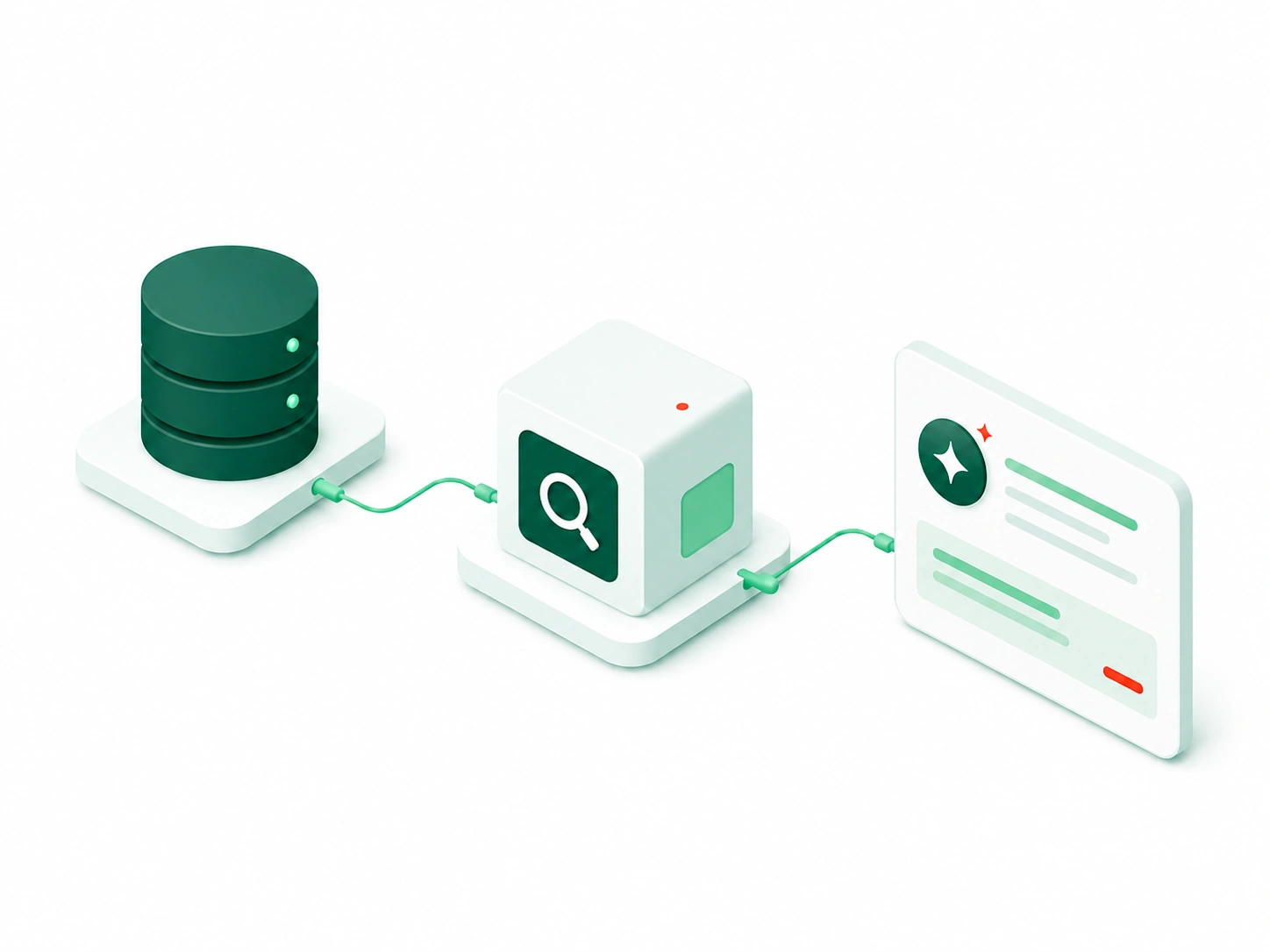
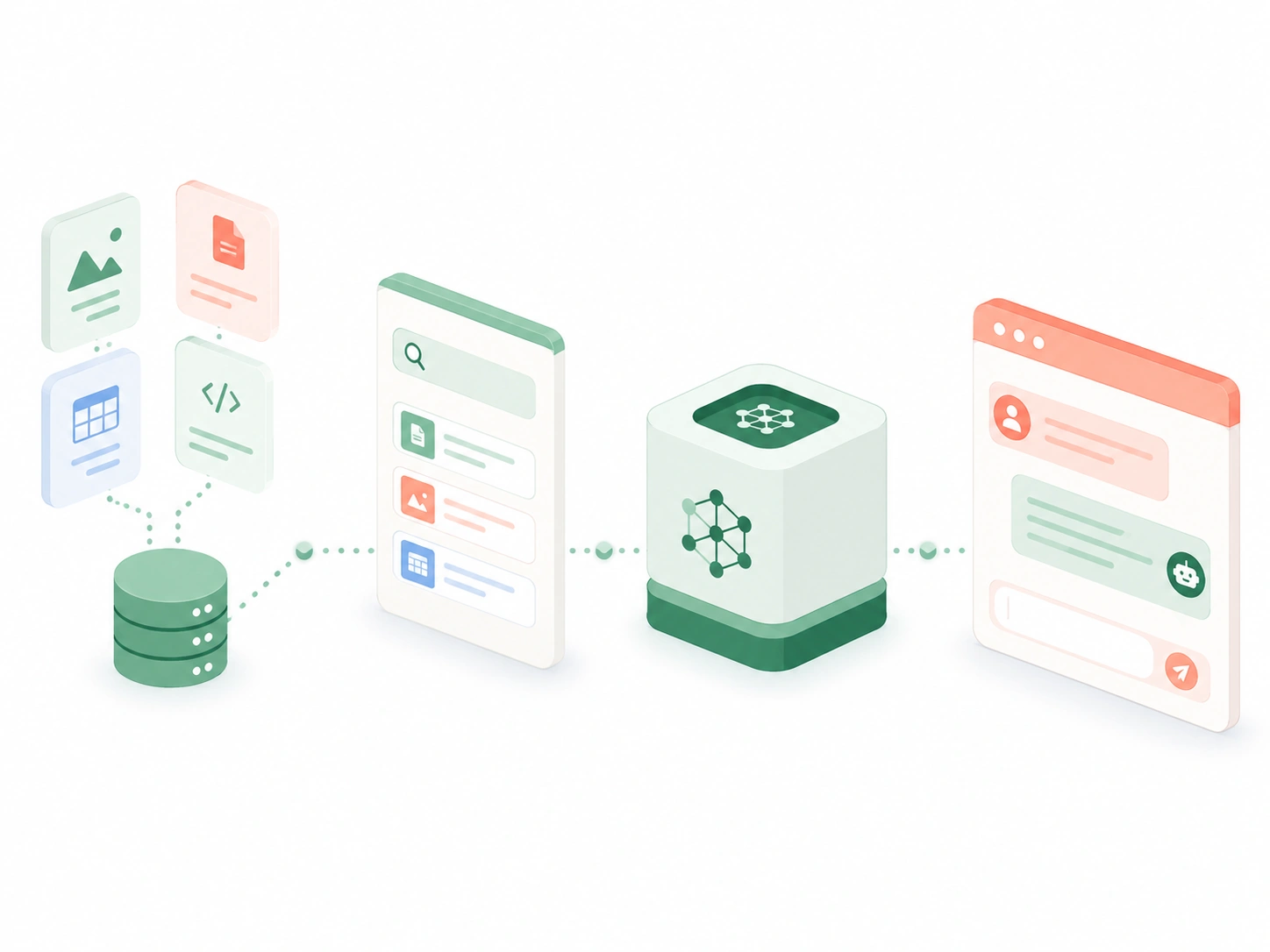
The retrieval engine that grounds your chatbot in your real documentation and policies — with citations — so answers are accurate and verifiable, not invented.

When the chatbot needs to do things, not just answer — book, update, or trigger actions across your systems, with tools and human-in-the-loop controls.

The production LLM application your chatbot runs on — engineered with evaluation, guardrails, and cost control, not a thin GPT wrapper.

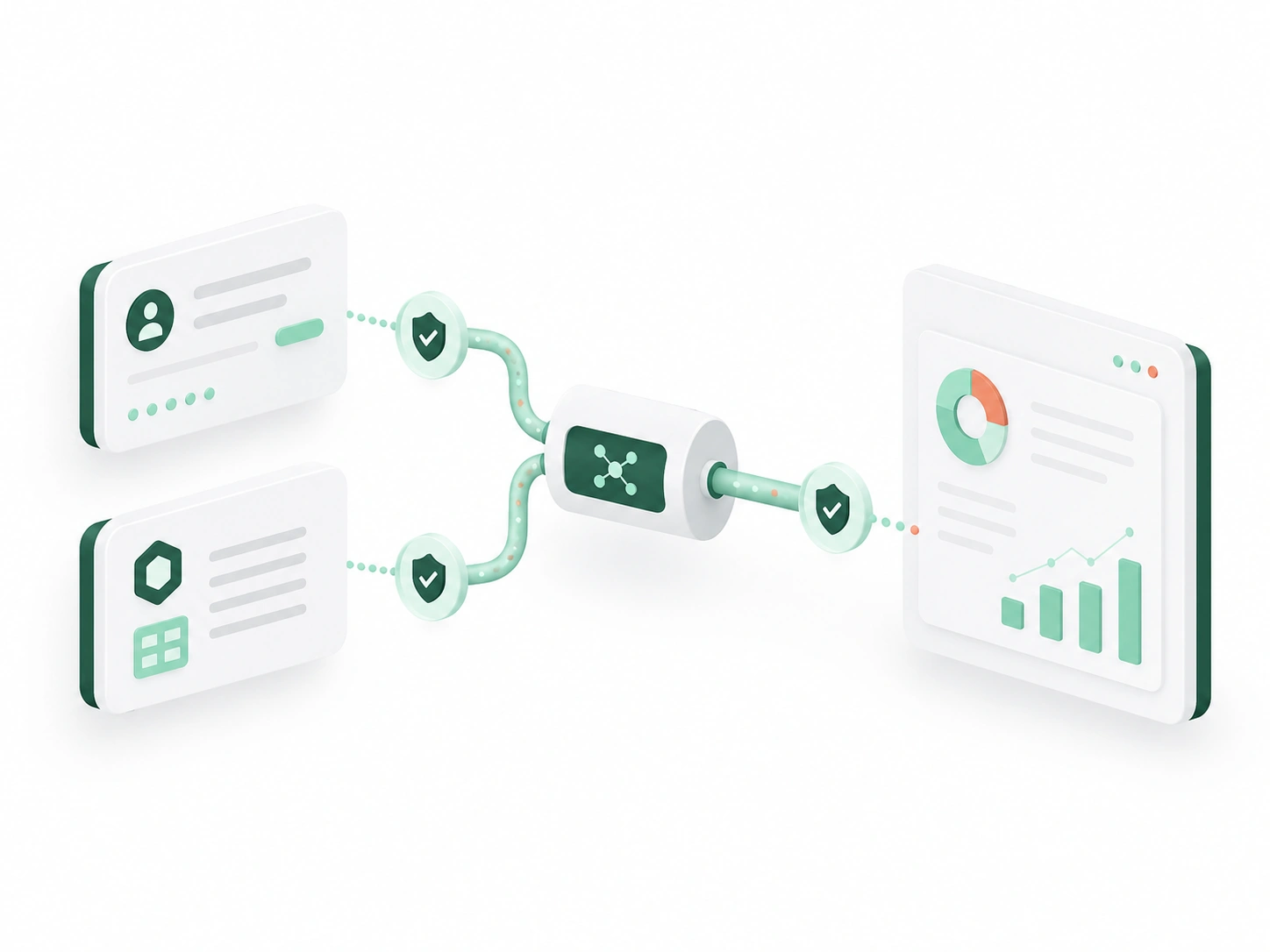
Wire the chatbot into your CRM, helpdesk, knowledge base, and identity provider — securely, so it works on live data and respects permissions.

Let users ask your data questions in plain language — a chatbot over your warehouse that returns governed answers, no SQL required.
Intent detection, entity extraction, and classification — the language understanding that makes a chatbot interpret what people actually mean.
Custom generative-AI features beyond chat — drafting, summarisation, and content generation built on the same governed foundation.

Not sure where a chatbot fits, or which use case first? Strategy and a costed roadmap before you build.

Customer-facing assistants that resolve tier-1 queries instantly, answer from your real policies and docs with citations, and hand off cleanly to a human when a conversation needs one — 24/7, in every channel.
IT, HR, and operations assistants that answer staff questions from internal policies and systems — deflecting routine tickets and freeing your teams for the work only people can do.

Permission-aware answers tied to your identity provider, content filtering and PII handling, and a full audit log of every conversation — so the chatbot stays safe, on-topic, and clears compliance review.
Our AI chatbots are tailored to the specific workflows, knowledge sources, and compliance requirements of each industry.
Consulting & Advisory Internal knowledge chatbots and client-facing assistants grounded in the documents multi-practice consulting firms already hold.
Trusted by Rodic Consultants
 Internal knowledge & policy assistantClient-facing support chatbotRBAC-aware access to project documents
SaaS & Digital Platforms. In-product support and onboarding chatbots that deflect tickets and guide users — embedded right inside your app.
In-product support chatbotOnboarding & feature-guidance assistantDeflection analytics & improvementEngineering & Infrastructure. Chatbots that answer technical questions from manuals, specs, and standards for field and office teams.
Technical-document Q&A chatbot
Standards & compliance assistantField-team mobile chatbotFinancial Services. Compliant, audited chatbots for customer service and internal support — permission-aware, with every conversation logged.
Compliant customer-service chatbotRBAC & full audit loggingPII handling & content guardrailsSupply Chain & Logistics. Chatbots that answer order, shipment, and inventory questions for customers and staff from live systems.
Order & shipment-status chatbotVendor & partner support assistantMultilingual customer supportHealthcare & Research. HIPAA-aware patient and staff chatbots grounded in approved content — with strict guardrails and human escalation for anything clinical.
CleanTech & Mobility. Customer and field-support chatbots for products, billing, and service questions across channels.
Customer product & billing chatbotField-service support assistantMulti-channel & multilingual supportEdTech Platforms. Learner-support and tutoring chatbots grounded in your curriculum, with escalation to staff when needed.
Learner support & FAQ chatbotCurriculum-grounded tutoring assistantEscalation to human tutorsNon-Profits & Foundations Donor, volunteer, and beneficiary support chatbots that stretch small teams across every channel.
Donor & volunteer support chatbotMultilingual beneficiary assistantFAQ deflection for small teams






We combine deep conversational-AI engineering with enterprise delivery practices to ship chatbots that are accurate, governed, and trusted in production.
Enterprise software delivery — a track record built across technology cycles, not just the current AI wave.

Independently certified, annually audited — meets the security baseline enterprise procurement actually checks.
Nine in ten enterprise clients return for follow-on work — the only measure of delivery quality that cannot be faked.

Verified client reviews, independently collected — real feedback from real enterprise engagements.

Certified cloud partnerships with AWS and Microsoft Azure — enterprise infrastructure standards from day one.

DataSense, DocSense, BidSense — proprietary pre-built AI products that go live in weeks, not months of custom build.

IP, data, and strategy protected before the first discovery call ends — not after contracts are signed.

Post-deployment optimisation included in every engagement — we stay accountable until the system is performing.
 Why Most "Enterprise Chatbots" Aren't Enterprise-Grade
Wrapping an LLM in a chat window is easy — and it's what most "enterprise chatbots" actually are. The gap between that and an assistant you'd put in front of customers or staff is where the real work lives. Here are the truths that separate the two.
A scripted bot just frustrates people. A confident, wrong AI chatbot actively misleads them — in your name, in writing, at scale. Getting grounding right is the line between a useful assistant and a liability.
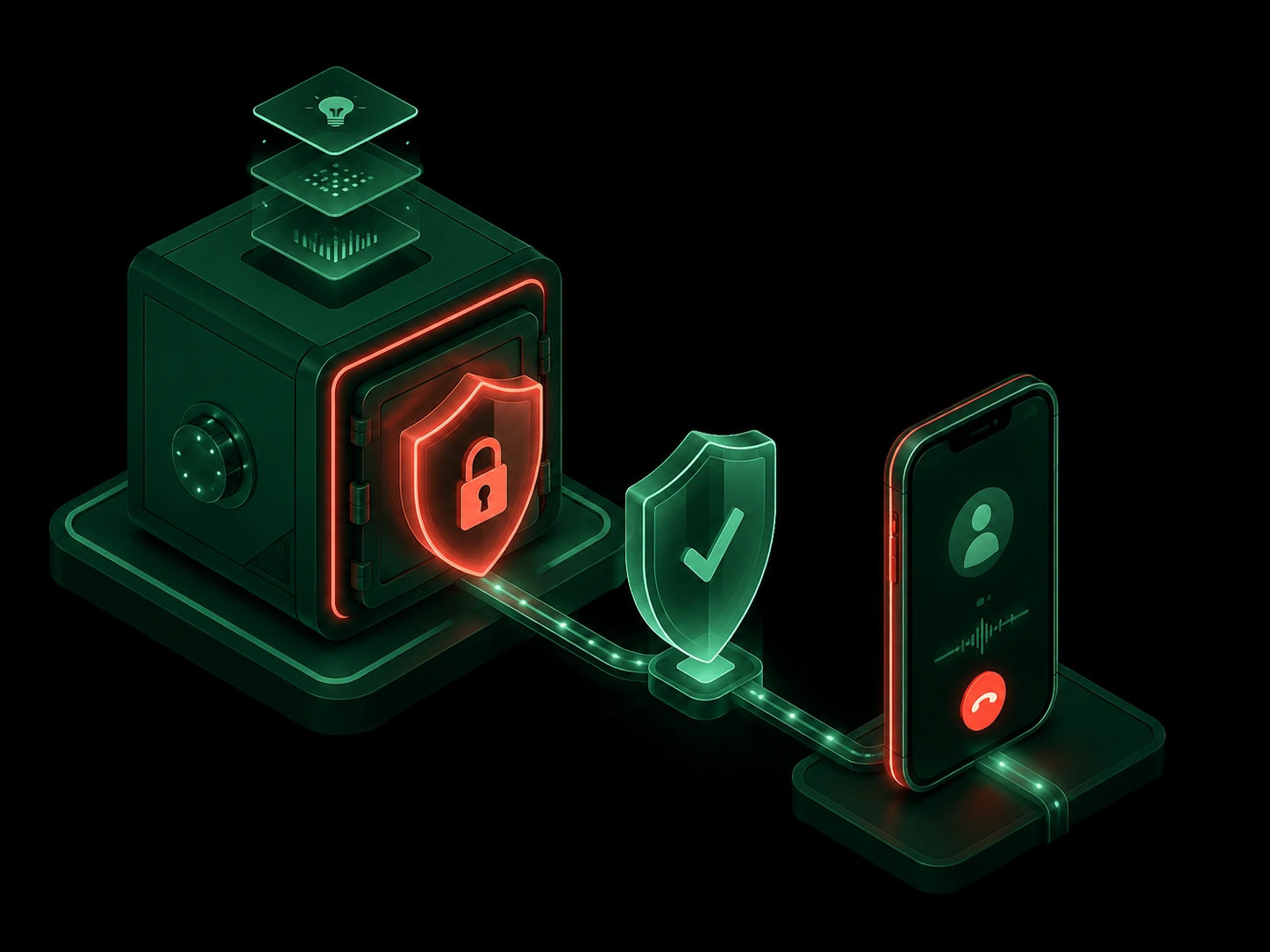
An out-of-the-box model will answer anything, confidently, whether or not it knows — and in a customer-facing chatbot that's a published, branded mistake. The fluency is exactly what makes it dangerous: a wrong answer that sounds right gets trusted and acted on. The 'thin GPT wrapper' chatbots flooding the market have no defence against this, which is why they don't belong near real customers.
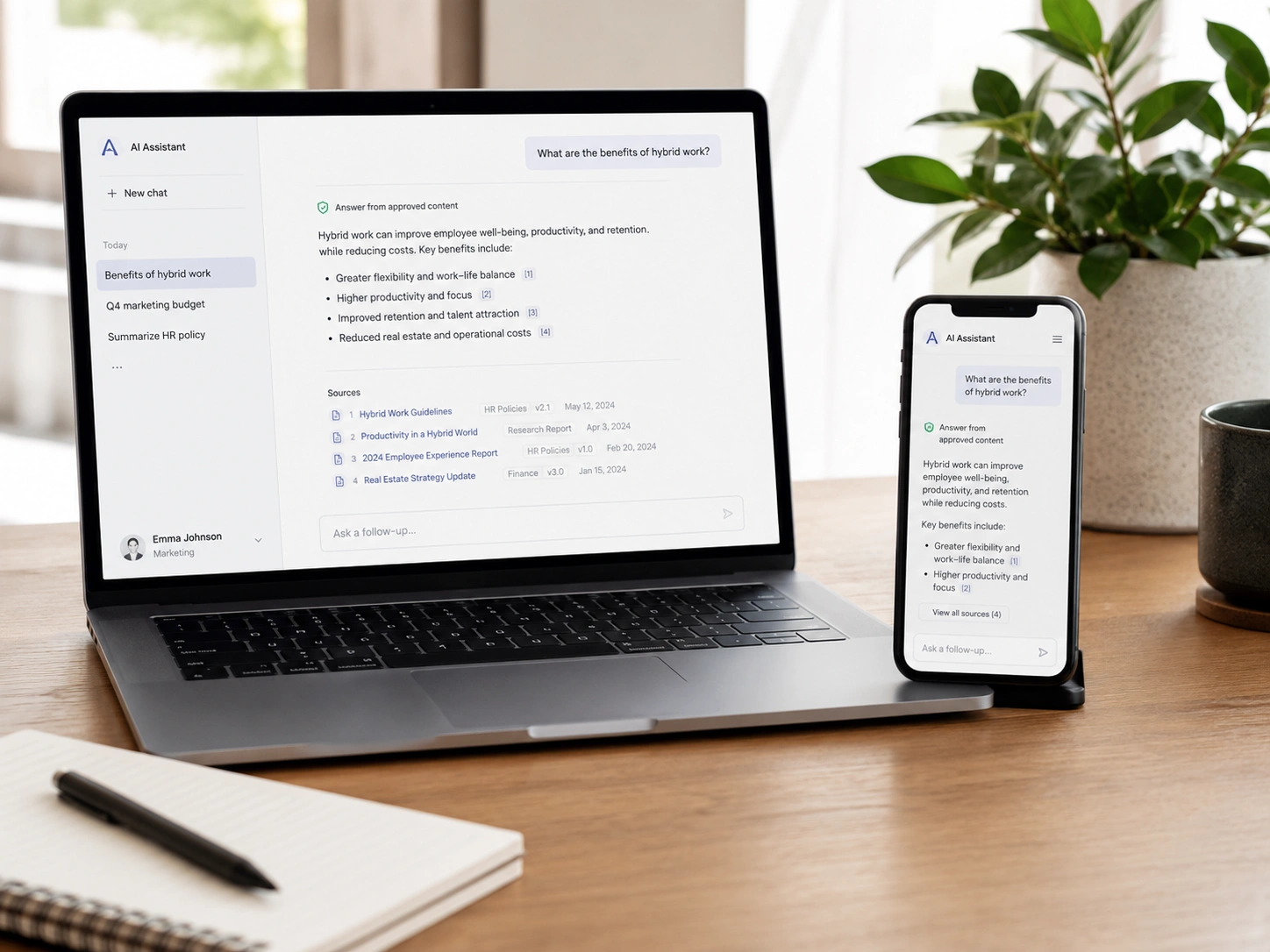
The fix is to stop the model improvising: answers come from your retrieved, approved content (RAG), carry a citation the user can check, and are constrained so the bot says 'I don't know, here's how to get help' instead of inventing. A grounded, cited answer is one a customer can trust and a reviewer can verify — the difference between an assistant and a guessing machine.
We agree what the chatbot is allowed to get wrong, and how often, before it goes live — then build the evaluation and monitoring to hold it there. 'Does it ever hallucinate?' is the wrong question; 'is it within the limit we agreed, and would we know if it drifted?' is the one a serious build can actually answer.
Most chatbot demos answer every user identically. Inside an enterprise that's a breach waiting to happen — a junior employee shouldn't get answers drawn from documents they're not allowed to open.

The moment a chatbot can read from your internal knowledge, 'who is allowed to know this?' becomes the most important question — and the one a consumer-grade bot completely ignores. A single answer surfaced to the wrong person is a data-leak incident, not a UX bug. Permissions are the dividing line between a demo and something you can safely connect to real systems.
The chatbot should know who it's talking to and answer as that person's access allows — authenticated through your existing SSO/identity provider, with the same role-based permissions your other systems already enforce. It inherits your access model rather than inventing a new, looser one beside it.
Retrieval is scoped to each user's permissions, so two people asking the same question can correctly get different answers — or a polite refusal — based on what each is cleared for. The bot can't surface a document you couldn't open yourself, which is exactly what a security team needs to hear before it goes live.
Personal and sensitive data that flows through conversations is detected, masked or handled per policy, and never quietly logged where it shouldn't be. For regulated environments this isn't a nice-to-have; it's the difference between a chatbot that clears compliance and one that becomes a liability the day it's audited.
Adoption doesn't die in a launch meeting. It dies the third time a user gets stuck in a loop and gives up — after which they route around the chatbot forever, and your deflection numbers quietly collapse.

Users give a chatbot one or two chances. A bot that misunderstands, repeats itself, or traps them with no way out teaches them, permanently, to demand a human immediately — which destroys the very efficiency it was meant to deliver. The damage is silent: nobody files a complaint, they just stop using it, and the project quietly fails.
A serious chatbot detects when it can't help — or when a user is getting frustrated — and hands off to a human with the full conversation, not a cold transfer that makes the customer repeat themselves. Knowing when to stop trying is as important as answering well, and it's what makes people trust the bot enough to start with it.
A vendor optimising purely for 'tickets deflected' will happily build a wall between your customers and your team — the number looks great while satisfaction quietly tanks. We optimise for actually resolving the query, with escalation as a feature, not a failure. A bot that resolves earns the next conversation; one that just blocks loses the customer.
Understanding intent, answering accurately from real content, and handing off gracefully at the right moment are deliberate engineering outcomes — not happy accidents of a good model. The chatbots that get used habitually are the ones where someone designed the failure paths as carefully as the happy path.
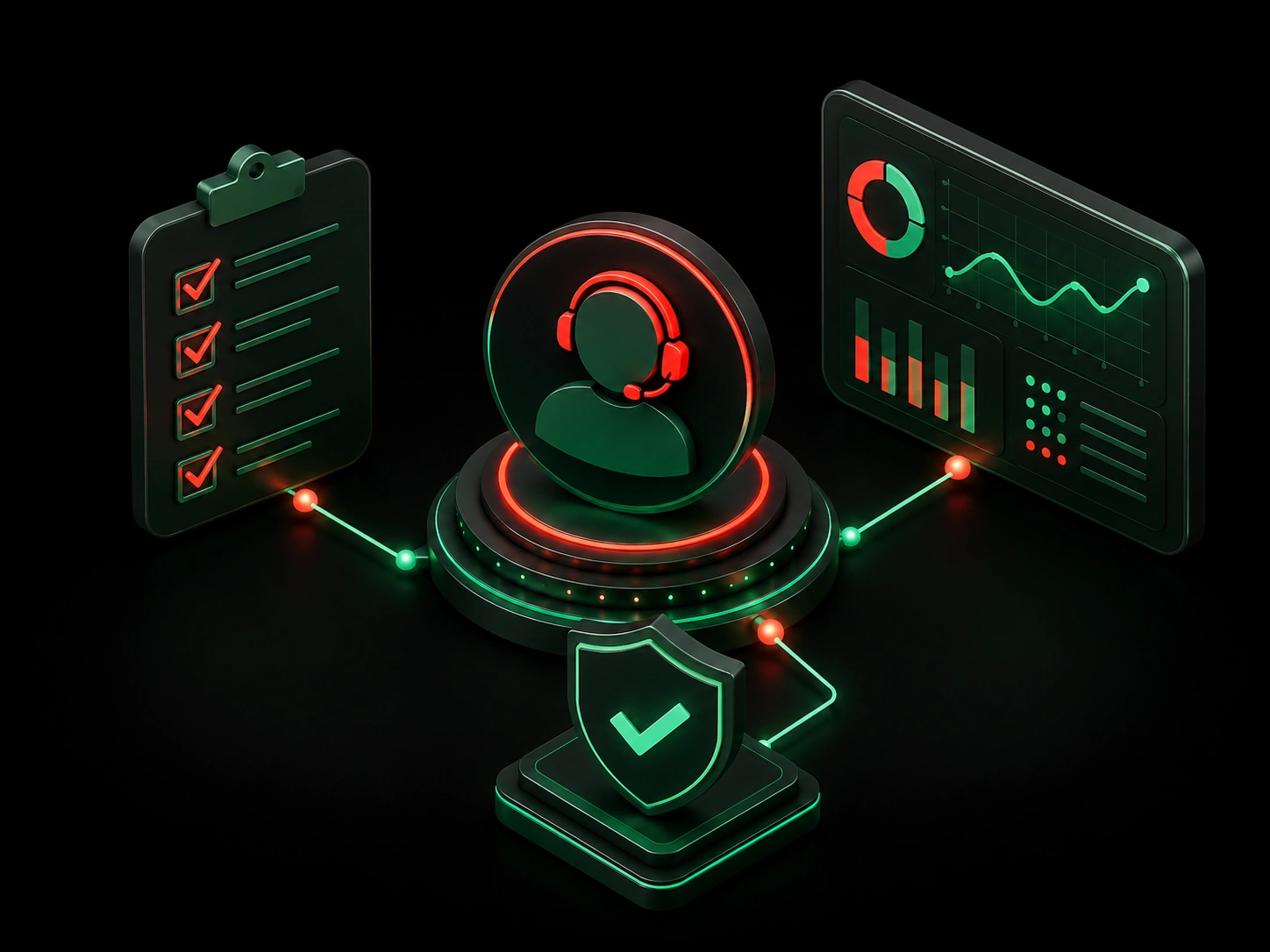
The fastest way to test whether a chatbot is truly enterprise-grade: ask the vendor for a complete log of exactly what it told a specific user last Tuesday. If they can't produce it, it won't survive your compliance review.

Each exchange — who asked, what the bot answered, which sources it drew on — is recorded, attributable, and exportable. When a customer disputes what they were told, or a regulator asks how a decision was reached, you can answer with the actual record rather than a shrug. That log isn't overhead; it's what lets you stand behind what the chatbot says.
Enterprise procurement comes with a checklist: data handling, access control, retention, residency. We design to it from day one and produce the documentation your security team needs — so the review confirms controls already in place instead of sending the project back for a quarter of rework.
For regulated industries, where conversation data lives and how it's handled is not negotiable. We support deployment within your perimeter, PII controls, and retention policies that match your obligations — so the chatbot meets GDPR, HIPAA, or sector rules because it was built to, not because someone patched it later.
An auditable, documented, explainable chatbot is what turns a nervous security team into an approver. It's increasingly a competitive point too — being able to show exactly how the bot behaves is the difference between a deployment that ships and one that stalls indefinitely in review.
They look almost identical and are engineered very differently. Treating an internal assistant and a customer-facing chatbot as one project is one of the most common — and most expensive — mistakes buyers make.
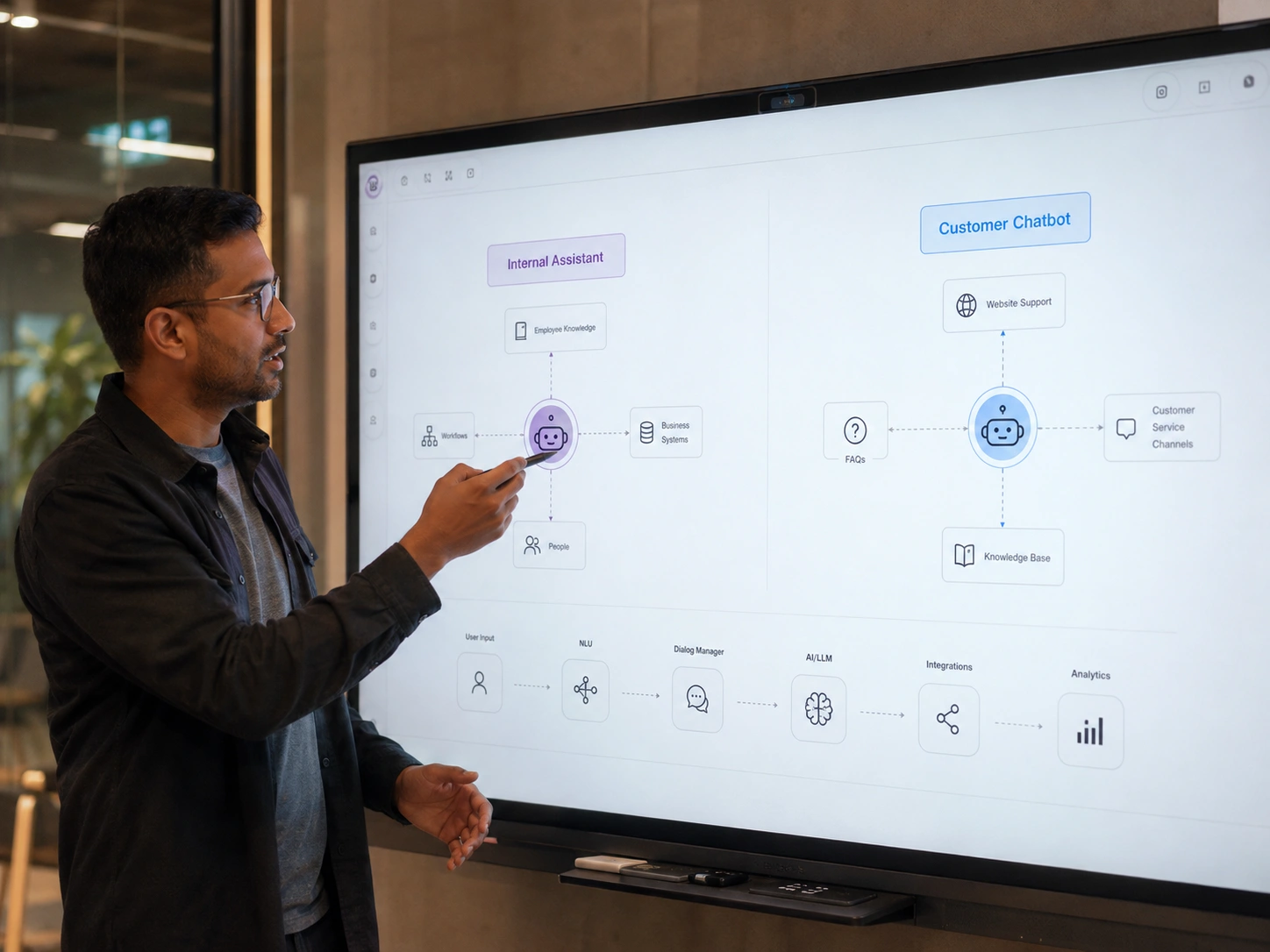
A customer-facing chatbot is a brand and legal exposure — every word is public, so tone, guardrails, and accuracy are paramount. An internal assistant's bigger danger is permissions: leaking data across roles. The controls that matter most are different, and a build that optimises for one set leaves the other dangerously exposed.
Internal bots draw on sensitive, permission-controlled systems where RBAC is non-negotiable. Customer bots draw on curated, public-safe content where the priority is on-brand accuracy and never revealing anything internal. We scope the knowledge boundary explicitly for each, because 'what can it see?' has a very different answer in each case.
Internal success is ticket deflection and employee time saved; customer success is resolution rate, satisfaction, and containment without harming the experience. We agree the metric per use case up front — because optimising the wrong one produces a chatbot that hits its number and still fails its actual job.
The underlying engineering — grounding, guardrails, escalation, logging — is shared. We build a foundation that serves both internal and customer-facing bots, so your second chatbot reuses the first's infrastructure instead of starting from scratch. Same core, different surface and controls per audience.
The launch is the start, not the finish line. A chatbot shipped and forgotten gets steadily worse as your content ages and users ask things it can't handle — while a maintained one gets measurably better every week.

The questions users actually ask — and the ones the bot fumbles — are the most valuable signal you'll ever get for improving it. A chatbot wired to learn from its own production conversations closes its gaps faster than any amount of upfront guessing. The vendors who 'ship and leave' throw this signal away.
Your policies change, products update, and the documents the bot relies on go stale — and a chatbot confidently answering from outdated content is worse than one that admits it doesn't know. We monitor for that drift and keep the knowledge base in sync, because accuracy on launch day is no guarantee of accuracy six months later.
A chatbot without someone accountable for its accuracy, and a number they're watching, decays unnoticed until users abandon it. We define who owns it, how it's monitored, and what 'good' looks like — so it stays a living product with a roadmap, not an install that's quietly rotting behind a chat icon nobody clicks anymore.
Because we build with evaluation, logging, and a feedback loop from the start, improving the chatbot is a routine, low-risk activity rather than a re-build. The first version is engineered to get better — which is what separates a chatbot that compounds in value from one that peaks at launch and declines from there.
Weeks 1–2
We define the chatbot's purpose, scope, and conversation flows, and map the knowledge and channels it needs — before any build begins.
Use-case & scope definitionConversation & escalation flow designKnowledge-source auditChannel & identity mappingSuccess metrics & accuracy targets definedWeeks 3–5
We build the knowledge layer and model setup — RAG grounding, prompts, and model selection — that determines answer quality.
Knowledge ingestion & indexingRAG retrieval setup & tuningLLM selection & benchmarkingPrompt & persona designSandbox prototype for stakeholder reviewWeeks 5–8
We build the chatbot and connect it to your channels and systems, with human handoff wired in.
Chatbot application buildChannel integration (web, Teams, Slack, WhatsApp)Backend & system connectorsHuman-escalation & handoffIntegration test suiteWeeks 8–9
We add access controls, guardrails, and audit logging, and pass the chatbot through security review.
Role-based access (RBAC) setupContent guardrails & PII handlingHallucination controls & confidence thresholdsConversation audit loggingSecurity & compliance reviewWeeks 9–12
We launch a controlled pilot, improve on real conversations, and move the chatbot into production with analytics and support.
Controlled pilot with real usersConversation-driven iterationProduction deploymentAnalytics dashboard & documentation90-day post-launch support (included)Book a free 30-minute discovery call with a senior AI engineer — no slide deck, just questions about your users, your knowledge, and your goals.










Enabled users to retrieve operational, financial, and project insights through natural language queries, transforming complex data analysis into instant, self-service intelligence.
See case study
 <12 Seconds
  10+ Systems
  Days → Minutes
  95%+
95%+ We build enterprise chatbots on a proven stack — capable models, orchestration and retrieval frameworks, vector databases, messaging channels, and secure deployment infrastructure — selecting the right combination for your channels, knowledge, and security requirements.
State-of-the-art models for reasoning, generation, and tool use.
 OpenAI GPT-4
 Claude
 Google Gemini
 Cohere
 Mistral
Coordinate conversation flow, retrieval, and tools with reliability and control.
 LangChain
 LangGraph
 AutoGen
 CrewAI
High-performance vector databases for semantic search and retrieval.
 Pinecone
 Weaviate
 Milvus
 Qdrant
 Chroma
Maintain conversation history and context across turns and sessions.
 Redis
Redis
 PostgreSQL
 Zep
Zep
 LangMem
Modern languages and runtimes for building AI applications.
 Python
 TypeScript
 Node.js
 FastAPI
Connect to tools, APIs, and external systems seamlessly.
 MCP
MCP
 REST APIs
 GraphQL
 n8n
n8n
 Zapier
 Webhooks
 Twilio
 MS Bot Framework
Monitor, trace, and evaluate AI systems in production.
LangSmith
 Langfuse
 OpenTelemetry
 Grafana
 Prometheus
Enterprise-grade cloud services and infrastructure foundations.
 AWS Bedrock
 Azure OpenAI
 GCP Vertex AI
 Docker
 Kubernetes
Enterprises trust VOCSO for AI chatbots built to scale securely and meet regulatory standards. We design conversational AI that balances helpfulness with compliance, privacy, and auditability across AWS, Azure, and Google Cloud.

General Data Protection Regulation

Information Security Management Systems

System and Organization Controls

For AI applications in healthcare
Responsible AI principles and implementation

AI Risk Management

Principles and implementations

India’s personal data protection framework

Auditability frameworks

Standards and evaluation practices
 Fixed-Price POC
Validate an AI agent use case with a low-risk, fixed-scope engagement designed to prove value, feasibility, and ROI before committing to a full build.
4–6 week delivery timeline Defined scope & success criteria Low commitment, fixed budget Executive-ready ROI assessment Dedicated AI Team
A cross-functional AI agent team embedded into your environment — working within your processes, security requirements, and communication tools.
AI, Data & MLOps specialists Named delivery lead Works within your NDA & security policies Scalable team composition Project-Based
End-to-end delivery of a defined AI agent capability with fixed scope, timeline, and commercial terms. Full knowledge transfer and documentation included.
Fixed scope & pricing Defined milestones & deliverables Dedicated project management Knowledge transfer & documentationLet's discuss the right engagement model for your project?
Book a call
First-hand experiences from firms that deployed AI chatbots, scaled support intelligently, and achieved measurable results.
View all client testimonials“Vocso team has really creative folks and is very co-operative to implement client project expectations. MicroSave Consulting had great experience working with Anju and Prem.”

“Working with Deepak and his team at Vocso is always a pleasure. They employ talented staff and deliver professional quality work every time.”

“We love how our website turned out! Thank you so much VOCSO Digital Agency for all your hard work and dedication.”

“VOCSO SEO & SEM services helped me find new customers in a small budget. Their advanced SEO strategies made us visible to everyone.”

“Vocso team has really creative folks and is very co-operative to implement client project expectations. MicroSave Consulting had great experience working with Anju and Prem.”
“Working with Deepak and his team at Vocso is always a pleasure. They employ talented staff and deliver professional quality work every time.”
“We love how our website turned out! Thank you so much VOCSO Digital Agency for all your hard work and dedication.”
“VOCSO SEO & SEM services helped me find new customers in a small budget. Their advanced SEO strategies made us visible to everyone.”
The single biggest difference between a chatbot you can trust and one you can't is grounding. An ungrounded chatbot invents answers; a grounded one answers from your actual content, with a citation.
Retrieval-augmented generation (RAG) is how an enterprise chatbot answers from your documentation, policies, and knowledge base instead of the model's training memory. Done well, it's the foundation of accuracy; done naively, it's the source of most wrong answers.
Curate the knowledge first — We index the content that should answer questions and deliberately exclude the stale, the draft, and the contradictory, because the chatbot will faithfully repeat whatever it's given.
Hybrid retrieval & re-ranking — We combine semantic and keyword search, then re-rank, so the chatbot is handed the most relevant passages — not just the most superficially similar.
Citations users can check — Every answer links back to its source, so users can verify it and trust grows. An answer that shows its source is one people act on.
'I don't know' over a guess — When retrieval finds nothing relevant, the chatbot says so and escalates, rather than inventing a confident, wrong answer that erodes trust.
At VOCSO, retrieval quality is measured and tuned before launch — because in a chatbot, a confident wrong answer is worse than no chatbot at all.
An enterprise chatbot that answers everyone identically is a data breach waiting to happen. The chatbot must know who's asking and answer only from what that person is allowed to see.
This is the dividing line between a consumer chatbot and an enterprise one. RBAC — role-based access control — isn't a feature you add later; it's a constraint that shapes the whole retrieval and answer pipeline.
Identity-bound sessions — The chatbot authenticates each user through your identity provider, so it always knows who it's talking to and what their role permits.
Permission-filtered retrieval — RBAC is enforced at retrieval: the chatbot can only pull from content the current user is authorised to access, so it physically cannot answer from documents they can't open.
No leakage through phrasing — Because the restriction is on the data the model sees — not just the prompt — no clever question can coax out an answer the user isn't entitled to.
Auditable by user — Every answer is logged against the identity that received it, so you can always show who was told what, and on what basis.
At VOCSO, RBAC is designed into the retrieval layer from the start — because permission control bolted on after the fact is the gap that fails security review.
A capable chatbot without guardrails will eventually say something wrong, off-brand, or non-compliant — usually at the worst possible moment, to the worst possible person. Guardrails are what make it safe to deploy.
Guardrails aren't a single setting; they're layers of control around what goes in, what comes out, and what the chatbot is even willing to discuss. They have to be enforced in the runtime, not requested politely in a prompt.
Topic boundaries — The chatbot stays in its lane — answering what it's meant to and declining what it isn't — so it can't be steered into giving advice or opinions it shouldn't.
Output validation & filtering — Responses are checked before they reach the user, blocking unsafe, off-brand, or non-compliant content rather than hoping the model behaves.
PII handling — Personal and sensitive data is detected and handled to policy — redacted, protected, or kept out of logs — so the chatbot doesn't become a privacy liability.
Prompt-injection defence — User input is treated as untrusted and tested against attempts to override the chatbot's instructions or extract content it shouldn't reveal.
At VOCSO, guardrails are tested against real adversarial inputs before launch — because the time to discover what a chatbot can be tricked into saying is before a customer does.
The mark of a good chatbot isn't that it never fails — it's that it fails gracefully. A chatbot that knows its limits and hands off cleanly beats one that confidently bluffs every time.
Escalation is where most chatbot experiences fall apart: the user gets stuck, the bot loops, and there's no way out. Designing the handoff well is what separates a chatbot people tolerate from one they trust.
Know when to escalate — The chatbot detects low confidence, repeated failure, sensitive topics, or an explicit request for a human — and escalates rather than guessing.
Hand off with full context — When it escalates, the human receives the whole conversation, so the user never has to repeat themselves — the single biggest cause of handoff frustration.
Route to the right place — Escalations go to the correct queue, team, or ticketing system based on topic and user — not a generic inbox no one watches.
Close the loop — Escalated conversations feed back into improvement, so the questions that needed a human this month become ones the chatbot can handle next.
At VOCSO, the escalation path is designed alongside the chatbot, not bolted on — because a chatbot with nowhere to send the hard questions just relocates the frustration it was meant to remove.
Your users aren't all in one place — some are on your website, some in Teams, some on WhatsApp. The mistake is building a separate chatbot for each. The right approach is one brain, many faces.
A channel is just a way in. The knowledge, guardrails, permissions, and logic should live once, behind every channel, so the chatbot behaves consistently and improving it once improves it everywhere.
One backend, many front ends — A single chatbot core serves a web widget, Teams, Slack, WhatsApp, and mobile — so there's one thing to maintain, not five.
Consistent answers everywhere — The same question gets the same grounded, permission-aware answer regardless of channel, so the experience doesn't fracture across touchpoints.
Channel-aware presentation — While the brain is shared, the chatbot adapts format to each channel — rich cards on web, plain text on SMS — so it feels native, not bolted on.
Add channels without rebuilding — Because channels are a thin layer over the core, adding a new one later is a small change, not a second project.
At VOCSO, we build the chatbot core first and treat channels as adapters — so you can start in one place and expand to the next without starting over.
A chatbot isn't done at launch — that's when the real data starts arriving. The teams that win treat launch as the beginning of improvement, not the end of the project.
Every conversation is a signal: what users actually ask, where the chatbot nails it, and where it stumbles. Without measurement, you're flying blind; with it, accuracy and deflection climb week over week.
The metrics that matter — Resolution rate, deflection, escalation rate, and user satisfaction — tracked on a dashboard, not guessed at — so you know how the chatbot is actually performing.
Find the gaps from real questions — Unanswered and poorly-answered queries surface exactly what content or tuning is missing — a prioritised to-do list written by your users.
Improve without regressing — Changes are tested against past conversations before they ship, so fixing one thing doesn't quietly break another.
Watch for drift — As your content and the underlying models change, we re-check accuracy so a chatbot that was reliable at launch stays reliable months later.
At VOCSO, the analytics and improvement loop is part of the build, not an afterthought — because a chatbot that doesn't get better after launch slowly gets worse.
You delivered exactly what you said you would in exactly the budget and in exactly the timeline.







 Transparency on every decision Talented Team of AI Engineers Smooth Collaboration & Reporting Efficient & Adaptive Workflow Strict Privacy Assurance with NDA 12 Months Free Post-Launch Support On-time Delivery, No Surprises ISO 27001 Certified Engineering
Most teams start with one high-value use case — typically customer support, an IT/HR helpdesk, or a knowledge assistant. We help you scope, build, and prove it in 6 weeks, grounded and governed. No open-ended contracts. No ambiguous scope.
deepak@vocso.com — no forms, no funnels.
Often, yes — and it's where a lot of our work starts. If your current chatbot is underperforming — hallucinating, ignoring permissions, looping, frustrating users — we assess what's there and frequently fix it by adding the missing layers (grounding, RBAC, guardrails, escalation) rather than rebuilding from scratch. The same goes for messy or outdated documentation behind it: we'll tell you honestly whether the faster path is repairing what you have or starting clean, and we won't push a rebuild just to make the project bigger.
Cost tracks with scope, channels, integrations, and compliance depth. A focused single-channel chatbot typically runs $15,000–$40,000; a multi-channel, RBAC-aware chatbot with system integrations and full audit/compliance runs $40,000–$120,000+. We usually start with a fixed-price PoC (typically $12,000–$20,000) that proves value on your real knowledge in one channel before you commit to the full build, and every engagement opens with a free 30-minute discovery call.
A production-ready enterprise chatbot typically takes 10–14 weeks: roughly 2 weeks of discovery and conversation design, 5–6 weeks of knowledge/model foundation and channel build, 2 weeks of guardrails, RBAC, and compliance, then pilot and production. A scoped PoC runs in about 6 weeks. The biggest variable is knowledge readiness — clean, current content is fast, while scattered or outdated content adds time we'll flag upfront.
It answers from your documents, not from the model's imagination — that's the core of an enterprise chatbot. We connect it to your documentation, policies, wikis, and knowledge base and use retrieval-augmented generation so every response is grounded in your material with a citation the user can check; when retrieval finds nothing relevant, the bot says it doesn't know and escalates rather than guessing. We agree an acceptable error rate and test against a hallucination benchmark before launch, and as your content changes the answers change with it.
Permissions are enforced at the retrieval layer, not just asked for in a prompt: the chatbot authenticates each user through your identity provider and can only retrieve content that user is authorised to access, so no clever phrasing extracts an answer they're not entitled to, and every answer is logged against the person who received it. On top of that we add PII detection and handling, content guardrails and topic boundaries, encryption, and data-residency controls, with a complete audit log of every conversation. It's designed to pass enterprise security review and supports GDPR, HIPAA, SOC 2, and ISO 27001 requirements depending on your context.
Yes — and good escalation is what makes people trust the bot in the first place. It detects when it can't help, when a topic is sensitive, or when a user simply asks for a person, and hands off to a live agent with the full conversation context so nobody has to repeat themselves. Escalations route to the right team or ticketing system, not a generic inbox — handoff is treated as a feature, not a failure.
One chatbot can run across your website widget, Microsoft Teams, Slack, WhatsApp, SMS, mobile apps, and custom interfaces, all sharing the same backend, knowledge, and controls — so adding a channel later is a small change, not a rebuild. On language, modern LLM-based chatbots handle many out of the box; we configure and test the specific languages your users need so quality is consistent, and can add voice interfaces for phone and voice-assistant channels where typing isn't practical.
Yes. Beyond answering questions, the chatbot can check an order status, create a ticket, look up an account, or update a record by connecting to your CRM, ERP, helpdesk, and other systems. High-consequence actions are scoped, gated, and logged, and can require user or human confirmation before they execute — so the bot is genuinely useful without ever being able to do something it shouldn't.
Yes — and we engineer them differently, because they're genuinely different builds. Customer-facing chatbots prioritise brand-safe answers, tone, and guardrails; internal assistants (IT, HR, knowledge) prioritise RBAC and access to sensitive systems. The risks and the success metrics differ, so we scope each accordingly — but they share the same underlying foundation, so your second chatbot reuses the first's infrastructure instead of starting over.
With a dashboard tracking the numbers that matter for your use case — resolution rate, ticket deflection, escalation rate, and user satisfaction — against targets we agree before launch. Unanswered and poorly-answered questions surface exactly what to improve next, and every change is tested against past conversations so a fix in one place doesn't quietly break another. Quality is something you can see and steer, not guess at.
Yes — and a chatbot needs it, because one that isn't maintained slowly degrades as content ages and users ask new things. Every engagement includes 90 days of post-launch support (monitoring, tuning, content updates). Beyond that, retainers cover accuracy monitoring, model-update validation, new channels and topics, and ongoing improvement driven by real conversation data — so the bot gets better over time instead of decaying behind a chat icon.
Completely. All code, prompts, configuration, conversation logs, and documentation are yours, unconditionally. We sign NDAs before any discovery conversation, retain no client data after a project concludes, and never use your data or conversations to train models for anyone else. For stricter requirements we work entirely within your cloud environment so we never hold your production data at all.
Discover complementary services that enhance performance, improve user experience, and help your business build scalable digital solutions efficiently.