Assets Live Everywhere
Kit is spread across desks, vans, job sites, and store cupboards — with no single record of what you own or where it actually is.
Desks
Vans
Sites


StackRoom replaces the store-cupboard spreadsheet with a signed, scannable record of who has what. Register your kit, print QR labels, and issue equipment against a name and a signature — so laptops, tools, and gear stop walking off unaccounted for.













Signed, scannable asset custody — the change teams see in their first quarter
Laptops, tools, cameras, and instruments get handed out on trust and tracked in a spreadsheet nobody keeps current. When something goes missing, no one knows who had it last.
Kit is spread across desks, vans, job sites, and store cupboards — with no single record of what you own or where it actually is.
One shared sheet, edited by everyone and trusted by no one. Rows fall out of date the moment a piece of kit moves.
Out of date by MondayWhen an asset walks off, there's no signature, no timestamp, and no accountable name to follow up with.
Zero chain of custodyCounting everything by hand across sites means audits take days — and the numbers still never quite reconcile.
Days of manual countingKit that can't be found gets rebought. The budget leaks a little more every month.
A sticky note. A group chat. A guess. The kit didn't fail — the way you track it did.
No mystery here. These are the actual screens — the board your admin opens each morning, the custody list, the warranty countdown, and the audit that closes itself.
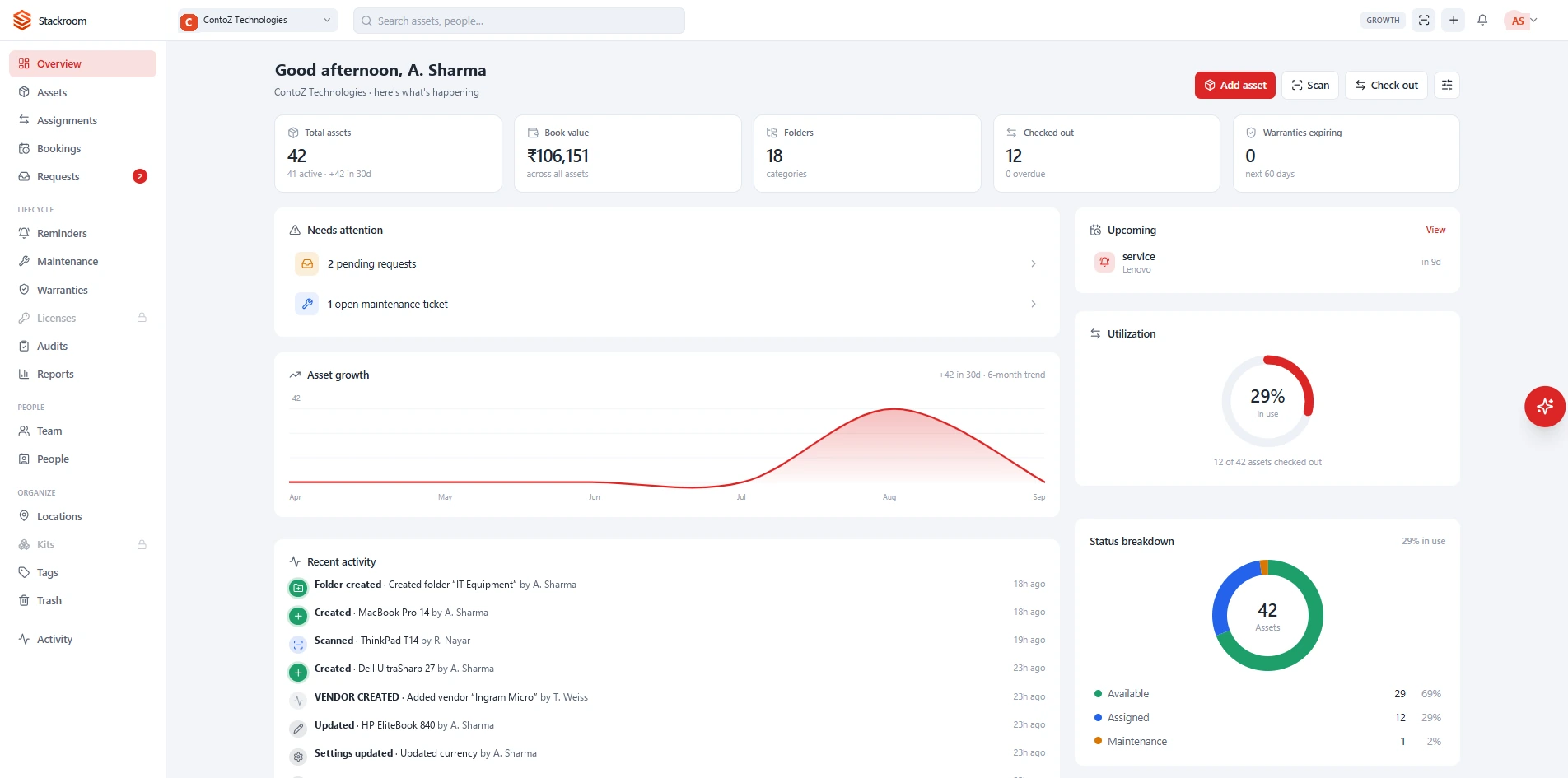
Total assets, book value, utilisation and whatever needs attention — all on one screen. Open it in the morning and you already know what moved, what is late, and what is waiting on you.
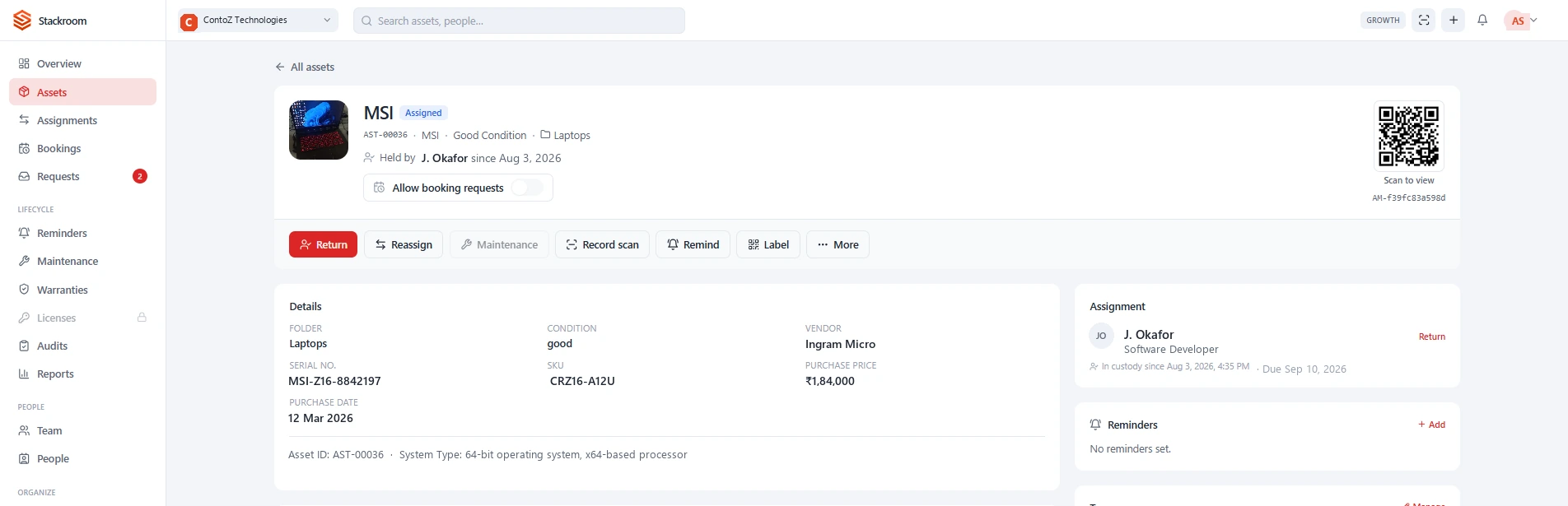
Scan the label, pick the person, set a due date. The whole handover takes seconds and leaves a signed record behind it — no clipboard, no sign-out sheet, no one trying to remember who took the drill.
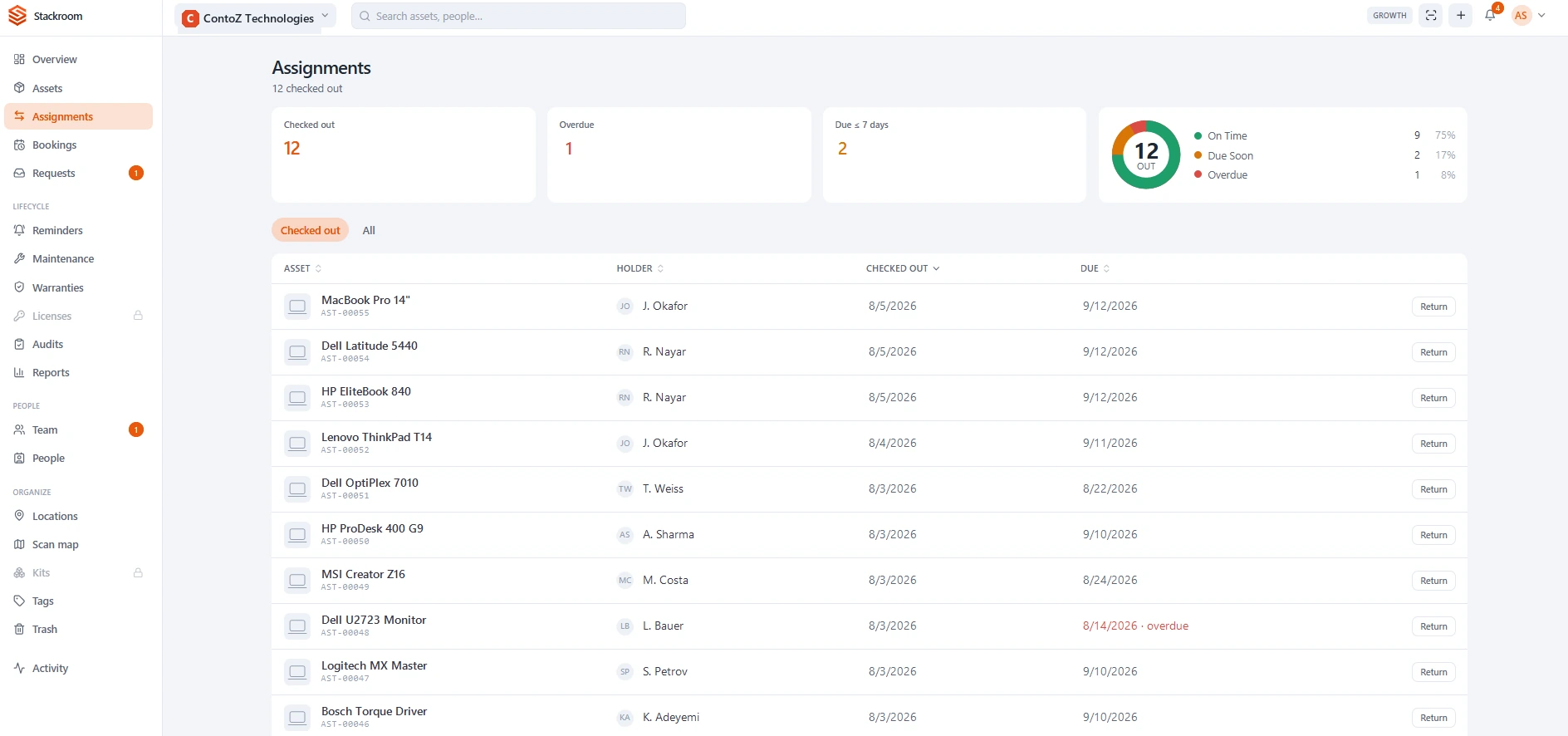
Every item checked out against a name, a date and a due date. One list tells you what is out, what is overdue, and exactly whose desk to walk to — without asking a single person.
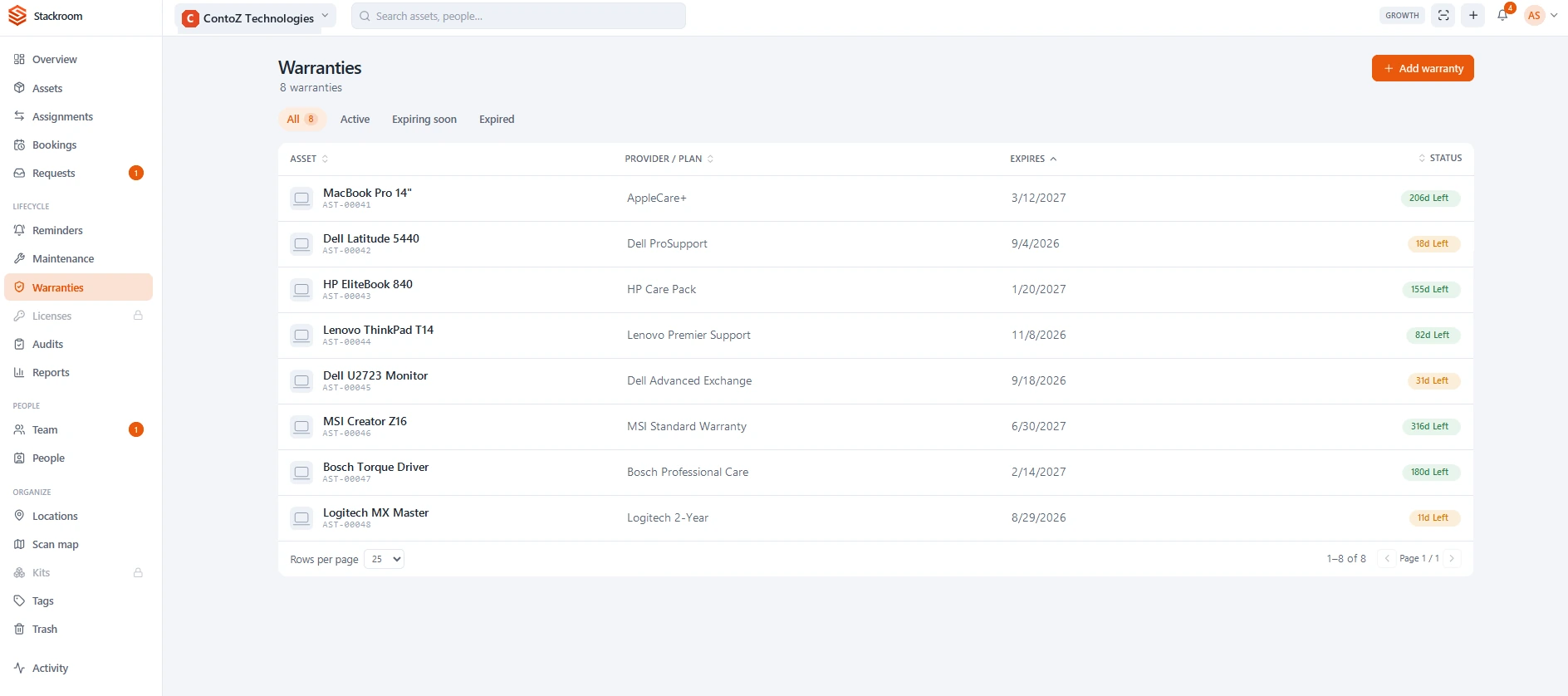
Provider, plan and expiry sit on the asset itself and count down in plain sight. You hear about cover while you can still use it — not when the repair quote lands.
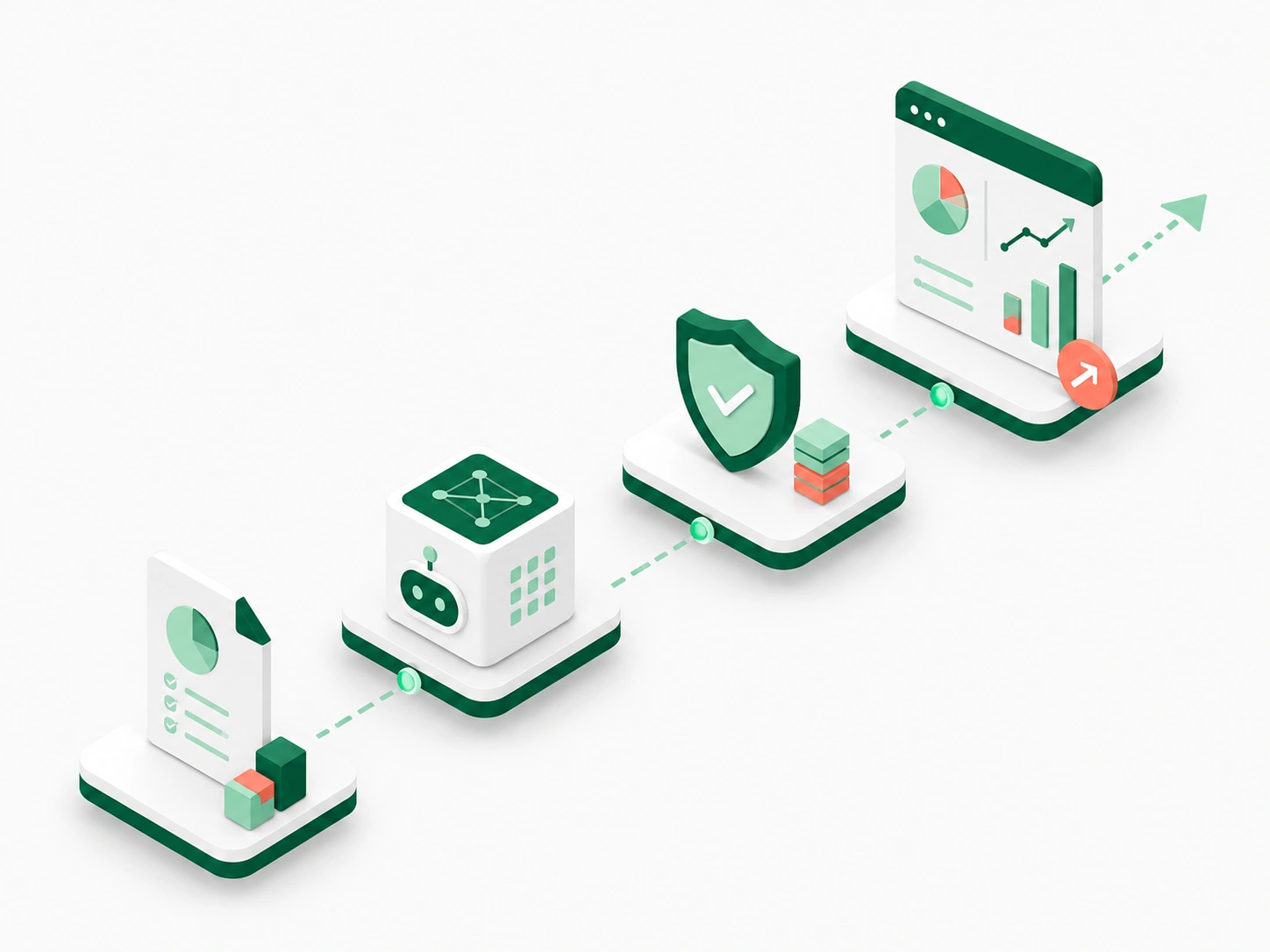
Six stages carry a piece of kit through its whole life — register, issue, track, maintain, audit and return — each one on the same record, each one signed by somebody.
Add an asset once — make, model, serial, cost, photos — and StackRoom prints a QR label for it. Bring your existing spreadsheet in on day one instead of typing it all again.
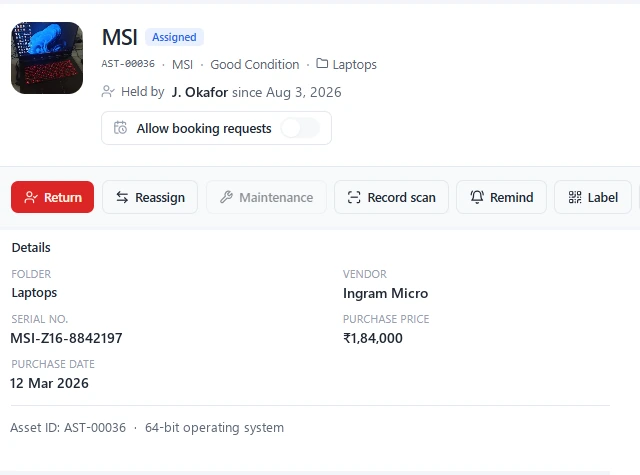
Scan the label, pick the person, set a due date. The handover is recorded against a name, so custody is a record rather than something two people remember differently.
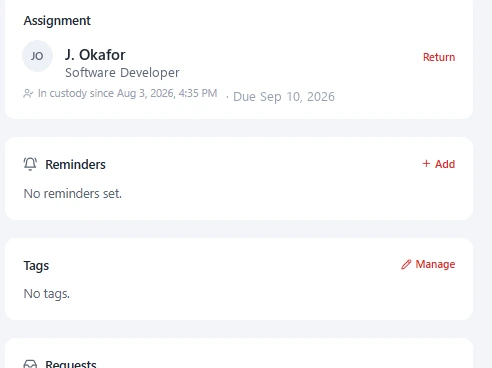
Holder, location, condition and status stay current on the record. No group-chat hunt for the missing laptop, and no walking three floors to find out a monitor was moved last week.
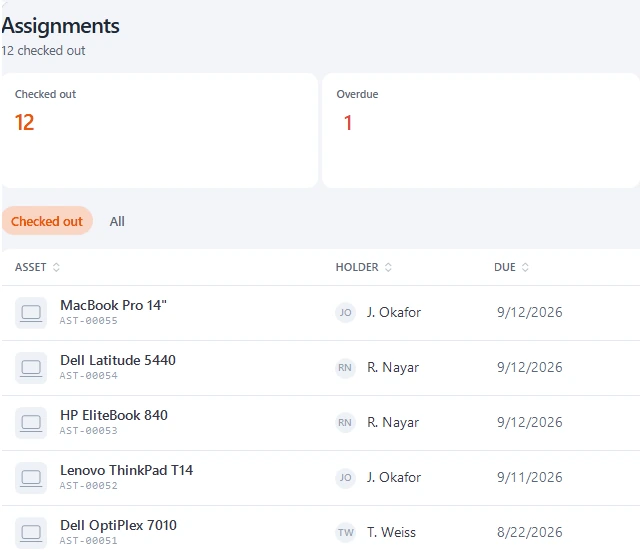
Warranty expiry, service schedules and repair tickets live on the asset itself and raise their hand in time to act — so cover gets used and kit gets fixed instead of replaced.
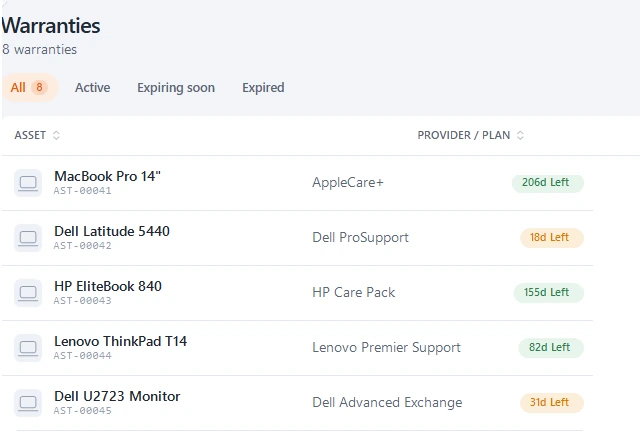
Walk the site and scan what you find. StackRoom ticks the register off live and flags anything missing while it is still findable, closing with an accuracy figure you can hand to finance.
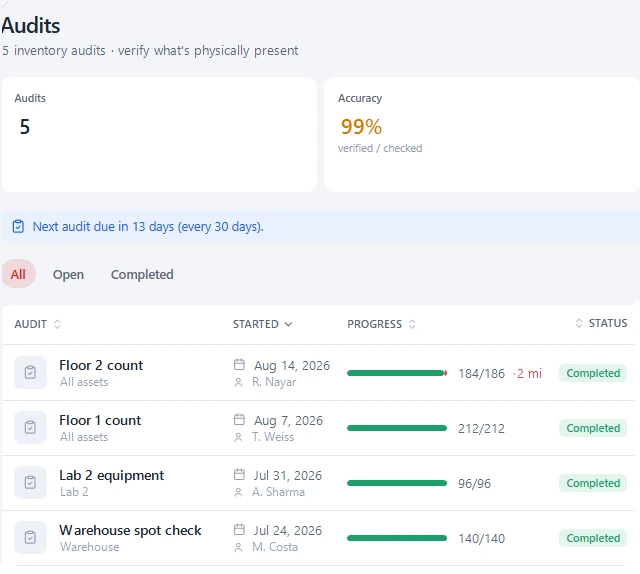
Returns and offboarding run as a clearance list. Nothing is settled until every item is back, reassigned, or written off on the record with somebody’s name against the decision.
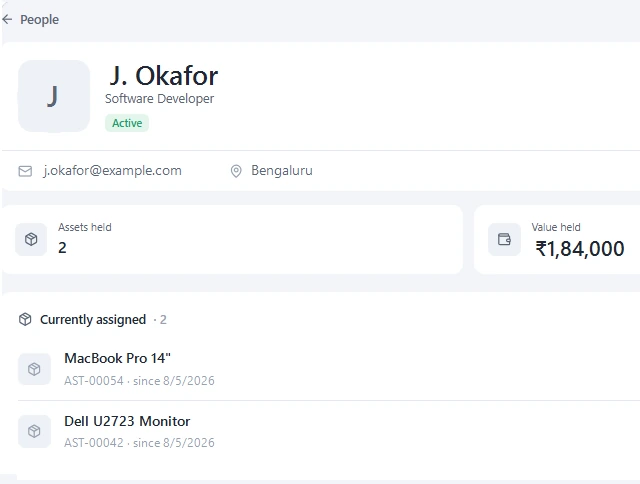
Most teams are still running a shared spreadsheet and a sign-out sheet on a clipboard. Here is what changes when custody becomes a record instead of a habit.
A sign-out sheet nobody filled in after the first week
Find the sheet, write the row, hope it gets read
Ask around, check the cupboard, ask around again
Nobody notices until someone else needs the item
Discovered when the repair quote arrives
Days of clipboard counting, reconciled by hand afterwards
A leaver, a laptop, and a conversation nobody had
A file that is only as good as the last person to update it
 Stackroom
Every handover scanned and signed against a name and date
One scan, one person, one due date — done in seconds
Search the register and see holder, location and status
Surfaces itself the day it is late, with a name attached
Counts down on the asset and warns before cover lapses
Scan the floor — the register closes itself with an accuracy figure
A clearance list that cannot close until every item is settled
Every movement timestamped and attributed, ready to export
Watch a laptop go from the shelf to somebody’s desk and back again — the label scan, the due date, the overdue nudge, and the return that closes it out. No slideware, no canned demo.
Everyone touches the kit for a different reason. Switch between teams to see what each one actually gets out of the same record.
Leadership sees total asset value, utilisation and what is sitting idle from the same record the team works on — so the replacement budget is a decision, not a guess.

IT hands over laptops and peripherals with one scan, sees who is holding what across every site, and gets the item back because the record chases it instead of a person.

Finance gets purchase value, depreciation basis and current holder on every item, plus an audit that closes with a real accuracy figure instead of an assurance that it looks about right.

HR sees exactly what a joiner has been issued and what a leaver still holds, so onboarding is ready on the first morning and clearance cannot quietly skip a laptop.

Procurement checks what already exists and where it sits before raising an order, and sees which vendors and models actually last — from the service history on your own kit.

Site and field crews sign for tools on a phone, transfer them between vans and sites, and every move stays on the record — so the expensive gear stops disappearing between jobs.

What changes in the first quarter once every handover leaves a record behind it.
Scan, pick the person, set a due date — faster than finding the sign-out sheet ever was.
QR labels print on an ordinary printer and scan on the phone your team already carries.
Nothing leaves the shelf unsigned, so “I thought someone else took it” stops happening.
Scan-based counts close with a number finance can sign, not a spreadsheet they have to trust.
StackRoom adapts to the equipment, sites and handover habits your sector actually runs on — so IT, finance, HR and the crew on the floor all work from the same signed record.
IT & Managed Services. Every laptop, dock and licence issued to a named person across every client site — with the return chased by the record instead of an account manager.
Built on VOCSO’s own IT estate
 One register across offices, clients and remote staffWarranty and licence expiry surfaced before renewalOffboarding clearance that cannot skip a device
Software & SaaS Teams. Fast-growing headcount means constant kit churn. New joiners are issued in one scan and leavers clear out on a checklist, so the hardware budget stops leaking.
Day-one issue list per role, ready before they arriveRemote staff sign for kit from their own phoneIdle machines surfaced instead of quietly re-boughtEngineering & Construction. Tools and instruments move between vans, sites and crews all week. Every transfer is scanned, so expensive gear stops vanishing between jobs.
Site-to-site and van-to-van transfers on a phoneCalibration and service dates tracked per instrumentSigned custody for anything that leaves the yardFinancial Services. Asset registers here carry serial numbers, values and people’s names. StackRoom runs inside your perimeter with role-scoped access and a full trail on every movement.
Runs in your VPC — register never leaves the boundaryRole-scoped visibility across IT, finance and auditEvery movement timestamped for compliance reviewWarehousing & Logistics. Scanners, terminals, trolleys and safety kit spread across shifts and depots — counted in an afternoon instead of a shutdown weekend.
Depot-wise registers with shift handover built inMobile scan audits that close with an accuracy figureDamage and write-offs recorded against a personHealthcare & Labs. Devices, instruments and portable equipment with service dates and certificates attached — so nothing in use is out of calibration or out of cover.
Service, calibration and warranty dates per deviceCertificates and documents attached to the assetWard, lab and room-level location trackingEnergy, Utilities & Fleet. Field crews carry high-value equipment daily. Sign it out on a phone, track it by vehicle, and know what came back before the shift closes.
Assets tracked by vehicle, crew and locationDaily issue and return without paperworkMaintenance history that follows the equipmentSchools & Universities. Laptop trolleys, lab kit and AV equipment issued to staff and students, and actually recovered at the end of term.
Issue to students or staff with a due dateTerm-end recovery run as a clearance listDepartment-wise registers and budgetsNon-Profits & Field Programmes. Equipment spread across programmes and field locations, with the clean records that donor and board reporting depends on.
Programme-wise asset registers and valuesField transfers logged from a phone, offline-friendlyAuditable evidence for funder reporting





We pair deep product-engineering experience with a track record of shipping and operating enterprise systems for corporate and government clients — so StackRoom clears your security review and earns its place in the stack.

Enterprise software delivery since 2009 — a track record built across technology cycles, not just the current AI wave.


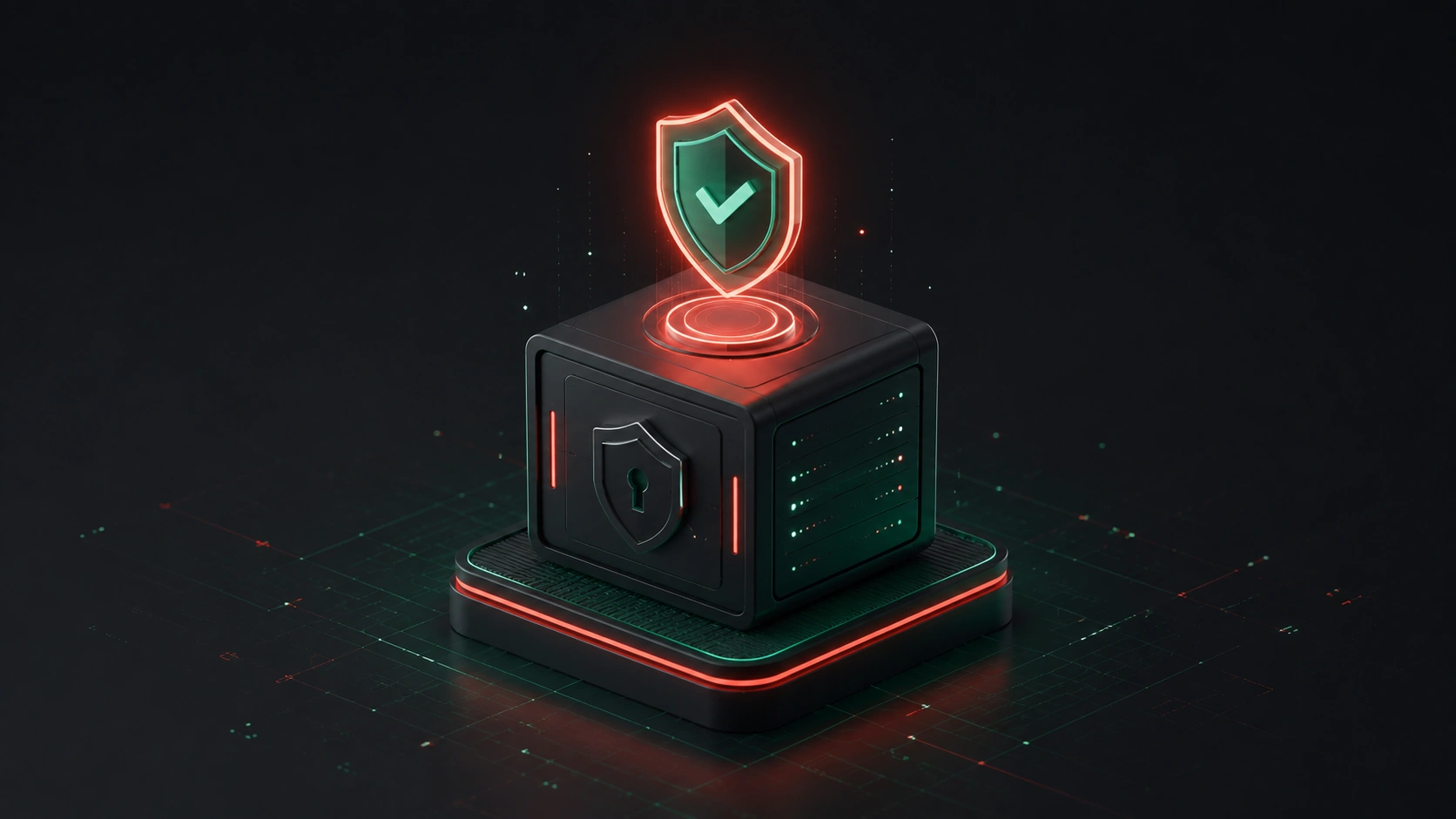
Independently certified, annually audited — meets the security baseline enterprise procurement actually checks.
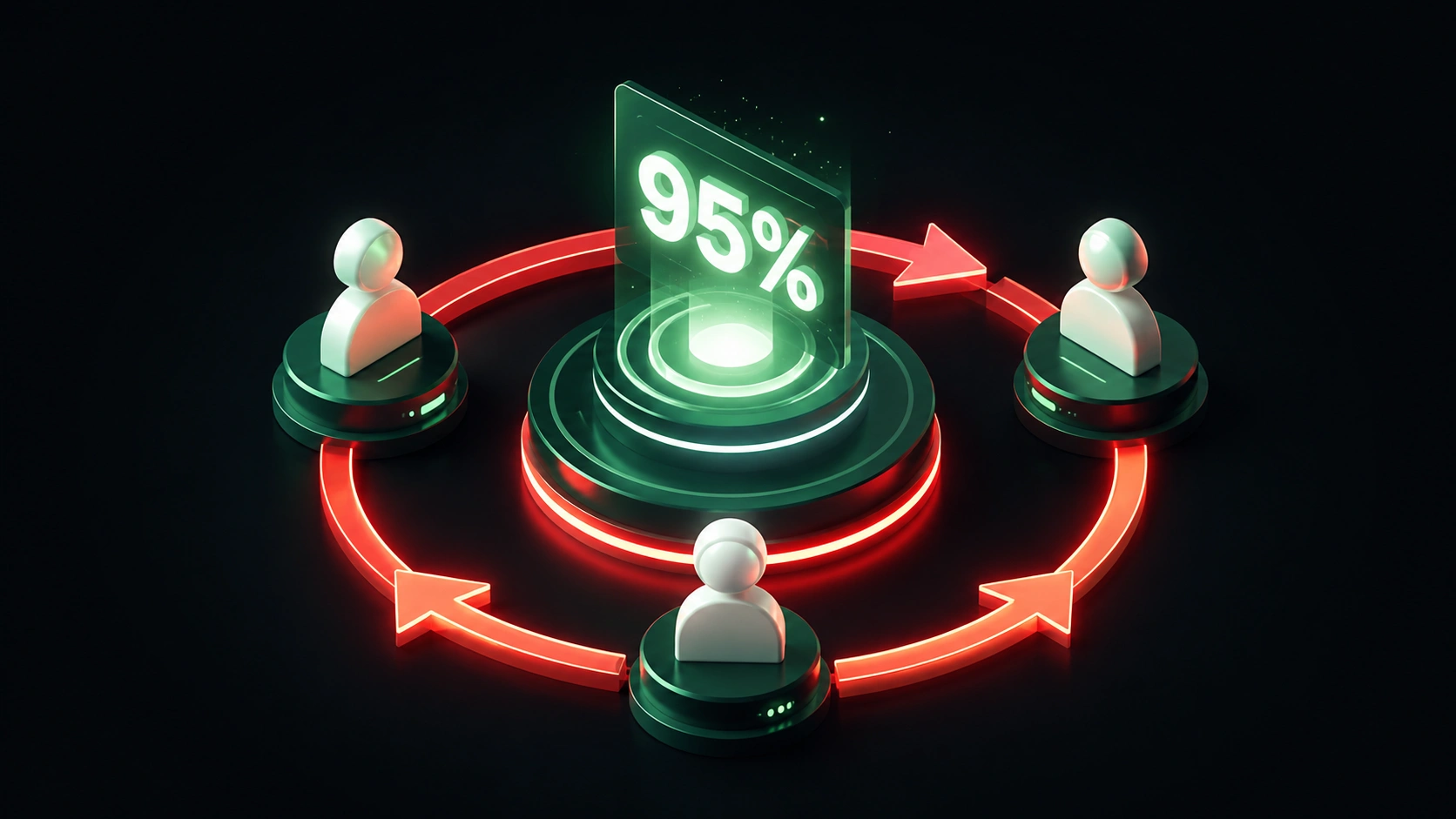
Nine in ten enterprise clients return for follow-on work — the only measure of delivery quality that cannot be faked.

Verified client reviews, independently collected — real feedback from real enterprise engagements.


Certified cloud partnerships with AWS and Microsoft Azure — enterprise infrastructure standards from day one.
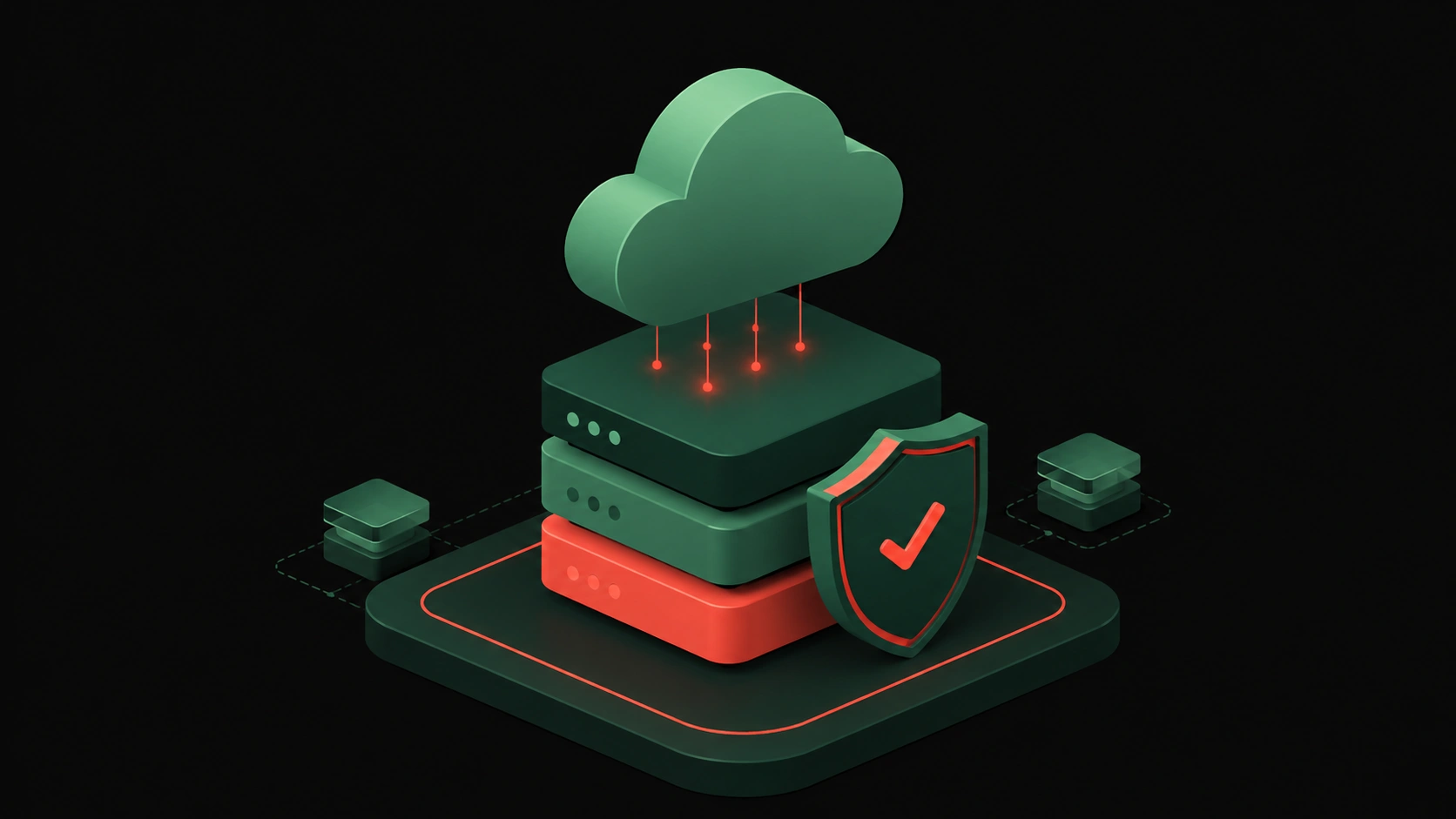

StackRoom, PeopleGrid, DataSense — proprietary pre-built products that go live in weeks, not months of custom build.
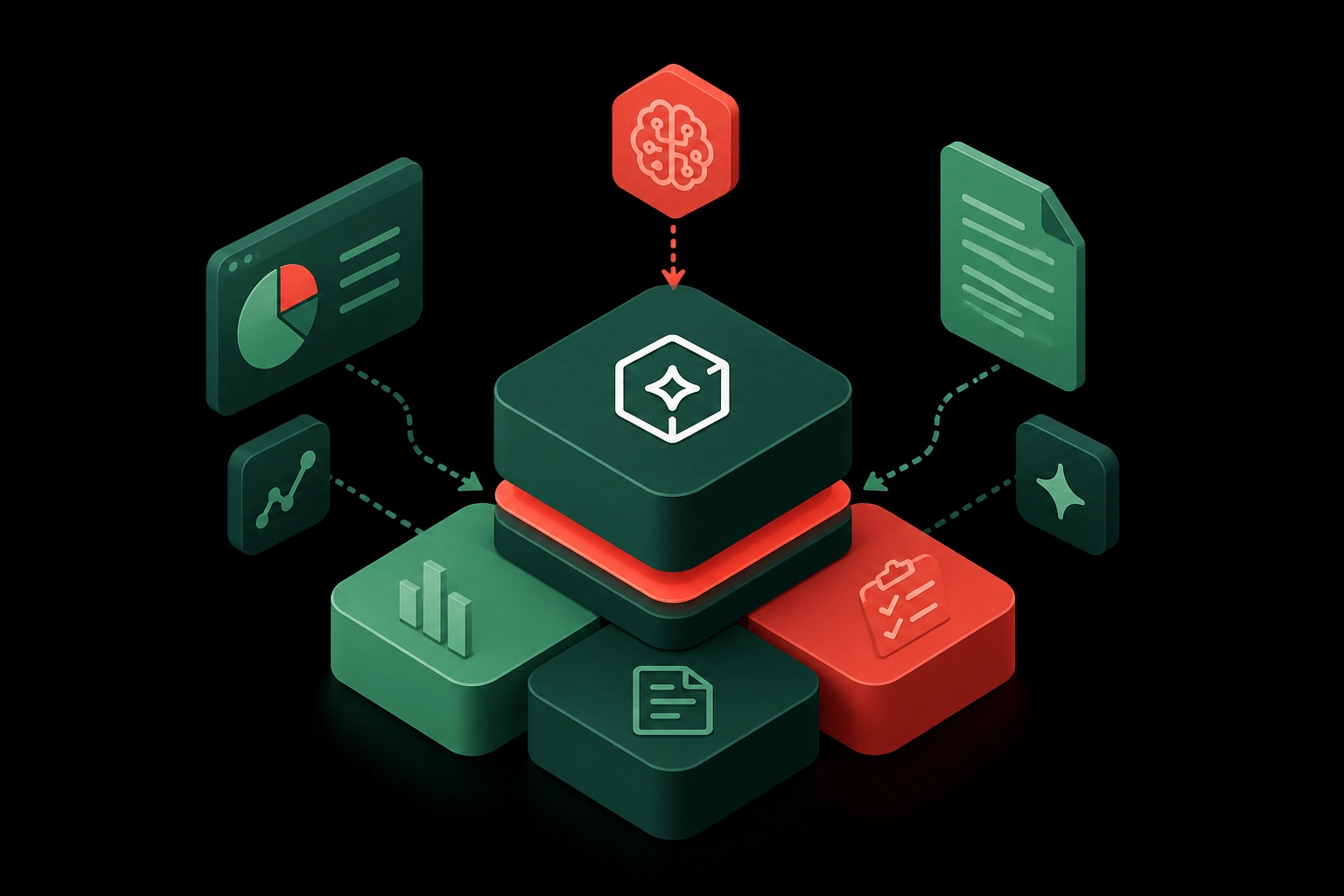

IP, data, and strategy protected before the first discovery call ends — not after contracts are signed.
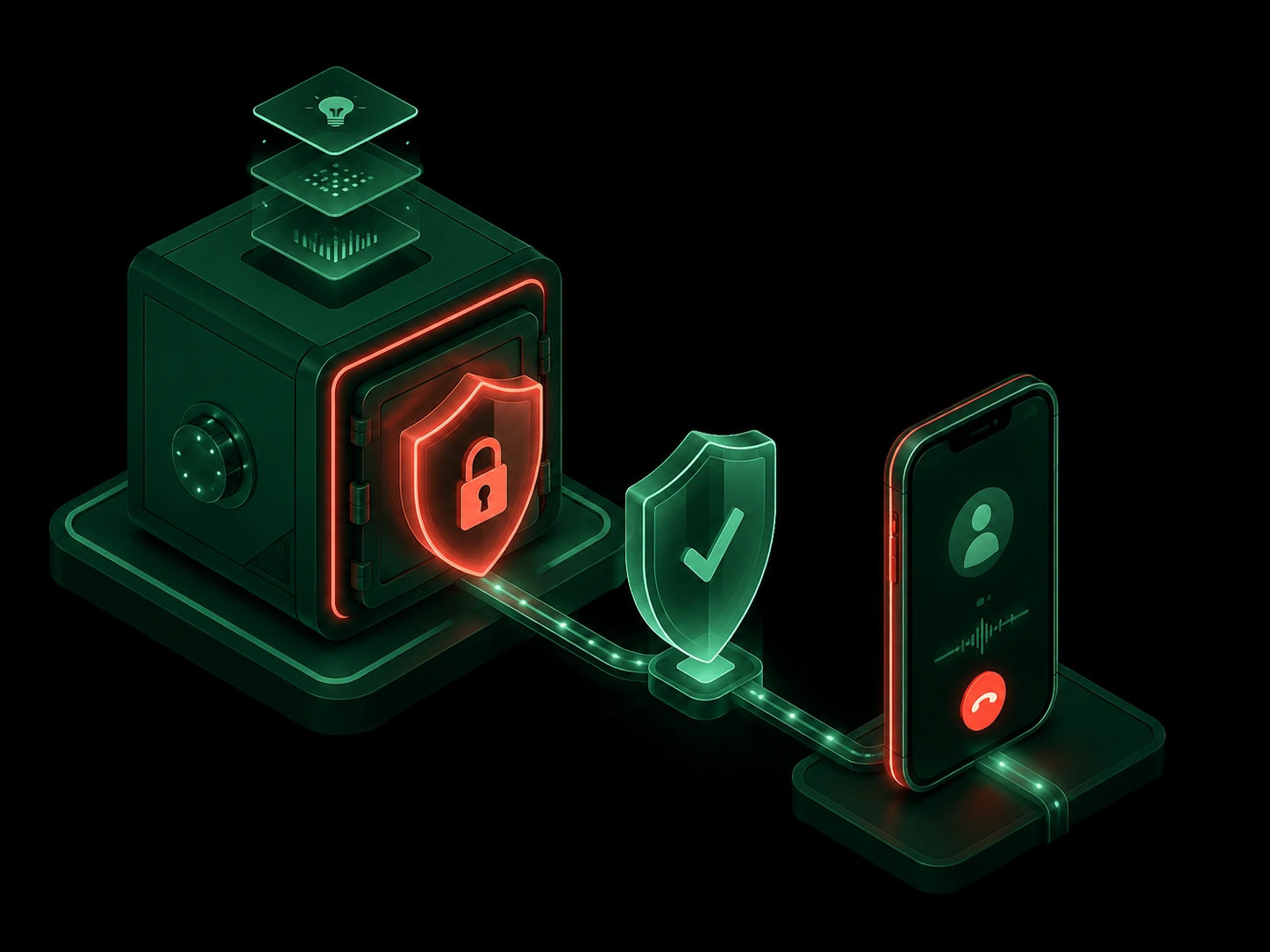

Post-deployment optimisation included in every engagement — we stay accountable until the system is performing.
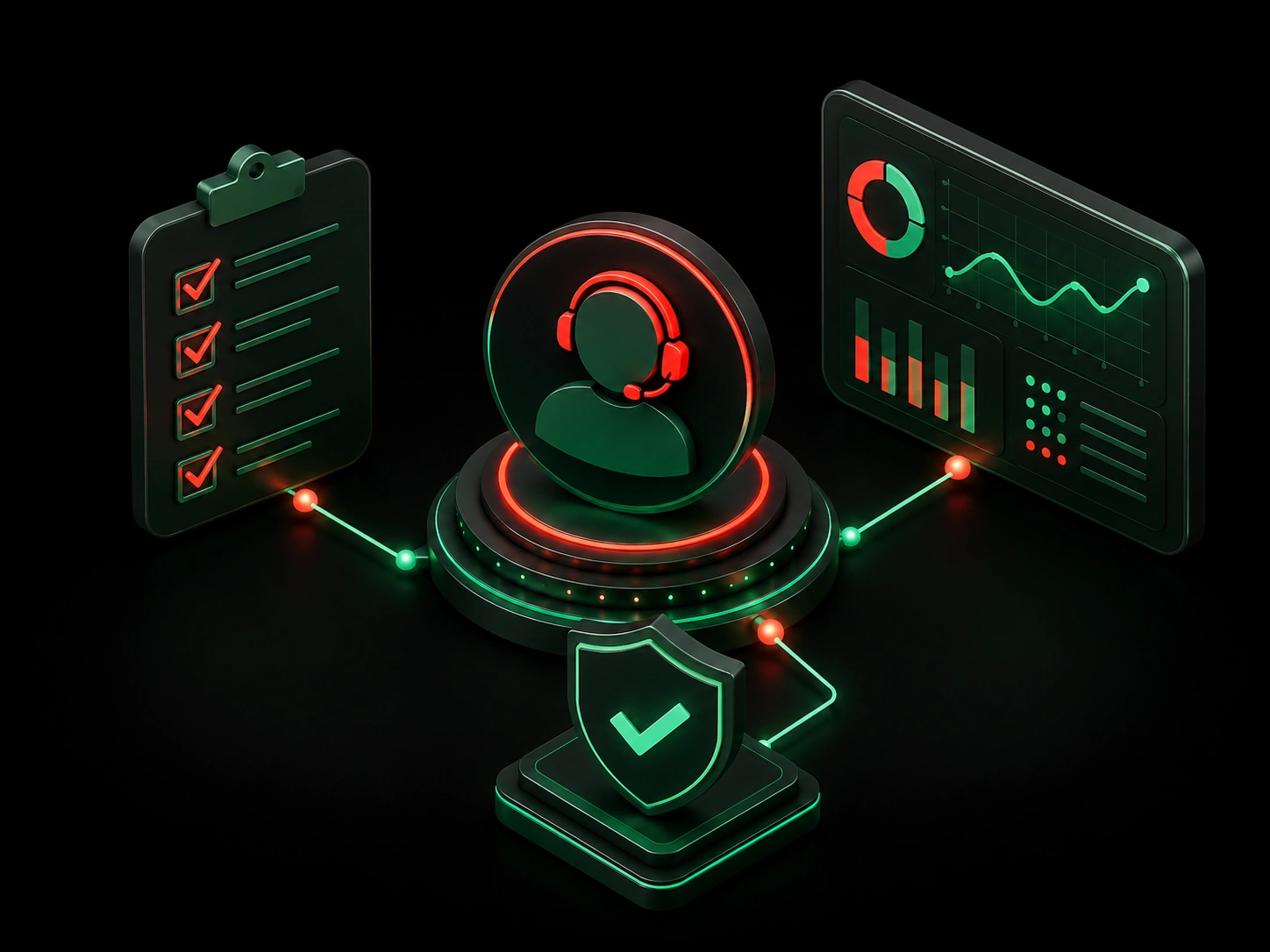
We import the register you already have, split it into the categories and locations your team actually uses, and print a QR label for every item — usually inside a day.
 Spreadsheet Imported, Not RetypedYour Categories, Sites & FoldersQR Labels on an Ordinary Printer
Kit starts moving through the system instead of around it. Every issue, transfer and return is one scan on a phone, so the record stays true without anyone maintaining it.
Scan to Issue, Scan to ReturnDue Dates That Chase ThemselvesRequests & Bookings From StaffWhen finance, audit or a departing employee raises the question, the answer is already on the record — attributed, timestamped, and exportable without anyone rebuilding it.
Scan-Based Audits That CloseFull Chain of Custody Per AssetClearance Evidence for OffboardingBook a free 30-minute discovery call with a senior StackRoom engineer — no slide deck, just questions about the kit you issue, the sites you run, and what a fixed-scope pilot would prove.










Enabled users to retrieve operational, financial, and project insights through natural language queries, transforming complex data analysis into instant, self-service intelligence.
See case study
 <12 Seconds
  10+ Systems
  Days → Minutes
  95%+
95%+ StackRoom runs on the same engineering stack we use for production enterprise systems — a hardened application layer, your choice of database, encrypted storage for documents and asset photos, and optional AI that stays inside your tenant. Hosted by us, or deployed entirely within your own network.
Built and run by VOCSO’s product engineering team — the same people who deliver our web application development, backend development and software development services for clients.
Modern, maintainable runtimes behind every screen, scan and workflow.
 TypeScript
 Node.js
 Python
 FastAPI
Your asset register lives in the database your IT team already supports.
 PostgreSQL
 MySQL
MySQL
 SQL Server
 MongoDB
 Redis
Redis
Optional AI for duplicate detection, invoice and warranty parsing, and asset-photo matching — with your own model keys.
 OpenAI
 Anthropic
 Azure OpenAI
 Google Gemini
 Mistral
 Groq
Groq
 DeepSeek
 OpenRouter
Semantic search across invoices, warranty documents, manuals and asset records.
 PGVector
 Pinecone
 Qdrant
 Weaviate
 FAISS
FAISS
 Milvus
Monitor, trace and report on the system holding your register.
 OpenTelemetry
 Grafana
Enterprise-grade cloud services, or your own on-premise environment.
 AWS
Azure
AWS
Azure
 GCP
GCP
 Docker
 Kubernetes
We prioritise the handover itself — the moment kit changes hands is where every register goes wrong.
Every handover is scanned and signed against a name and a date. “Who has it?” stops being a question anyone has to ask.
Serial, purchase cost, warranty, service history, photos and current holder all live on the same record — from delivery to disposal.
No proprietary tags and no dedicated scanners. Print QR labels on an ordinary printer and scan them with the phone in your pocket.
Run StackRoom in your own VPC or on-premise. Asset values, serial numbers and the people holding them never leave your boundary.
Walk the floor, scan what is there, and the register closes itself — ending with an accuracy figure finance can sign off.
Who issued it, who took it, who brought it back and when. Your chain of custody becomes evidence instead of memory.
Where CTOs and Security Officers stop scrolling. Your register carries purchase values, serial numbers and the names holding them — all of it stays inside your boundary.
01Connected Sources
Holds the chain of custody for every asset, enforces role-based permissions on each scan and transfer, and writes an immutable audit entry for every movement.
Data Stays in Your Tenant03Role-Scoped Access
Your register holds purchase values, serial numbers and the names of the people carrying your equipment — so StackRoom is architected to clear the privacy, security and data-protection bar your IT, finance and audit teams hold you to. We design to the standards and frameworks enterprises depend on, across AWS, Azure, and Google Cloud.

General Data Protection Regulation

For equipment registers in healthcare
India’s personal data protection framework
 Proof-of-Value Pilot
Fixed fee. 2–4 weeks on one site or one department.
Your register imported, your labels printed One real audit run end to end Success criteria agreed before we start Pilot fee 100% credited into either model StackRoom Cloud
Annual subscription. One subscription, all-inclusive — no setup fee.
Live in days — hosted and managed for you Priced by asset count + seats, never per scan Mobile scanning and every update included Best for growing mid-market teams StackRoom Enterprise
Annual licence — implementation is a one-time fee.
Runs in your VPC — asset data never leaves SSO, multi-site rollout & white-label branding Guided rollout, label setup, training & SLA Built for government & regulated environmentsCommercial terms are scoped to your asset count, sites and deployment model during the pilot.
Book a call
First-hand experiences from teams that put VOCSO-built systems to work — signed, scannable, and accountable from the first handover.
View all client testimonials“Vocso team has really creative folks and is very co-operative to implement client project expectations. MicroSave Consulting had great experience working with Anju and Prem.”

“Working with Deepak and his team at Vocso is always a pleasure. They employ talented staff and deliver professional quality work every time.”

“We love how our website turned out! Thank you so much VOCSO Digital Agency for all your hard work and dedication.”

“VOCSO SEO & SEM services helped me find new customers in a small budget. Their advanced SEO strategies made us visible to everyone.”

“Vocso team has really creative folks and is very co-operative to implement client project expectations. MicroSave Consulting had great experience working with Anju and Prem.”
“Working with Deepak and his team at Vocso is always a pleasure. They employ talented staff and deliver professional quality work every time.”
“We love how our website turned out! Thank you so much VOCSO Digital Agency for all your hard work and dedication.”
“VOCSO SEO & SEM services helped me find new customers in a small budget. Their advanced SEO strategies made us visible to everyone.”
Start with a fixed-scope pilot on one site — we import your register, print your labels, and run one real audit end to end, with success criteria agreed up front. Live in weeks, inside your own network if you need it. No slideware, no canned demo, no commitment beyond the pilot.
deepak@vocso.com — no forms, no funnels.
StackRoom is asset and equipment tracking for teams that actually hand kit out. Register everything you own, print a QR label for it, and issue it against a name and a signature — so laptops, tools, vehicles and site gear always have a holder, a date and a paper trail. It is built and backed by VOCSO, and runs in the StackRoom cloud or fully inside your own network.
Anything with a serial number or a label on it. Laptops, phones, monitors and peripherals; power tools, test equipment and safety gear; furniture, vehicles and site kit. You define your own categories and folders, so a construction firm and a software team can run the same system without either one bending to the other's vocabulary.
No. StackRoom prints QR labels on an ordinary label printer, and your team scans them with the phone already in their pocket — no dedicated scanner, no proprietary tags, no per-device licence. If you already use barcode scanners, those work too.
Import it on day one. Map your columns once and StackRoom brings across asset names, serials, purchase values, categories and current holders. Most teams are live on real data within a day, which is why the spreadsheet gets retired instead of quietly running alongside.
Scan the label, pick the person, set a due date — that is the whole handover, and it takes seconds. The asset now shows a holder and a due date on every screen. Returns are the same scan in reverse, and anything past its date surfaces as overdue without anyone having to go looking.
Yes. Staff raise a request or reserve an asset for a date range from their own portal, and it lands in the IT or admin queue for approval instead of arriving as a message at 9pm. Bookings stop two people being promised the same projector for the same morning.
Open their record and you see everything they hold and what it is worth. Offboarding runs as a clearance list — each item returned, reassigned or written off, signed by the right person — and the record cannot close until the list does. That is usually the single fastest payback in the whole system.
Walk the floor and scan what you find. StackRoom ticks items off the register live, flags anything missing, and closes with an accuracy figure you can hand to finance. What used to be days of clipboard counting turns into an afternoon, and the result is evidence rather than an assertion.
Yes. Provider, plan and expiry sit on the asset itself and count down, so you hear about cover before it lapses rather than after the repair quote. Service schedules and repair tickets attach to the same record, and software licences are tracked alongside the hardware they run on.
Yes. StackRoom deploys in our managed cloud or fully inside your own VPC or on-premise environment. Your asset register carries purchase values, serial numbers and the names of the people holding them, so regulated and government clients usually choose the self-hosted route, with SSO wired to your existing identity provider.
Start with a fixed-fee pilot on one site or one department, with success criteria agreed before we begin. After that it is an annual subscription priced by asset count and seats — never per scan, never per transaction — or an annual licence if you run it yourself. The pilot fee is credited into whichever model you choose.
StackRoom is built by VOCSO, a product-engineering team with a track record of designing, shipping and operating enterprise systems for corporate and government clients — that experience, productized. Enterprise engagements include guided rollout, label and scanning setup, team training and a dedicated SLA, with quarterly reviews as you add sites.
One suite of pre-built AI products for modern enterprise teams — each solving a different job, all built on the same governed, secure foundation.