Since 2009
Enterprise software delivery — a track record built across technology cycles, not just the current AI wave.



AI built for how professional-services and consulting firms actually make money — protecting billable hours, winning more bids, and turning institutional knowledge into leverage. From proposal and RFP automation to project knowledge systems and delivery copilots, governed and secure enough for client-confidential work. Deployed in production.













Building software since 2009, validated in numbers

We map AI to the metrics partners actually watch — utilization, realization rate, win rate, and write-offs — and sequence the use cases that move them, before any build.
Turn every past engagement, deliverable, and precedent into an answer your team finds in seconds — grounded, cited retrieval across your entire archive, not a guess.

Draft first-pass proposals, reports, and client deliverables from your own winning past work — so seniors edit a strong draft instead of starting from a blank page.

Connect AI to the systems your firm runs on — your PSA, CRM, document management (iManage, NetDocuments, SharePoint), time & billing, and ERP — via secure connectors or MCP.

Agents that gather, synthesize, and cite from your archives and external sources — collapsing the hours juniors spend on due diligence, market scans, and bid research.

A governed assistant grounded in your firm's knowledge, so anyone finds 'what did we do for a similar client?' in seconds without interrupting a partner.

Orchestrate end-to-end engagement workflows — intake, research, drafting, QA, and delivery — across specialized agents, each with a defined role and approval scope.

Copilots embedded in Word, Outlook, and Teams that draft deliverables, summarize matters, and answer from firm knowledge — production-grade help where your people already work.

Draft first-pass proposals and RFP responses from your own winning past work — pulling the right case studies, bios, and pricing — so seniors edit instead of starting cold.

Ethical walls, matter-level access control, audit trails, and hallucination checks — so AI respects engagement boundaries and survives a client's confidentiality and security review.

Automate the non-billable drag — timesheet narratives, billing prep, status reports, and engagement admin — so senior people stop losing chargeable hours to overhead.
Our AI is tailored to the specific workflows, data environments, and governance requirements of each industry we serve.
Consulting & Advisory. Proposal and bid automation, engagement knowledge retrieval, and resource scheduling for multi-practice consultancies competing on speed and expertise.
Trusted by Rodic Consultants
 Proposal & bid agent powered by DocSense2,100+ projects indexed at Rodic ConsultantsResource allocation agents with conflict flagging
SaaS & Digital Platforms. Build intelligent product experiences with in-product AI copilots, automated onboarding, and analytics agents that lift activation and retention.
In-product AI copilot developmentAutomated user onboarding agentsUsage analytics & churn-prediction agentsEngineering & Infrastructure. Mine past project documentation for reuse, automate bid and tender responses, and speed up compliance and specification checks across engagements.
Project document & drawing retrieval
Tender and bid response automationStandards and compliance checkingFinancial Services. Automate document review, compliance checks, KYC workflows, and client reporting with governed, fully auditable AI.
Contract review & clause extractionAML / KYC document agentsRegulatory compliance monitoringSupply Chain & Logistics. Improve vendor communication, demand forecasting, and inventory intelligence with AI agents that act on live operational data.
Vendor onboarding & communication agentsInventory anomaly detectionDemand forecasting & reorder agentsHealthcare & Research. Enable medical document intelligence, research summarization, and secure knowledge assistants — built for privacy-sensitive, regulated environments.
Clinical & research document summarizationKnowledge assistants over medical literatureSecure, compliant data handlingCleanTech & Mobility. Support sustainability operations, energy monitoring, fleet intelligence, and ESG reporting with AI agents.
Energy usage monitoring & reportingFleet optimization & route planningSustainability & ESG reportingEdTech Platforms. Improve learner support, content operations, and course personalization with AI agents embedded inside your platform.
AI tutor & student support agentsCourse recommendation & learning pathsContent generation & assessment automationNon-Profits & Foundations. Automate grant research, donor communication, and impact reporting so teams spend more time on mission and less on paperwork.
Grant discovery & proposal draftingDonor engagement & communicationImpact measurement & reporting






We pair deep AI engineering with an understanding of how services firms actually make money — billable time, leverage, and client trust — to ship AI that earns its keep.
Enterprise software delivery — a track record built across technology cycles, not just the current AI wave.

Independently certified, annually audited — meets the security baseline enterprise procurement actually checks.

Nine in ten enterprise clients return for follow-on work — the only measure of delivery quality that cannot be faked.


Verified client reviews, independently collected — real feedback from real enterprise engagements.

Certified cloud partnerships with AWS and Microsoft Azure — enterprise infrastructure standards from day one.

DataSense, DocSense, BidSense — proprietary pre-built AI products that go live in weeks, not months of custom build.

IP, data, and strategy protected before the first discovery call ends — not after contracts are signed.

Post-deployment optimisation included in every engagement — we stay accountable until the system is performing.
 What AI Really Changes in a Professional-Services Firm
Not the hype version — the honest one. Where AI earns its place in a business that sells billable time, what actually decides whether it works, and the tension inside the partnership model that nobody names out loud.
The firms pulling ahead aren't running AI experiments — they're recovering hours lost to research, drafting, and admin, and reinvesting them in fee-earning work. The ROI case here is capacity, not novelty, and that's the case that gets signed off.

A large share of fee-earner time goes to work clients don't pay a premium for — assembling proposals, reviewing contracts, synthesising research, writing status reports, hunting for what the firm did on a similar engagement. The live AI deployments in mid-market consulting, advisory, and Big-4-adjacent practices target exactly that: proposal and bid drafting from past wins, contract and clause review, client-report synthesis, and knowledge retrieval across the archive. None of it touches the judgment clients pay for; all of it gives time back.
Every deliverable that takes 2 hours instead of 8 frees 6 hours of billable capacity. A firm with 80 consultants running a few AI-assisted workflows recovers hundreds of hours a week without adding a single hire — capacity it can either bill or reinvest in winning more work. That's the number you take to the partnership: hours recovered and redeployed, not a clever demo.
The advantage compounds. The more of your engagement archive the system indexes, the better its retrieval and reuse get, so the same tools deliver more next quarter than this one. Firms that started building this discipline early are already ahead on margin and turnaround, and that lead widens as their knowledge base deepens — which is exactly why catching up later is harder than starting now.
An AI tool that doesn't know your methodology, your past engagements, and your clients produces generic output your people won't trust — and quietly stop using. The entire value is in grounding it on your firm's actual work.

Most AI pilots that stalled in services firms shared one root cause: the agent had no proper data layer, so its output was generic and unreliable. A tool that doesn't know your frameworks, your deliverable formats, or what you did for a similar client last year is just a chatbot with worse manners — and consultants abandon it fast. The first decision isn't which model; it's how it reaches your engagement archive, CRM, and document store.
An agent trained on your methodology, past deliverables, and quality standards behaves like a senior reviewer embedded in every workstream — pulling the right precedent, drafting in your house style, and flagging what's missing. It raises the floor on quality precisely because it knows how your firm actually works, not how consulting works in general.
A template vendor shows an agent demoed a hundred times on clean, predictable inputs. Ask what happens when it meets your CRM schema, your legacy document formats, or a workflow that doesn't fit the standard pattern. We start with your data, systems, and edge cases before designing anything — and tell you honestly when the infrastructure isn't ready, which template vendors won't.
The other failure mode is a demo that impresses and then breaks at scale, or an agent that acts outside its intended scope because governance was an afterthought. We build data-first, governance-in, and production-ready from day one — because an agent that only works on tidy inputs in a sandbox isn't a tool your firm can rely on with client-confidential work.
Professional-services firms churn people, and every departure takes project context, client preferences, and hard-won lessons with it. Unless you've captured that knowledge while people are still here, you re-buy it every time someone leaves.

Average tenure in most firms is only a few years, and a lot of what makes the firm effective is undocumented — how you approached a similar client, why a past engagement went the way it did, the lessons that never made it into a template. When that person leaves, the context leaves with them, and the next team rediscovers it the expensive way.
A system indexed on your project archive, client notes, and internal documentation turns scattered, departing knowledge into something searchable — grounded in your real engagements, with citations back to the source deliverable. Hard-won precedent stops depending on whether the one person who remembers it is still on the payroll.
Instead of interrupting a partner or starting from a blank page, a junior asks the system how the firm has handled something before and gets an answer drawn from real past work in seconds. It frees senior time previously spent answering questions that were already answered somewhere — and raises the quality of what juniors produce.
For a firm whose value is its accumulated expertise, capturing that expertise before it churns out is genuine risk management, not a nice-to-have. It protects delivery quality through turnover and acquisitions — and it's increasingly something clients and buyers probe when they assess how resilient a practice really is.
A leaner kind of services firm is emerging — partially AI-powered, able to offer comparable outputs at a noticeably lower price. Your enterprise clients' procurement teams are already putting their proposals next to yours.

Newer firms are building delivery that's partially agent-powered from the start, so they carry less cost per deliverable and can price below established players for work that looks comparable on paper. They're not winning on brand or depth — they're winning on the cost of producing the routine 70% of an engagement, which is exactly the part AI compresses.
Enterprise buyers run structured procurement, and your proposal increasingly sits beside a leaner competitor's at a lower number. When the outputs look similar, price and turnaround start to decide — and 'we've always done it this way' is not an answer that survives a procurement scorecard.
You hold advantages a new entrant can't match — relationships, track record, depth of expertise. Adding AI to your delivery lets you defend on cost and speed without giving up that edge, instead of waking up to find clients have quietly migrated to a cheaper option. The window to do this deliberately is open now, before the gap becomes obvious to your clients.
Recovered capacity isn't only a cost story — it's a pitch. A firm that can turn a proposal around in a day, or a first deliverable in days instead of weeks, has a concrete advantage to sell. AI lets you compete on responsiveness, which is often what an enterprise client feels most, rather than racing only on rate card.
In most firms, quality depends on who's staffed — the partner-led job is exceptional, the junior-led one needs rework. AI grounded in your standards raises the floor across every workstream, so the client experience doesn't swing on the org chart.

The uncomfortable truth in services delivery is that the same firm produces very different work depending on who's on the team. Clients notice it, and rework on the inconsistent engagements quietly eats margin. The opportunity isn't to make your best people better — it's to make every engagement closer to your best.
An agent grounded in your methodology, past deliverables, and quality criteria acts like a senior reviewer that's present on every job — surfacing missing sections, inconsistent formatting, and deviations from how the firm does things, for a human to confirm. It catches on the junior-led engagement what a partner would have caught, before it reaches the client.
Mistakes in professional services follow patterns: missed contract clauses, inconsistent data, overlooked compliance obligations. An agent applying structured validation catches these the same way every time — not just when the reviewer is fresh and paying attention. On fixed-fee work, every error caught before issue is rework avoided and risk reduced.
Procurement teams now ask vendors directly: what do your agents do with client data, can you show an audit trail, what's your human-oversight model? A firm with auditable, documented, explainable AI workflows answers confidently — and increasingly that documented governance is itself a reason to win the contract. It's no longer just risk management; it's differentiation.
The hardest part of AI in a services firm isn't the technology — it's the partnership model. If AI cuts the hours on a deliverable, what happens to the revenue tied to those hours? Get this wrong and your own people quietly resist the tool.

If a fee earner is measured on billable hours and AI makes the work faster, the rational individual response is to not use it — or to not report the time saved. This is the single biggest reason promising AI pilots stall inside services firms, and it's invisible on a technology roadmap. We surface it in week one and design the rollout around it, because a tool people won't adopt has zero ROI no matter how good the model is.
The firms winning with AI are reframing the saved time as recovered capacity — more engagements per team, faster turnaround as a selling point, and a gradual shift toward fixed-fee and value-based pricing where the efficiency gain becomes margin rather than lost revenue. AI doesn't force you to abandon the billable hour overnight; it gives you the option to compete on outcomes where that's the stronger position.
Adoption rises sharply when AI is positioned as leverage for your best people rather than a headcount threat. The framing that works: the agent does the first 70% — the research, the draft, the data pull — so your experts spend their hours on judgment, client relationships, and the 30% that actually commands premium fees. Pair that with involving sceptics in the pilot and measuring success in hours returned, and resistance turns into pull.
Start where the saved time is unambiguously good for everyone — non-billable overhead, proposal effort you write off anyway, or capacity-constrained teams turning away work. Prove the model there, settle the pricing and incentive questions on low-stakes ground, and you earn the internal trust to take AI into the billable core on your own terms. We help you choose that first workflow deliberately, not by accident.
Weeks 1–2
We pinpoint the workflow with the best ROI for your firm — and the adoption and incentive realities around it — before any development begins.
Stakeholder interviews & workflow mappingData source audit & access assessmentAgent authority scope definitionHuman handoff condition mappingAgent design document sign-offWeeks 3–5
We build the core agent architecture, including model selection, tool connectors, memory, and orchestration logic.
LLM selection & benchmark testingTool connector architectureMemory layer design (short + long term)Orchestration framework setupSandbox prototype for stakeholder reviewWeeks 5–8
We connect the system to your PSA, CRM, document management, time & billing, and knowledge sources through secure data flows.
Live system API integration (CRM, ERP, docs)RAG layer configuration (if required)Data security & access reviewMCP / connector development for legacy systemsIntegration test suiteWeeks 8–9
We implement matter-level access, audit trails, escalation controls, and safety rules so the system holds up to client confidentiality and security review.
Action audit trail implementationHallucination guardrail setupHuman-in-the-loop escalation gatesCost & latency monitoring dashboardZero Trust access controls reviewWeeks 9–12
We launch a controlled pilot, gather real-user feedback, refine the system, and move it into production with support.
Controlled pilot with real usersStructured feedback & iterationProduction deploymentFull runbook & documentation90-day post-launch support (included)Book a free 30-minute discovery call with a senior AI engineer — no slide deck, just questions about your workflows, your data, and your goals.










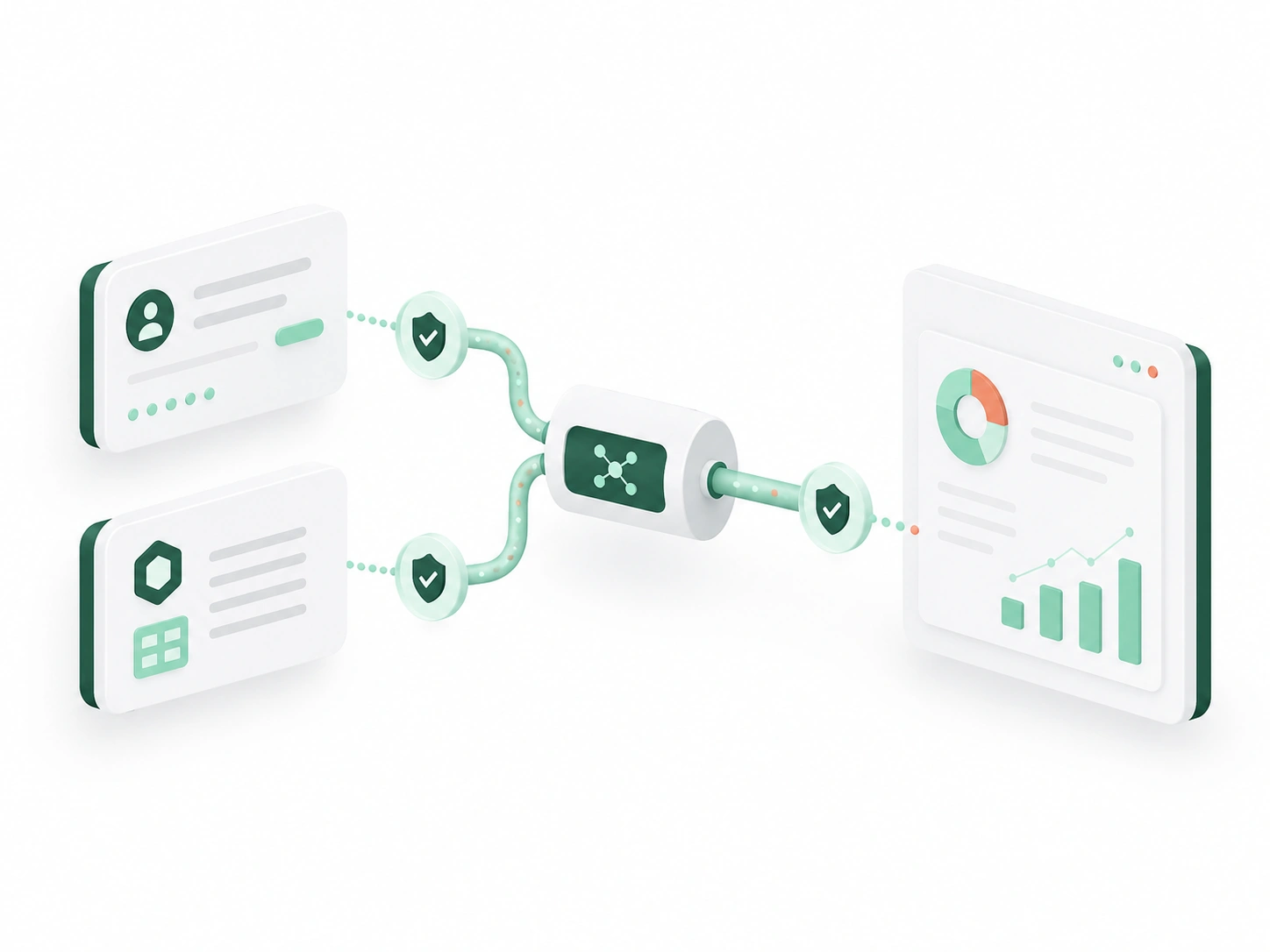
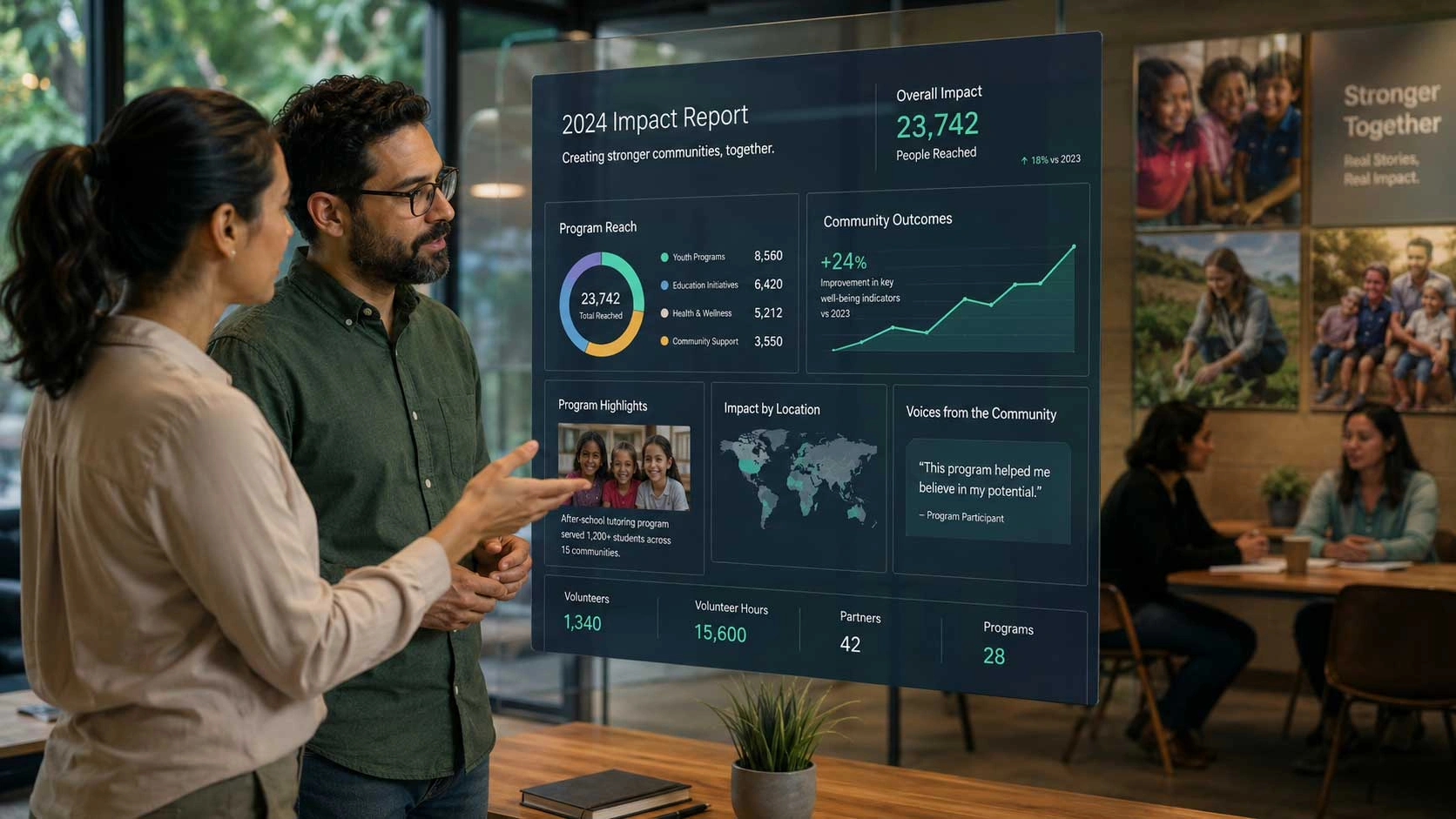
Enabled users to retrieve operational, financial, and project insights through natural language queries, transforming complex data analysis into instant, self-service intelligence.
See case study
 <12 Seconds
  10+ Systems
  Days → Minutes
  95%+
95%+ We pair best-in-class AI models, orchestration frameworks, and vector databases with the business systems services firms actually run on — selecting the right combination for your stack, your use case, and your confidentiality requirements.
State-of-the-art models for reasoning, generation, and tool use.
 OpenAI GPT-4
 Claude
 Google Gemini
 Cohere
 Mistral
Coordinate agents, tools, and workflows with reliability and control.
 LangChain
 LangGraph
 AutoGen
 CrewAI
High-performance vector databases for semantic search and retrieval.
 Pinecone
 Weaviate
 Milvus
 Qdrant
 Chroma
Store, recall, and manage agent memory and long-term state.
 Redis
Redis
 PostgreSQL
 Zep
Zep
 LangMem
Modern languages and runtimes for building AI applications.
 Python
 TypeScript
 Node.js
 FastAPI
Connect to tools, APIs, and external systems seamlessly.
 MCP
MCP
 REST APIs
 GraphQL
 n8n
n8n
 Zapier
 Webhooks
 Salesforce
 Microsoft 365
Monitor, trace, and evaluate AI systems in production.
LangSmith
 Langfuse
 OpenTelemetry
 Grafana
 Prometheus
Enterprise-grade cloud services and infrastructure foundations.
 AWS Bedrock
 Azure OpenAI
 GCP Vertex AI
 Docker
 Kubernetes
Services firms handle their clients' most confidential data — so AI must clear the same security and confidentiality bar your clients hold you to. We design to the standards and frameworks your engagements depend on, across AWS, Azure, and Google Cloud.

General Data Protection Regulation

Information Security Management Systems

System and Organization Controls

For AI applications in healthcare
Responsible AI principles and implementation

AI Risk Management

Principles and implementations

India’s personal data protection framework

Auditability frameworks

Standards and evaluation practices
 Fixed-Price POC
Validate an AI agent use case with a low-risk, fixed-scope engagement designed to prove value, feasibility, and ROI before committing to a full build.
4–6 week delivery timeline Defined scope & success criteria Low commitment, fixed budget Executive-ready ROI assessment Dedicated AI Team
A cross-functional AI agent team embedded into your environment — working within your processes, security requirements, and communication tools.
AI, Data & MLOps specialists Named delivery lead Works within your NDA & security policies Scalable team composition Project-Based
End-to-end delivery of a defined AI agent capability with fixed scope, timeline, and commercial terms. Full knowledge transfer and documentation included.
Fixed scope & pricing Defined milestones & deliverables Dedicated project management Knowledge transfer & documentationLet's discuss the right engagement model for your project?
Book a call
First-hand experiences from services firms that put AI to work, recovered billable capacity, and achieved measurable results.
View all client testimonials“Vocso team has really creative folks and is very co-operative to implement client project expectations. MicroSave Consulting had great experience working with Anju and Prem.”

“Working with Deepak and his team at Vocso is always a pleasure. They employ talented staff and deliver professional quality work every time.”

“We love how our website turned out! Thank you so much VOCSO Digital Agency for all your hard work and dedication.”

“VOCSO SEO & SEM services helped me find new customers in a small budget. Their advanced SEO strategies made us visible to everyone.”

“Vocso team has really creative folks and is very co-operative to implement client project expectations. MicroSave Consulting had great experience working with Anju and Prem.”
“Working with Deepak and his team at Vocso is always a pleasure. They employ talented staff and deliver professional quality work every time.”
“We love how our website turned out! Thank you so much VOCSO Digital Agency for all your hard work and dedication.”
“VOCSO SEO & SEM services helped me find new customers in a small budget. Their advanced SEO strategies made us visible to everyone.”
The first AI project decides whether you get a second one. Pick a use case that's too ambitious, too political, or too hard to measure, and a failed pilot poisons the well for years.
For a services firm, the best first use case is high-volume, low-judgment, and unambiguously good for everyone — so the saved time is a clear win, not a threat. Get the first one right and the proof of value unlocks the budget and trust for everything after.
High frequency, repeatable — Target work your firm does constantly — proposals, status reports, research, document review — so a small per-task saving compounds into real recovered hours.
Painful and non-billable — Starting on overhead or write-off work sidesteps the billable-hour debate entirely — nobody loses revenue, everyone gets time back.
Clean, accessible data — Pick a workflow whose data already lives somewhere reachable; if the inputs are locked in scattered PDFs and inboxes, fix that first or choose another use case.
Measurable in one number — Choose something where success is a single metric a partner cares about — hours per proposal, turnaround time — so the result is undeniable.
At VOCSO, use-case selection is the first thing we do — because the highest-ROI workflow for your firm is rarely the flashiest one, and the wrong first choice is the most expensive mistake in the whole program.
Your clients trust you with their most sensitive information. One AI misstep — data leaking across engagements or into a public model — and you're not explaining a bug, you're explaining a breach.
Confidentiality isn't a feature you add to AI for a services firm; it's the precondition for deploying it at all. The system has to respect the same engagement boundaries and duties your professionals work under.
Ethical walls & matter-level access — AI sees only the matters and clients a given user is cleared for — engagement boundaries are enforced in the system, not left to good intentions.
Your data never trains public models — Client data stays yours; we deploy so that confidential information is never used to train models that could surface it elsewhere.
Stays inside your perimeter — For the most sensitive work, the system runs in your tenant or fully self-hosted, so data residency has a clean, defensible answer.
Auditable for client review — Full logs of what was accessed and produced, so you can answer a client's security questionnaire or audit with evidence, not assurances.
VOCSO designs confidentiality controls from day one — because for a services firm, AI that can't pass your client's security review can't be deployed, no matter how capable it is.
Here's the question every services-firm leader eventually asks: if AI cuts a deliverable from 8 hours to 2, and we bill by the hour, did we just delete six hours of revenue?
This is the real obstacle to AI in services firms — not the technology, the business model. If you don't resolve the incentive question, your own people will quietly refuse to adopt the tool, and the ROI never materializes.
Saved time is recovered capacity — Reframe freed hours as the ability to take on more engagements or turn work around faster — capacity you can sell, not revenue you lost.
A nudge toward value pricing — AI strengthens the case for fixed-fee and outcome-based pricing, where efficiency becomes margin instead of a smaller invoice.
Fix the individual incentive — If fee earners are measured purely on hours, they're punished for using AI; we help you adjust the metrics so the tool and the people are aligned.
Start where it doesn't bite — Prove the model on non-billable or write-off work first, so you settle pricing and incentives on low-stakes ground before touching the billable core.
VOCSO raises the incentive and pricing question in week one — because the most common reason a strong AI pilot dies in a services firm has nothing to do with the model and everything to do with the comp plan.
Your firm's real asset isn't its software — it's decades of engagements, deliverables, and hard-won judgment. Most of it is locked in drives and inboxes, and it walks out the door every time someone leaves.
The firms pulling ahead with AI are the ones that turned that scattered institutional knowledge into something searchable and reusable. This is the advantage a generic AI tool can never give a competitor — it's built on what only your firm knows.
Index what you already have — Past proposals, reports, contracts, and project archives become a grounded knowledge base your team can query in seconds instead of days.
Capture knowledge before it leaves — With average tenure around three years, a knowledge system preserves context and lessons that would otherwise depart with every resignation.
Grounded, cited answers — Retrieval is tied to your source documents with citations, so people trust the output and can verify it — not guess whether the AI made it up.
Quality that travels — Your best methodology and templates become available on every engagement, so a junior-led project benefits from senior-level precedent.
VOCSO builds knowledge systems on your firm's own corpus — because a model anyone can buy is not a moat, but your institutional knowledge, made usable, is.
You can build a brilliant AI tool and watch it go unused. In services firms, the failure mode is rarely the technology — it's smart, busy professionals who never change their habits.
Adoption is the difference between a line item and a return. A tool used by 15% of the firm delivers a fraction of its value; the work is in making AI the obvious, easier path for the people who do the billable work.
Meet people in their tools — Embedding AI in Word, Outlook, and Teams beats a separate app no one opens — adoption follows the path of least resistance.
Position it as leverage, not threat — Framed as 'the AI does the first draft so you do the judgment', AI becomes something your best people want, not something they fear.
Win over a sceptic early — Involving a respected doubter in the pilot and letting the results convince them turns your hardest critic into your most credible advocate.
Measure and celebrate hours returned — Reporting time saved in business terms — and recognizing the teams using it — creates the social proof that pulls the rest of the firm along.
VOCSO designs the rollout, not just the system — because in a services firm, the model is the easy part and adoption is where the ROI is actually won or lost.
"It feels faster" won't survive a partners' meeting. To fund the next phase of AI, you have to prove its value in the metrics that already run your firm.
Services firms already live by a handful of numbers — utilization, realization, win rate, write-offs. The strongest AI business case doesn't invent new metrics; it moves the ones leadership already watches.
Utilization & recovered capacity — Track the billable hours AI frees from overhead and research, then where that capacity is redeployed — the clearest line from AI to revenue.
Realization & write-offs — Faster, more consistent work means fewer hours written off and higher realization on fixed-fee engagements — margin you can attribute directly.
Win rate & speed-to-proposal — Measure how proposal automation affects how many bids you submit and how many you win — top-line impact, not just efficiency.
Baseline before you build — We capture the 'before' numbers up front, so the improvement is provable and credited to the AI rather than argued about later.
VOCSO instruments the business case in your firm's own language — so when the partners ask what AI is worth, the answer is a number on the metrics they already trust, and the budget to scale follows.
You delivered exactly what you said you would in exactly the budget and in exactly the timeline.







 Transparency on every decision Talented Team of AI Engineers Smooth Collaboration & Reporting Efficient & Adaptive Workflow Strict Privacy Assurance with NDA 12 Months Free Post-Launch Support On-time Delivery, No Surprises ISO 27001 Certified Engineering
Most firms start with one high-value workflow — proposal automation, knowledge retrieval, or status reporting. We help you scope it, prove the hours saved, and settle the adoption and pricing questions before you scale. No open-ended contracts. No ambiguous scope.
deepak@vocso.com — no forms, no funnels.
This is the right question, and it's the one most vendors ignore. If AI makes a deliverable faster and you bill purely by the hour, the naive reading is lost revenue. The firms winning with AI reframe saved time as recovered capacity — more engagements, faster turnaround as a selling point — and use it to shift selectively toward fixed-fee and value-based pricing where efficiency becomes margin. We raise this in week one and design the rollout (and the first use case) around your pricing and incentive model, because if your own people are penalised for using AI, they won't — and the ROI never lands.
It depends on scope and integration depth. A focused single-workflow build (e.g. proposal automation or knowledge search) typically runs $30,000–$80,000; a broader rollout across multiple workflows with deep practice-system integration and firm-wide governance runs $80,000–$200,000+. We almost always start with a fixed-price PoC (typically $15,000–$25,000) that proves the hours saved on one workflow before you commit to more. Every engagement begins with a free discovery call to scope requirements and give you a realistic estimate — and an honest view of the likely ROI.
A focused PoC delivers a working tool on your real data in 4–6 weeks, with measured hours-saved on the target workflow. A production rollout of a single high-value capability typically takes 10–16 weeks including integration, confidentiality controls, and adoption support. The biggest variable is how accessible your data and systems are — well-documented APIs make integration fast, while legacy practice systems add connector time. We sequence delivery so you see working software and an early proof of value, not a long silence before a big-bang launch.
Confidentiality is the precondition, not an add-on. We enforce ethical walls and matter-level access so AI only sees the clients and matters a given user is cleared for — isolation between clients is enforced in the system, not left to the model's discretion, so a retrieval or copilot request can only surface what the requester is entitled to see. This mirrors the ethical walls your firm already maintains and is essential when you're juggling conflicts, confidential deals, or competing clients. Client data is never used to train public models; for the most sensitive work the system runs inside your tenant or fully self-hosted so data never leaves your perimeter; and every access and output is logged. We document exactly how the boundaries are enforced so your risk and compliance teams — and your clients — can verify it.
The best first use case is high-frequency, low-judgment, and unambiguously good for everyone — so the saved time is a clear win, not a threat. For most firms that's proposal/RFP drafting from past work, knowledge retrieval across the engagement archive, or automating non-billable overhead like status reports and timesheet narratives. Starting on overhead or write-off work sidesteps the billable-hour debate entirely. We help you pick deliberately in discovery, because the highest-ROI workflow is rarely the flashiest, and the wrong first choice is the most expensive mistake in the program.
Yes — this is one of the highest-ROI deployments for services firms. The system reads an incoming RFP or brief, extracts the requirements, retrieves your most relevant past proposals, case studies, bios, and pricing, and drafts a structured first response against your template — flagging gaps where information is missing. Your team edits and approves; the AI never submits anything autonomously. Typical saving is several hours per proposal, and because it pulls from your winning past work, the drafts start far closer to done than a blank page.
Yes. Integration with the systems your firm runs on is a core strength. We connect AI to document management (iManage, NetDocuments, SharePoint), CRM (Salesforce, HubSpot, Microsoft Dynamics), practice/PSA and time-and-billing systems, and ERPs via secure connectors or MCP. For older practice systems without clean APIs, we build structured wrappers so the AI uses your real data without forcing a risky migration. The AI also inherits your existing permission model rather than bypassing it, so integration doesn't open a new confidentiality gap.
Yes to both. We support deployments from your managed cloud tenant (AWS, Azure, GCP) to fully self-hosted environments running open-weight models where data never leaves your perimeter — so for firms with strict client or regulatory residency rules, confidential data is processed inside your boundary and we never need direct access to production data. And ownership is unconditional: your data, the system we build, the outputs, and all code are yours. We sign NDAs before any discovery conversation, never retain client data after an engagement, and never use your data to train models that benefit other clients — and we transfer knowledge deliberately (documentation, runbooks, pairing) so your team can own and operate the system rather than being locked into us.
For client-facing work this matters enormously, so we address it at several layers. Answers are grounded in your own source documents with citations (RAG), structured outputs are validated before use, low-confidence results are routed to human review, and we test against hallucination-specific cases before launch. Crucially, the workflow keeps a human in the loop — the AI produces a cited draft, your professional reviews and signs off. We agree an accuracy benchmark with you up front and monitor for drift in production, so quality is measured and bounded rather than assumed.
That's exactly what we build for. Because services firms handle their clients' confidential data, AI has to clear the same security bar your clients hold you to. We design to be compatible with the controls behind GDPR, SOC 2, ISO 27001, HIPAA, and emerging AI regulation — identity-first access, isolation, audit trails, and explainability — and we produce the architecture and control documentation your team needs to answer a client security questionnaire with evidence. A documented governance posture increasingly wins work; firms are citing it as a reason they're awarded contracts.
Not perfect data, and not a dedicated data team — but data readiness is the single most underestimated factor, so we assess it honestly in discovery. The trick is to choose a first use case whose data is already reasonably accessible, and to scope the project around the systems you actually have. Where data is messy or locked in scattered files, we either build the access layer as part of the work or steer you to a different first use case. A readiness gap is a reason to scope carefully, not a reason to wait.
Yes. Production AI needs ongoing attention, and we offer managed support and MLOps. Our standard engagement includes a period of included support after launch — monitoring, incident response, performance review, and minor adjustments. Beyond that, retainers cover model-drift monitoring, periodic re-evaluation against fresh data, cost optimization, feature additions, and integration maintenance as your practice systems change. Because models degrade quietly rather than failing loudly, this monitoring is what keeps quality and cost in check long after launch — and it's why we define operational ownership before go-live.
Discover complementary services that enhance performance, improve user experience, and help your business build scalable digital solutions efficiently.