Since 2009
Enterprise software delivery — a track record built across technology cycles, not just the current AI wave.
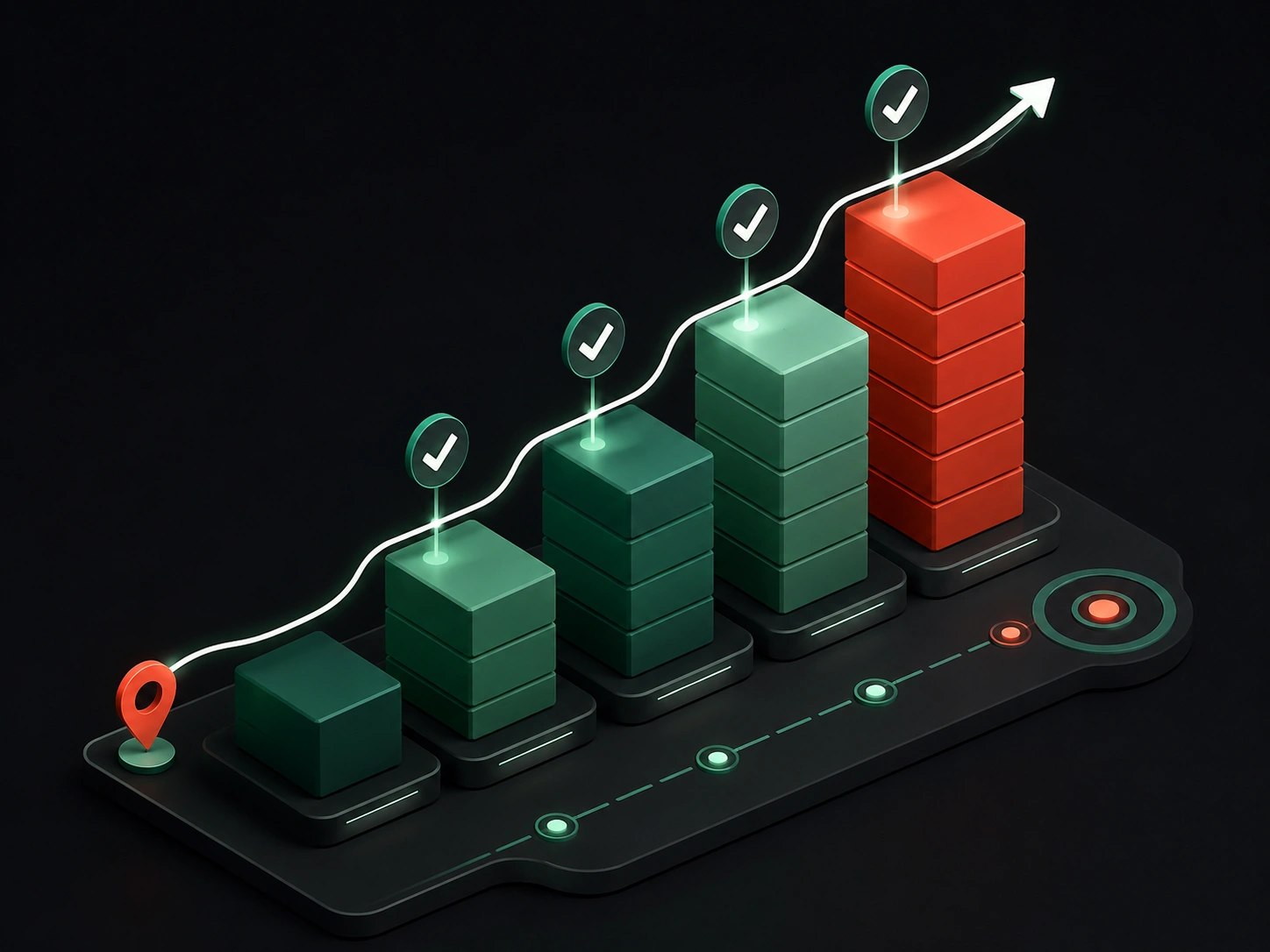


AI built for how engineering firms actually deliver — recovering billable engineering hours, winning more tenders, and turning decades of drawings, specs, and project archives into reusable knowledge. From bid and proposal automation to drawing and document retrieval, standards checking, and technical-report drafting — governed and accurate enough for work that carries professional liability. Deployed in production.













Building software since 2009, validated in numbers

We map AI to the numbers principals watch — chargeable utilization, project margin, rework, and bid hit rate — and sequence the use cases that move them, before any build.
Turn decades of drawings, specs, calculations, and project reports into answers engineers find in seconds — grounded, cited retrieval across your whole project archive, not a guess.
Draft tenders, technical reports, and method statements from your own won projects and standards — so engineers refine a strong first draft instead of starting from a blank page.
Connect AI to the systems engineering runs on — BIM/CAD, EDMS (Aconex, ProjectWise, SharePoint), project management, and your ERP — via secure connectors or MCP.

Agents with defined roles and approval gates for technical research, bid intake, and QA — collapsing the hours engineers spend on feasibility, precedent, and checking.

Read scanned drawings, markups and site photos — OCR on title blocks and schedules, defect and progress detection in inspection imagery — so visual records become searchable, checkable data.
A governed assistant grounded in your firm's project knowledge, so a mid-level engineer finds 'how we've done this before' in seconds without interrupting a principal.

Orchestrate end-to-end project workflows — bid intake, technical research, drafting, QA/checking, and submission — across specialized agents, each with a role and an approval gate.

Copilots in Word, Outlook, and Teams that draft technical reports, summarize specs and RFIs, and answer from firm knowledge — production-grade help where engineers already work.

Draft tender and proposal responses from your own won projects — pulling the right methodologies, project references, CVs, and rate build-ups — so engineers refine instead of starting cold.
Check drawings, specs, and submissions against codes, standards, and client requirements — surfacing non-conformances and missing items for an engineer to confirm, far faster than manual review.

Cited sources, confidence thresholds, audit trails, and a mandatory engineer-of-record review on anything technical — so AI assists judgment without ever owning a liability-bearing decision.
Our AI is tailored to the specific workflows, data environments, and governance requirements of each industry we serve.
Consulting & Advisory. Proposal and bid automation, engagement knowledge retrieval, and resource scheduling for multi-practice consulting and advisory firms.
Trusted by Rodic Consultants
 Proposal & bid agent powered by DocSense2,100+ projects indexed at Rodic ConsultantsResource allocation agents with conflict flagging
SaaS & Digital Platforms. Build intelligent product experiences with in-product AI copilots, automated onboarding, and analytics agents that lift activation and retention.
In-product AI copilot developmentAutomated user onboarding agentsUsage analytics & churn-prediction agentsEngineering & Infrastructure. Drawing and document retrieval, tender automation, and standards checking for engineering and infrastructure consultancies — with an engineer always confirming technical output.
Project document & drawing retrieval
Tender & bid response automationStandards & compliance checkingFinancial Services. Automate document review, compliance checks, KYC workflows, and client reporting with governed, fully auditable AI.
Contract review & clause extractionAML / KYC document agentsRegulatory compliance monitoringSupply Chain & Logistics. Improve vendor communication, demand forecasting, and inventory intelligence with AI agents that act on live operational data.
Vendor onboarding & communication agentsInventory anomaly detectionDemand forecasting & reorder agentsHealthcare & Research. Enable medical document intelligence, research summarization, and secure knowledge assistants — built for privacy-sensitive, regulated environments.
Clinical & research document summarizationKnowledge assistants over medical literatureSecure, compliant data handlingCleanTech & Mobility. Support sustainability operations, energy monitoring, fleet intelligence, and ESG reporting with AI agents.
Energy usage monitoring & reportingFleet optimization & route planningSustainability & ESG reportingEdTech Platforms. Improve learner support, content operations, and course personalization with AI agents embedded inside your platform.
AI tutor & student support agentsCourse recommendation & learning pathsContent generation & assessment automationNon-Profits & Foundations. Automate grant research, donor communication, and impact reporting so teams spend more time on mission and less on paperwork.
Grant discovery & proposal draftingDonor engagement & communicationImpact measurement & reporting


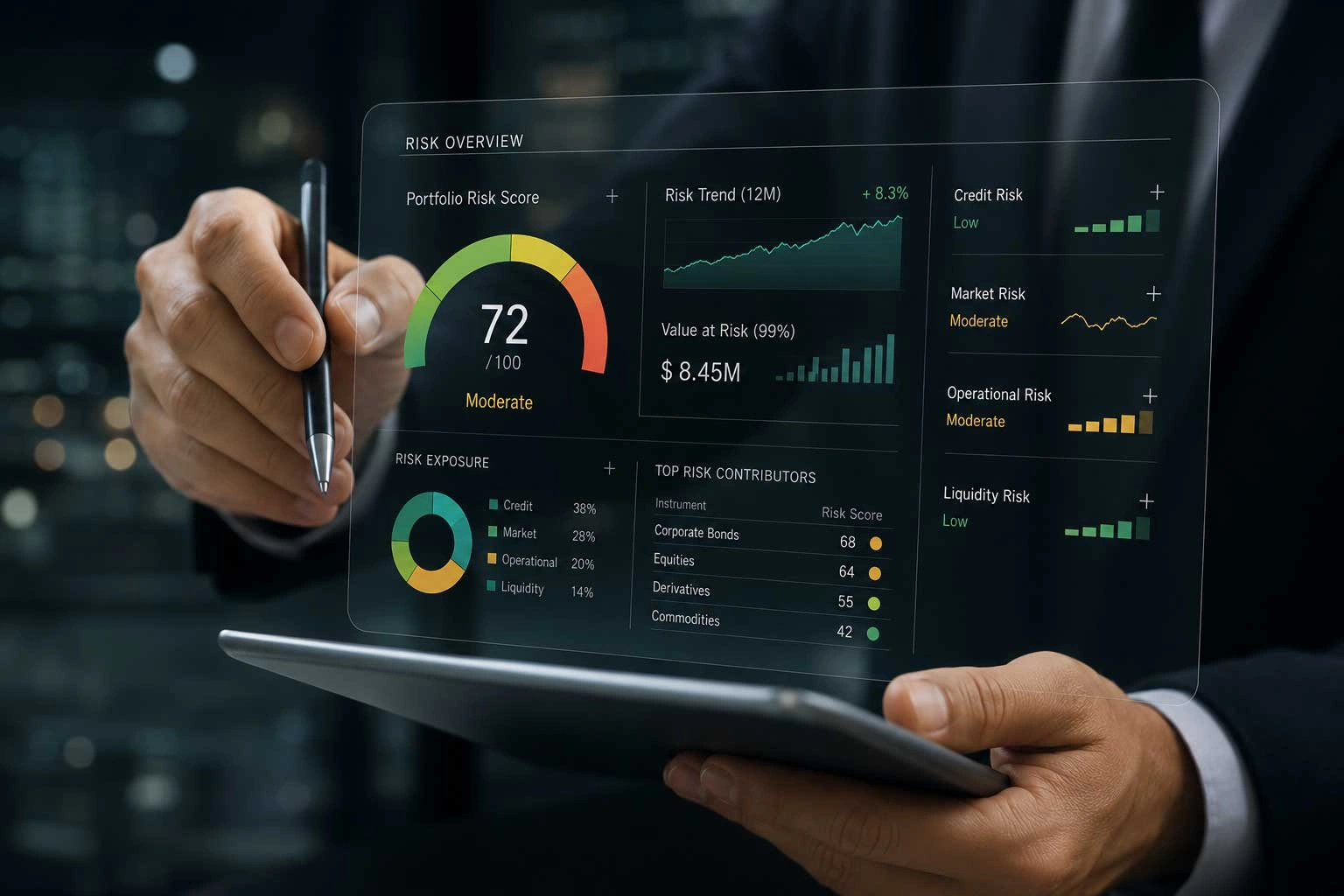




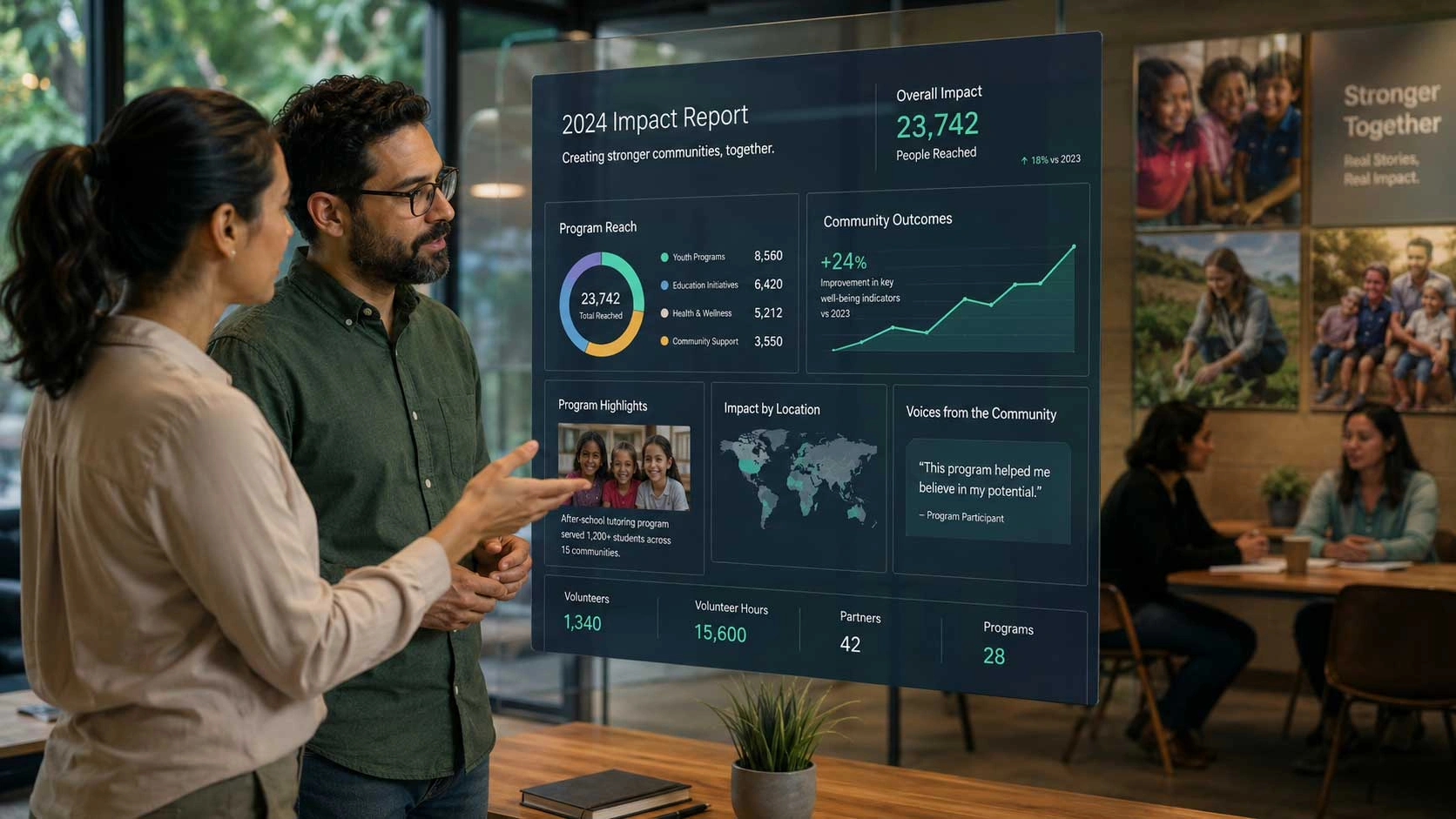
We pair deep AI engineering with an understanding of how engineering firms deliver — chargeable hours, technical precedent, and code compliance — to ship AI that earns its keep on real projects.
Enterprise software delivery — a track record built across technology cycles, not just the current AI wave.

Independently certified, annually audited — meets the security baseline enterprise procurement actually checks.

Nine in ten enterprise clients return for follow-on work — the only measure of delivery quality that cannot be faked.

Verified client reviews, independently collected — real feedback from real enterprise engagements.


Certified cloud partnerships with AWS and Microsoft Azure — enterprise infrastructure standards from day one.

DataSense, DocSense, BidSense — proprietary pre-built AI products that go live in weeks, not months of custom build.

IP, data, and strategy protected before the first discovery call ends — not after contracts are signed.

Post-deployment optimisation included in every engagement — we stay accountable until the system is performing.
 What AI Really Changes in an Engineering Firm
Not the hype version — the honest one. Where AI earns its place in a consultancy that carries professional liability, what actually decides whether it works, and the one line it must never cross.
The firms pulling ahead aren't running AI experiments — they're recovering senior engineering time lost to non-design work and billing it instead. The ROI case here is utilization, not novelty, and that's the case that gets signed off.

A large share of chargeable senior time goes to work that isn't design — searching archives for precedent, drafting documents, checking compliance, assembling bids. The live AI deployments in mid-size civil, structural, MEP, and multidiscipline firms target exactly that: tender drafting from past wins, drawing and document retrieval ('how did we detail this connection on the 2019 bridge job?'), standards checking before issue, and report drafting an engineer reviews rather than writes. None of it touches engineering judgment; all of it gives time back.
Every report that takes 2 hours instead of 8 returns 6 hours of fee-earning capacity. A firm with 120 engineers running three AI-assisted workflows recovers hundreds of chargeable hours a week without a single new hire — and lifts bid volume at the same time. That's the number you take to the board: capacity recovered and billed, not a clever demo.
The advantage compounds. The more of your project archive the system indexes, the better its retrieval and reuse get, so the same tool delivers more next quarter than this one. Firms that started building this in 2023–24 are already ahead on margin and tender hit rate, and that lead widens as their knowledge base deepens — which is exactly why catching up later is so much harder than starting now.
An AI tool that doesn't know your standards, your past jobs, and your detailing conventions produces generic output engineers won't trust — and quietly stop using. The entire value is in grounding it on your firm's actual work.
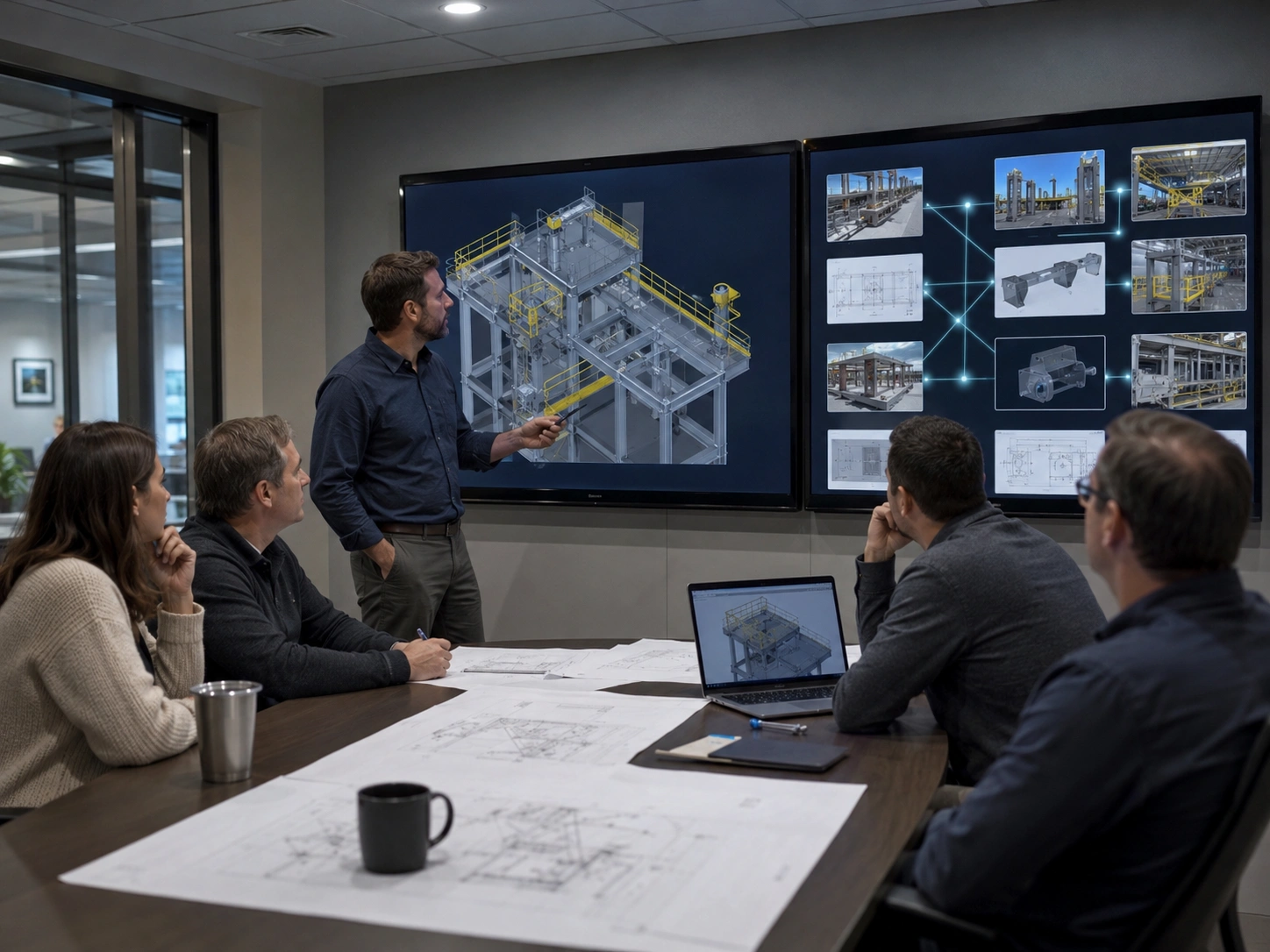
Of the engineering AI projects that struggled, most shared one root cause: the AI had no access to the firm's real project data, so its output was generic and untrusted. A chatbot that doesn't know your codes, your specs, or how you've detailed a connection before is just a search engine with worse manners — and engineers abandon it within a week. The first decision isn't which model; it's how it reaches your drawings, calcs, and reports.
On most projects, quality depends on who's on the team — the principal-led job is excellent, the junior-led one needs rework. AI grounded in your standards, past deliverables, and checking criteria behaves like a senior reviewer embedded in every workstream, catching missing items and non-conformances before they become rework. On fixed-fee work, rework is margin straight off the bottom line, so cutting it goes directly to profitability.
Engineers trust a tool when they can see where its answer came from. Every output is grounded in your source documents and codes with citations, and AI-drafted content is kept visibly distinct from engineer-checked content. That transparency — not a slicker model — is what turns a pilot nobody uses into a tool the practice actually adopts.
The other failure mode is a demo that impresses on tidy text and breaks on real CAD files, scanned legacy drawings, and 300-page specs. We build data-first — starting from your EDMS and your messy edge cases — and engineer for production from day one, because an engineering tool that only works on clean inputs isn't a tool, it's a slideshow.
Most disappointing engineering AI projects fail on data, not technology. Before the tool, the honest question is whether the drawings, specs, and reports it depends on are actually reachable — and what to fix first if they aren't.

Answer honestly: are your drawings, specs, and reports digital and reasonably organised in an EDMS — or scattered across project drives, scanned paper, and personal folders? Is there a single source of truth for the latest revision? How much sits in formats AI can read versus locked in old file types? If document control is weak, the first investment may be tidying the corpus the AI will rely on, not the AI itself — and we'll tell you that rather than build on sand.
Map it before you build. A typical engineering workflow touches your EDMS/document control for drawings and specs, project management for programme, CRM for the opportunity, and ERP for resourcing and billing. Each connection is a potential failure point. The firms that ship fastest complete this mapping in week one, not week eight — and pick a first use case whose data is already reachable.
Because engineering output carries professional liability, three things must be in place before production: a clear boundary on what AI drafts versus what an engineer checks; a mandatory engineer-of-record review gate on anything technical; and an audit trail of sources and changes. Build these before the tool — it takes a couple of weeks, not months, and it prevents the kind of incident that sets a whole programme back a year.
A readiness gap is a reason to scope carefully, not to pause. The right starting point: a PoC on one workflow with reasonably accessible data, one team that wants it, and one measurable outcome defined upfront. Most successful engineering AI programmes started with something that shipped in weeks and saved meaningful hours on a single painful task — and that proof of value is what unlocks budget for the rest.
Engineering firms face a demographic cliff: the judgment of senior engineers lives in their heads and in archives nobody can search. When they retire, it leaves with them — unless you've captured it while they're still here.

How you've detailed a tricky connection, specified for a difficult ground condition, or solved a recurring problem before is some of your firm's most valuable IP — and most of it is undocumented or buried in archives no one can search. A retiring principal takes that judgment with them, and the next junior reinvents it from scratch, often less well.
A system indexed on your drawings, calculations, specs, and project reports turns that scattered archive into something searchable — grounded in your actual work, with citations back to the source drawing or clause. Hard-won precedent stops depending on whether the one person who remembers it is still at the firm.
Instead of interrupting a principal or guessing, a mid-level engineer asks the system how the firm has handled something before and gets an answer drawn from real past projects in seconds. It raises the floor on quality across the practice — the junior-led job starts to look more like the principal-led one.
For a firm whose entire value is its expertise, capturing that expertise before it retires is a genuine risk-management asset, not a nice-to-have. It protects delivery quality through generational turnover — and it's increasingly something clients and acquirers look for when they assess how resilient a practice really is.
Of all the places AI helps an engineering firm, the bid desk is where it shows up on the top line first — more submissions, better tailored, without burning out the best people you most need on live projects.

Bid teams are stretched: every tender is days of assembling methodologies, references, and CVs, and firms routinely walk away from work they could win simply because there's no one free to respond in time. The constraint isn't pipeline — it's the capacity to turn opportunities into quality submissions.
A bid agent ingests the ITT and pulls the right methodologies, project references, and CVs from your past wins, producing a tailored first draft in under a day instead of a week of senior time. Your people move from writing proposals to refining them — the part where their judgment actually adds value.
With the drafting load lifted, you can pursue more of the opportunities worth chasing and submit better-tailored, more competitive responses on each — instead of choosing between volume and quality. Hit rate and bid volume both move in the right direction, rather than trading off against each other.
This is the rare AI win that touches the top line, not just cost. Every additional well-targeted bid you can now afford to write is a shot at fee-earning work you'd otherwise have passed on — which is why the bid desk is usually where an engineering firm sees payback first and most visibly.
In engineering, a confident-sounding wrong answer isn't an inconvenience — it's a liability that can reach a stamped drawing and a site. AI can accelerate almost everything around the work; the one line it must never cross is owning the decision.
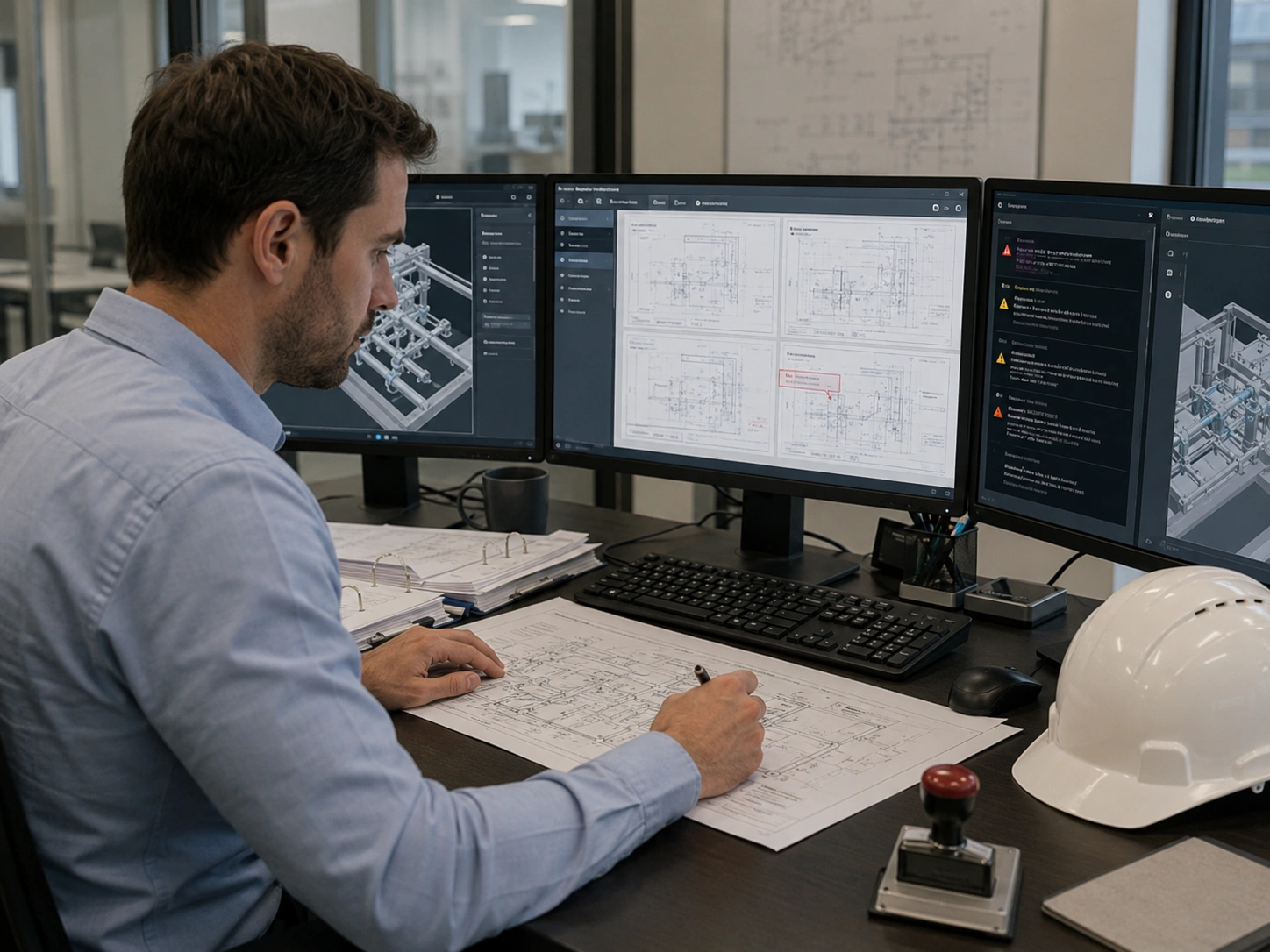
The only responsible model for engineering is AI as an accelerator of judgment, never a replacement for it. The system drafts, retrieves, and checks — but a qualified engineer reviews and owns anything that carries liability. We design that boundary explicitly: what the AI is allowed to produce, what must be confirmed, and what it must never assert on its own. The stamp stays human, and the workflow makes that unavoidable rather than optional.
Engineers won't — and shouldn't — trust a black box. Every answer is grounded in your source documents, codes, and project data with citations, so a reviewer can click through to the standard clause or the precedent drawing rather than taking the AI's word. Where confidence is low, the system says so and routes to a human. Verifiability is what turns AI from a liability risk into a tool a chartered engineer will actually rely on.
One of the biggest real-world risks is ambiguity about what's been verified. We make AI-generated content visibly distinct from engineer-checked content, with an audit trail of who reviewed what. That protects the firm: in a dispute or a QA review, you can show exactly where human judgment was applied — and it protects your engineers from inheriting unchecked output without knowing it.
Clients and insurers increasingly ask how a firm uses AI on liability-bearing work. A firm that can answer with a documented, auditable, engineer-in-the-loop process wins trust that a 'we ban it' or 'we use it informally' competitor can't. Getting the governance right early isn't only protection — it's a differentiator you can put in front of clients and your PI insurer.
Weeks 1–2
We pinpoint the workflow with the best ROI for your firm — and audit the project data and review discipline around it — before any development begins.
Stakeholder interviews & workflow mappingData source audit & access assessmentAgent authority scope definitionHuman handoff condition mappingAgent design document sign-offWeeks 3–5
We build the core agent architecture, including model selection, tool connectors, memory, and orchestration logic.
LLM selection & benchmark testingTool connector architectureMemory layer design (short + long term)Orchestration framework setupSandbox prototype for stakeholder reviewWeeks 5–8
We connect the system to your EDMS, project and document control, CAD/BIM sources, and ERP through secure data flows.
Live system API integration (CRM, ERP, docs)RAG layer configuration (if required)Data security & access reviewMCP / connector development for legacy systemsIntegration test suiteWeeks 8–9
We implement citations, engineer-of-record review gates, audit trails, and safety rules so AI assists judgment without ever owning a liability-bearing decision.
Action audit trail implementationHallucination guardrail setupHuman-in-the-loop escalation gatesCost & latency monitoring dashboardZero Trust access controls reviewWeeks 9–12
We launch a controlled pilot, gather real-user feedback, refine the system, and move it into production with support.
Controlled pilot with real usersStructured feedback & iterationProduction deploymentFull runbook & documentation90-day post-launch support (included)Book a free 30-minute discovery call with a senior AI engineer — no slide deck, just questions about your workflows, your data, and your goals.










Enabled users to retrieve operational, financial, and project insights through natural language queries, transforming complex data analysis into instant, self-service intelligence.
See case study
 <12 Seconds
  10+ Systems
  Days → Minutes
  95%+
95%+ We pair best-in-class AI models, orchestration frameworks, and vector databases with the document-control and project systems engineering firms run on — selecting the right combination for your stack, your use case, and your accuracy requirements.
State-of-the-art models for reasoning, generation, and tool use.
 OpenAI GPT-4
 Claude
 Google Gemini
 Cohere
 Mistral
Coordinate agents, tools, and workflows with reliability and control.
 LangChain
 LangGraph
 AutoGen
 CrewAI
High-performance vector databases for semantic search and retrieval.
 Pinecone
 Weaviate
 Milvus
 Qdrant
 Chroma
Store, recall, and manage agent memory and long-term state.
 Redis
Redis
 PostgreSQL
 Zep
Zep
 LangMem
Modern languages and runtimes for building AI applications.
 Python
 TypeScript
 Node.js
 FastAPI
Connect to tools, APIs, and external systems seamlessly.
 MCP
MCP
 REST APIs
 GraphQL
 n8n
n8n
 Zapier
 Webhooks
 SharePoint / EDMS
 Autodesk / BIM
Monitor, trace, and evaluate AI systems in production.
LangSmith
 Langfuse
 OpenTelemetry
 Grafana
 Prometheus
Enterprise-grade cloud services and infrastructure foundations.
 AWS Bedrock
 Azure OpenAI
 GCP Vertex AI
 Docker
 Kubernetes
Engineering firms carry professional liability and handle client- and project-confidential data, so AI has to meet a high security and governance bar. We design auditable, regulation-ready systems with the controls your QA, client, and PI-insurance requirements demand — across AWS, Azure, and Google Cloud.

General Data Protection Regulation

Information Security Management Systems
System and Organization Controls

For AI applications in healthcare
Responsible AI principles and implementation

AI Risk Management

Principles and implementations

India’s personal data protection framework

Auditability frameworks

Standards and evaluation practices
 Fixed-Price POC
Validate an AI agent use case with a low-risk, fixed-scope engagement designed to prove value, feasibility, and ROI before committing to a full build.
4–6 week delivery timeline Defined scope & success criteria Low commitment, fixed budget Executive-ready ROI assessment Dedicated AI Team
A cross-functional AI agent team embedded into your environment — working within your processes, security requirements, and communication tools.
AI, Data & MLOps specialists Named delivery lead Works within your NDA & security policies Scalable team composition Project-Based
End-to-end delivery of a defined AI agent capability with fixed scope, timeline, and commercial terms. Full knowledge transfer and documentation included.
Fixed scope & pricing Defined milestones & deliverables Dedicated project management Knowledge transfer & documentationLet's discuss the right engagement model for your project?
Book a call
First-hand experiences from engineering firms that put AI to work, recovered chargeable hours, and achieved measurable results.
View all client testimonials“Vocso team has really creative folks and is very co-operative to implement client project expectations. MicroSave Consulting had great experience working with Anju and Prem.”

“Working with Deepak and his team at Vocso is always a pleasure. They employ talented staff and deliver professional quality work every time.”

“We love how our website turned out! Thank you so much VOCSO Digital Agency for all your hard work and dedication.”

“VOCSO SEO & SEM services helped me find new customers in a small budget. Their advanced SEO strategies made us visible to everyone.”

“Vocso team has really creative folks and is very co-operative to implement client project expectations. MicroSave Consulting had great experience working with Anju and Prem.”
“Working with Deepak and his team at Vocso is always a pleasure. They employ talented staff and deliver professional quality work every time.”
“We love how our website turned out! Thank you so much VOCSO Digital Agency for all your hard work and dedication.”
“VOCSO SEO & SEM services helped me find new customers in a small budget. Their advanced SEO strategies made us visible to everyone.”
The first AI project decides whether you get a second one. Pick something too ambitious, too liability-sensitive, or too hard to measure, and a failed pilot sets the firm back years.
For an engineering firm, the best first use case is high-volume, low-liability, and unambiguously useful — so the time saved is a clear win and nobody worries about a wrong number reaching a drawing. Get it right and the proof of value funds everything after.
High frequency, repeatable — Target work the firm does constantly — tender drafting, document search, report formatting — so a small per-task saving compounds into real recovered hours.
Low liability to start — Begin with non-stamping work (bid writing, knowledge search, admin) rather than calculations, so accuracy concerns don't stall the pilot.
Reachable project data — Pick a workflow whose drawings, specs, or documents already live in your EDMS; if they're scattered or scanned, fix that first or choose another use case.
Measurable in one number — Choose something where success is a single metric a principal cares about — hours per tender, search time saved — so the result is undeniable.
At VOCSO, use-case selection is the first thing we do — because the highest-ROI workflow for an engineering firm is rarely the flashiest, and the wrong first choice is the most expensive mistake in the program.
In engineering, a confident wrong answer isn't an inconvenience — it can reach a stamped drawing and a site. Accuracy and clear human ownership aren't features; they're the price of admission.
The only responsible model is AI as an accelerator of an engineer's judgment, never a replacement for it. The system drafts, retrieves, and checks; a qualified engineer reviews and owns anything carrying liability.
Grounded and cited — Every answer ties back to your source documents, codes, or precedent drawings, so an engineer can verify it against the clause rather than trust a black box.
Engineer-of-record review gate — Anything technical routes through a mandatory human review before it's used — the stamp stays human, enforced by the workflow, not left optional.
Drafted vs. checked, made visible — AI-generated content is clearly distinct from engineer-verified content, with an audit trail of who reviewed what.
Honest about uncertainty — Where confidence is low, the system says so and escalates, instead of inventing a plausible-sounding number.
VOCSO designs the accuracy and review discipline first — because a tool your chartered engineers can't verify is a liability they won't (and shouldn't) put their name to.
Your firm's real asset is decades of project work — drawings, calculations, specs, and reports. Most of it is locked in an EDMS or old drives where nobody can actually find anything, and it walks out the door when senior engineers retire.
Turning that archive into something searchable is the advantage a generic AI tool can never give a competitor — it's built on what only your firm has done. The hard part is engineering documents are messy, so it takes more than pointing an LLM at a folder.
Handle real engineering formats — CAD files, scanned legacy drawings, marked-up PDFs, and long specs all need parsing the right way, not naive text extraction.
Grounded, cited retrieval — Answers point back to the exact drawing, clause, or report, so engineers trust and verify the result instead of guessing.
Respect revision control — Retrieval surfaces the current revision and flags superseded ones, so nobody reuses a detail from an outdated issue.
Capture retiring expertise — Indexing the archive preserves how the firm has solved problems before, so that judgment survives the people who built it.
VOCSO builds retrieval on your real project corpus — because a model anyone can buy is not a moat, but decades of your drawings and specs, made findable, is.
AI that can't reach your document control, CAD/BIM, and project systems is a demo, not a capability. And engineering systems are exactly the kind AI vendors find hardest — proprietary formats, on-prem servers, and document control that can't be bypassed.
The hard part of engineering AI is rarely the model; it's connecting it safely to the systems your projects actually live in. We treat that as a first-class problem, not an afterthought.
Meet your stack where it is — We integrate with EDMS (Aconex, ProjectWise, SharePoint), CAD/BIM sources, project management, and ERP through whatever each exposes.
Respect document control — The AI works within your revision and access controls rather than around them, so it never serves a superseded or unauthorised document.
Reach legacy without migration — For older systems without clean APIs, we build structured wrappers or use MCP, so you don't need a risky rip-and-replace first.
Keep data where it belongs — Sensitive project and client data can stay within your environment, including self-hosted, to meet confidentiality and contractual obligations.
At VOCSO, we map the integration landscape during discovery and design for the systems you actually have — so the AI works with your project stack instead of demanding you replace it.
You can build a brilliant tool and watch it go unused. Engineers are rigorous, busy, and rightly sceptical of anything that might put a wrong number in a deliverable — so adoption is never automatic.
Adoption is the difference between a line item and a return. A tool used by a handful of early adopters delivers a fraction of its value; the work is making AI the obvious, trustworthy path for the engineers doing chargeable work.
Meet engineers in their tools — Embedding AI in Word, Outlook, and the systems they already use beats a separate app nobody opens.
Earn trust with verifiability — Cited, checkable output and a clear human-review step address the accuracy scepticism that sits underneath most engineering resistance.
Position it as leverage — Framed as 'the AI does the search and first draft so you do the engineering', it becomes something your best people want, not a threat.
Win over a respected sceptic — Involving a hard-to-convince senior engineer in the pilot, and letting results persuade them, turns your toughest critic into your most credible advocate.
VOCSO designs the rollout, not just the system — because in an engineering firm the model is the easy part and adoption by qualified engineers is where the ROI is actually won or lost.
"It feels faster" won't survive a board meeting. To fund the next phase of AI, you have to prove its value in the numbers that already run an engineering firm.
Engineering firms live by a handful of metrics — chargeable utilization, bid hit rate, rework, project margin. The strongest AI business case doesn't invent new metrics; it moves the ones leadership already watches.
Chargeable utilization — Track engineering hours freed from search, drafting, and checking, and where that capacity is redeployed — the clearest line from AI to fee revenue.
Bid volume & hit rate — Measure whether tender automation lets you pursue more opportunities and win a higher share — top-line growth, not just efficiency.
Rework & margin — Fewer errors and non-conformances caught before issue means less rework, which on fixed-fee work is margin retained straight to the bottom line.
Baseline before you build — We capture the 'before' numbers up front, so the improvement is provable and credited to the AI rather than argued about later.
VOCSO instruments the business case in your firm's own language — so when the board asks what AI is worth, the answer is a number on the metrics they already trust, and the budget to scale follows.
You delivered exactly what you said you would in exactly the budget and in exactly the timeline.







 Transparency on every decision Talented Team of AI Engineers Smooth Collaboration & Reporting Efficient & Adaptive Workflow Strict Privacy Assurance with NDA 12 Months Free Post-Launch Support On-time Delivery, No Surprises ISO 27001 Certified Engineering
Most firms start with one high-value workflow — tender drafting, drawing and document retrieval, or standards checking. We help you scope it, prove the hours saved, and design the review discipline before you scale. No open-ended contracts. No ambiguous scope.
deepak@vocso.com — no forms, no funnels.
The best first use case is high-frequency, low-liability, and unambiguously useful — so the time saved is a clear win and nobody worries about a wrong number reaching a drawing. For most firms that's tender/proposal drafting from past projects, drawing and document retrieval across the archive, or report formatting and admin. Starting on non-stamping work sidesteps accuracy concerns while you build trust. We help you pick deliberately in discovery, because the highest-ROI workflow is rarely the flashiest, and the wrong first choice is the most expensive mistake in the program.
It depends on scope and integration depth. A focused single-workflow build (e.g. tender automation or drawing retrieval) typically runs $30,000–$80,000; a broader rollout across multiple workflows with deep EDMS/project-system integration and firm-wide review controls runs $80,000–$200,000+. We almost always start with a fixed-price PoC (typically $15,000–$25,000) that proves the hours saved on one workflow before you commit to more. Every engagement begins with a free discovery call to scope requirements and give you a realistic estimate — and an honest view of the likely ROI.
A focused PoC delivers a working tool on your real project data in 4–6 weeks, with measured hours-saved on the target workflow. A production rollout of a single high-value capability typically takes 10–16 weeks including integration, review controls, and adoption support. The biggest variable is how accessible and well-organised your drawings and documents are — a tidy EDMS makes integration fast, while scanned legacy archives add preparation time. We sequence delivery so you see working software and an early proof of value, not a long silence before a big-bang launch.
Accuracy and clear human ownership are the price of admission, so we design for them at several layers. AI drafts, retrieves, and checks — but a qualified engineer reviews and owns anything carrying liability; the stamp stays human, enforced by the workflow rather than left optional. Every output is grounded in your own source documents and codes with citations, so an engineer can verify against the clause instead of trusting a black box; structured outputs are validated, low-confidence results are flagged and escalated, and AI-generated content is kept visibly distinct from engineer-checked content with an audit trail of who reviewed what. We agree an accuracy benchmark up front and monitor for drift in production. The aim isn't a system that's never wrong — it's one whose output is always verifiable and always checked by a qualified engineer before it carries weight.
No — and any vendor pitching AI that 'makes engineering decisions' should worry you. We build AI as an accelerator of your engineers' judgment: it does the searching, first-drafting, and checking so your people spend their time on design, decisions, and the work that carries their stamp. A qualified engineer always reviews and owns liability-bearing output. The goal is to give your engineers more capacity for high-value work and to capture firm knowledge — not to remove the human expertise that is the firm's actual value.
Yes — and handling real engineering documents and systems is exactly where generic AI tools fall down. We process CAD files, BIM data, scanned legacy drawings, marked-up PDFs, and long specifications with the right parsing for each, not naive text extraction that loses the engineering content. And we connect to the systems your projects live in — document control and EDMS (Aconex, ProjectWise, SharePoint), CAD/BIM sources, project management, and your ERP — via secure connectors or MCP. The AI works within your revision and access controls, so it surfaces the current issue and flags superseded ones rather than serving an out-of-date detail; for older systems without clean APIs we build structured wrappers so you avoid a risky migration. What's realistic depends on your formats and storage, which we assess honestly in discovery.
Yes — this is one of the highest-ROI deployments for engineering firms. The system reads an ITT or brief, extracts the requirements, retrieves your most relevant won projects, methodologies, project references, and CVs, and drafts a structured first response against your template — flagging gaps where information is missing. Your bid team refines and approves; the AI never submits anything. Typical saving is a large share of the senior time a tender consumes, which lets you pursue more opportunities and submit better-tailored, more competitive bids.
Yes — compliance and consistency checking is a strong, lower-liability use case because the AI surfaces issues for an engineer to confirm rather than making the final call. It can check drawings, specs, and submissions against codes, client requirements, and your own standards, flagging likely non-conformances, missing items, and inconsistencies between documents far faster than manual review. The engineer remains the decision-maker; the AI just makes sure fewer things slip through. On fixed-fee work, catching issues before issue directly reduces rework and risk.
Yes to both. We support deployments from your managed cloud tenant (AWS, Azure, GCP) to fully self-hosted environments running open-weight models where data never leaves your perimeter — so for strict client-confidentiality, government, or defence-adjacent work, sensitive project data is processed inside your boundary and we never need direct access to it. And ownership is unconditional: your project data, the system we build, the outputs, and all code are yours. We sign NDAs before any discovery conversation, never retain your data after an engagement, and never use it to train models that benefit other clients — and we transfer knowledge deliberately (documentation, runbooks, pairing) so your team can own and operate the system rather than being locked into us.
It's a question worth raising with your insurer early, and a documented, engineer-in-the-loop process is exactly what reassures them. Because a qualified engineer reviews and owns every liability-bearing output — with citations and an audit trail showing what was AI-drafted versus engineer-checked — you can demonstrate that AI is an assistive tool inside your existing QA, not an unchecked decision-maker. Increasingly, clients and insurers ask how firms use AI on technical work; being able to show a controlled, auditable process is becoming a trust advantage rather than a liability.
Not perfectly — but document and data maturity is the single most underestimated factor, so we assess it honestly in discovery. The trick is to choose a first use case whose data is already reasonably accessible in your EDMS, and to scope around the systems you actually have. Where a lot sits in scanned paper or scattered drives, we either build the access and preparation layer as part of the work or steer you to a different first use case. A readiness gap is a reason to scope carefully, not a reason to wait.
Yes. Production AI needs ongoing attention, and we offer managed support and MLOps. Our standard engagement includes a period of included support after launch — monitoring, incident response, performance review, and minor adjustments. Beyond that, retainers cover model-drift monitoring, re-evaluation as codes and standards are updated, cost optimization, feature additions, and integration maintenance as your project systems change. Because models degrade quietly rather than failing loudly, this monitoring is what keeps quality and trust intact long after launch — and it's why we define operational ownership before go-live.
Discover complementary services that enhance performance, improve user experience, and help your business build scalable digital solutions efficiently.