Web platforms and portals for IFC, Marriott, Okinawa, Alten and 600+ other projects since 2009


We build custom web applications (SaaS products, customer portals, dashboards and internal tools) for startups and growing businesses in India, the US and beyond. Engagements start at $10,000, most builds land between $30,000 and $150,000, and every project runs on a fixed quote or a dedicated team. 600+ projects since 2009, ISO 27001 certified.

 Reviewed by Deepak Chauhan, Founder & CEOLast updated













Web platforms and portals for IFC, Marriott, Okinawa, Alten and 600+ other projects since 2009
Custom web application development is the design and engineering of browser-based software built around one business's workflows, data and users, rather than adapted from an off-the-shelf product. Typical examples are SaaS platforms, customer and partner portals, booking and marketplace systems, learning platforms and the internal tools that replace spreadsheets.
At VOCSO, a senior team in Faridabad, India takes each application from discovery to production. We start with a scoping phase that fixes features, user roles, integrations and a quote. We then design the UX in Figma, build in two-week sprints on Next.js, Node.js or Python with PostgreSQL, and ship to AWS or your own cloud with automated tests and monitoring. You own the code and IP from the first commit. Projects start at $10,000 and most land between $30,000 and $150,000. Our web application cost calculator gives a first estimate in minutes, and full-stack development covers teams that need one squad from MVP to scale.

Multi-tenant SaaS platforms with sign-up, subscription billing, role-based access and an admin console. We built and run our own SaaS, StackRoom, on the same stack we use for clients.

Secure portals where customers, agents or partners log in to apply, track, learn or transact. One example is the multilingual training and certification portal we built for an IFC (World Bank Group) programme.

Admin panels, approval workflows, reporting dashboards and back-office tools that replace spreadsheets and email chains, with audit trails and permissions per role.

Connect your web app to payment gateways, CRMs, ERPs, maps, messaging and AI providers. See our custom API development and backend development services.

Listing, search and lead-generation platforms that stay fast with thousands of pages, such as the Colleges18 college discovery portal on Next.js and Strapi.

Re-platform an ageing PHP, .NET or jQuery application onto a modern stack in stages, keeping data and users intact while the old system is retired route by route.
Three recent web applications, with the results each one reported.









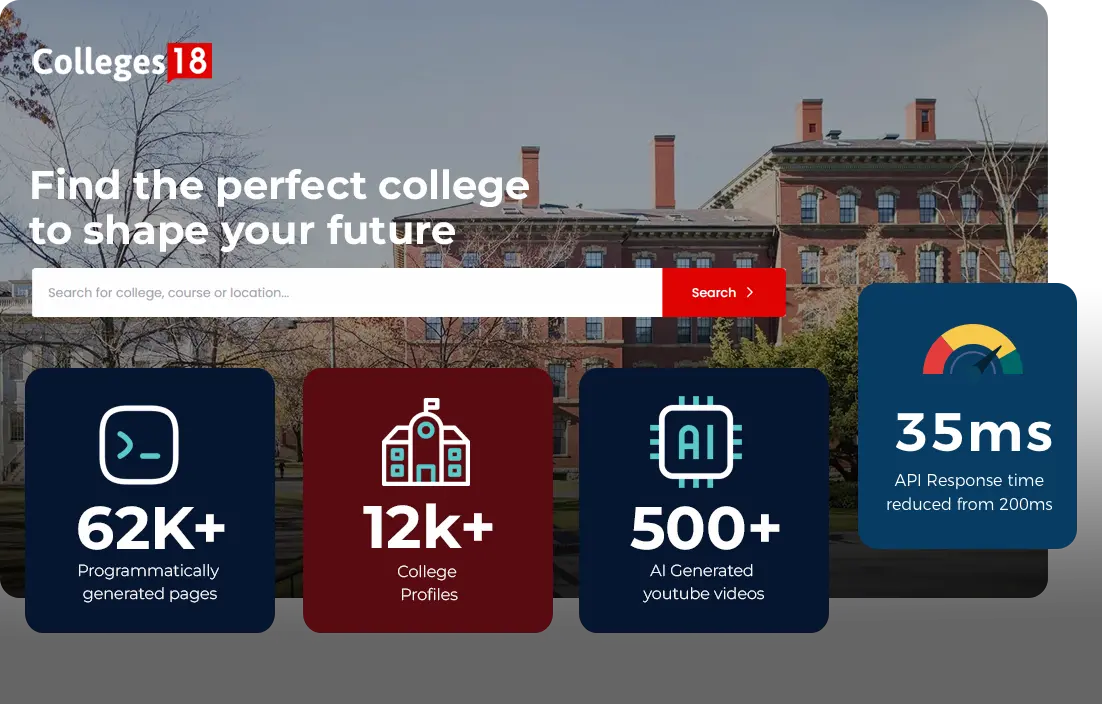

A search, comparison and reviews platform holding more than 12,000 colleges, server-rendered with Next.js over a Strapi and Node.js back end, with programmatic SEO across 50+ page templates.
In the first three months after launch it earned 25.3K organic clicks and 4.85M search impressions, and it generated over 500 leads within one month.

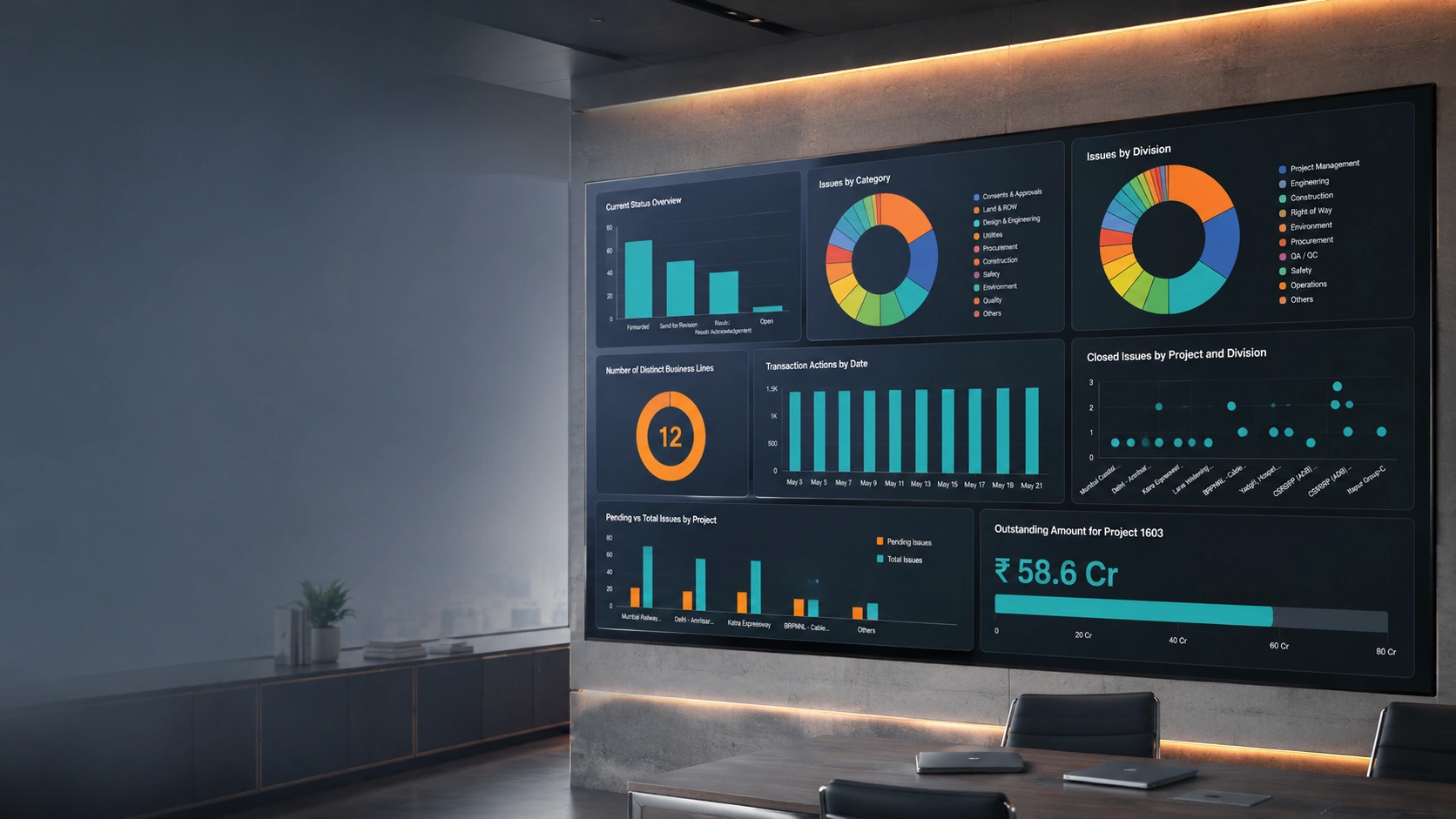

A corporate training platform for onboarding, compliance and skills courses, with an assessment and certification engine, analytics dashboards and role-based access for five roles, built on Next.js, Node.js, Strapi and PostgreSQL.
It now carries 100+ courses, with learners averaging 100+ hours on the platform.
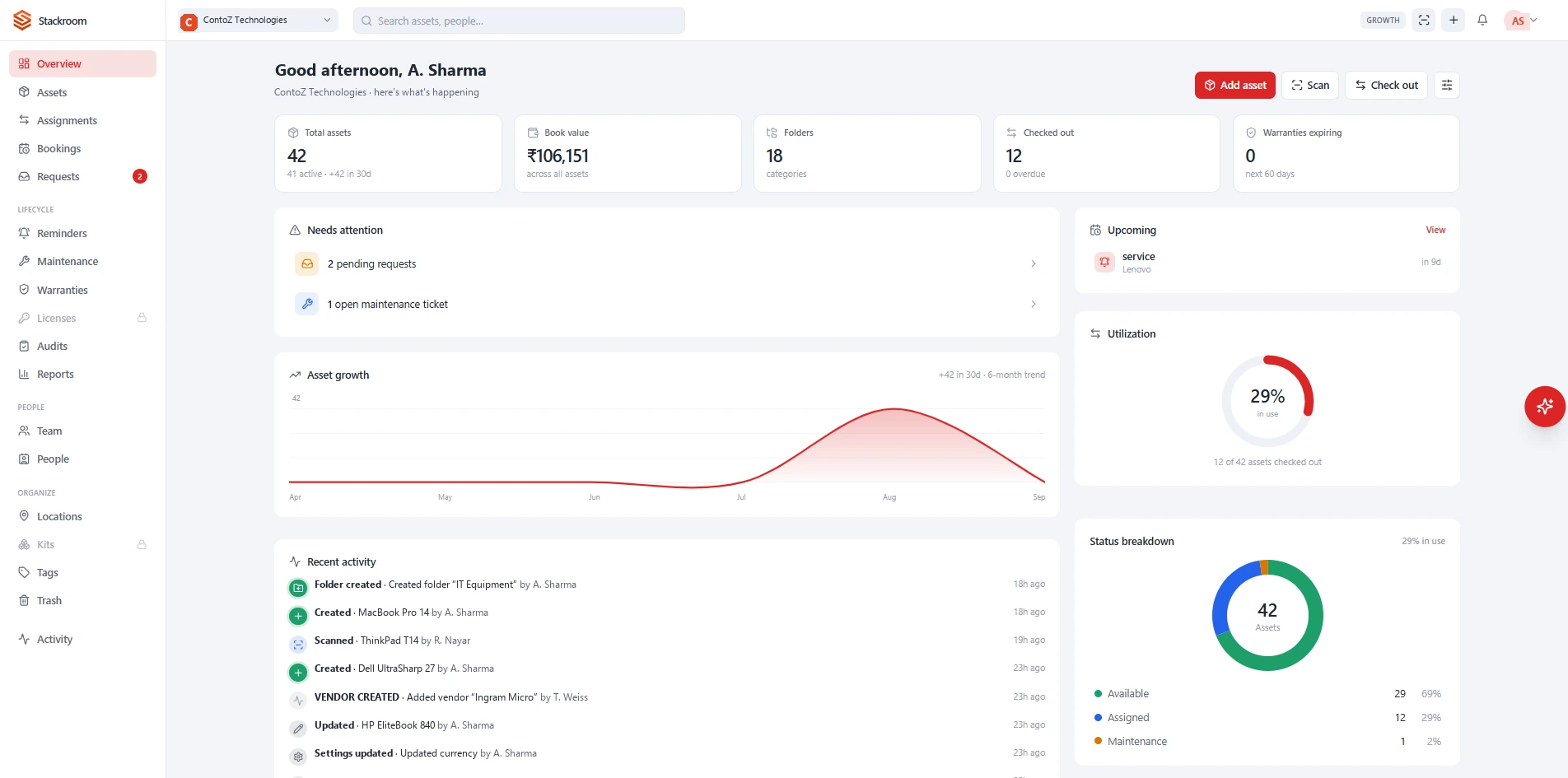

VOCSO's own asset-tracking product: a web application plus iOS and Android apps on one register, with QR labels, signed check-outs, audits and an AI assistant that answers from the organisation's own data.
Issuing an asset takes about 30 seconds and needs no scanner hardware.

Feedback from clients across our software and AI engagements.
View all client testimonials“Vocso team has really creative folks and is very co-operative to implement client project expectations. MicroSave Consulting had great experience working with Anju and Prem.”

“Working with Deepak and his team at Vocso is always a pleasure. They employ talented staff and deliver professional quality work every time.”

“We love how our website turned out! Thank you so much VOCSO Digital Agency for all your hard work and dedication.”

“Vocso team has really creative folks and is very co-operative to implement client project expectations. MicroSave Consulting had great experience working with Anju and Prem.”
“Working with Deepak and his team at Vocso is always a pleasure. They employ talented staff and deliver professional quality work every time.”
“We love how our website turned out! Thank you so much VOCSO Digital Agency for all your hard work and dedication.”

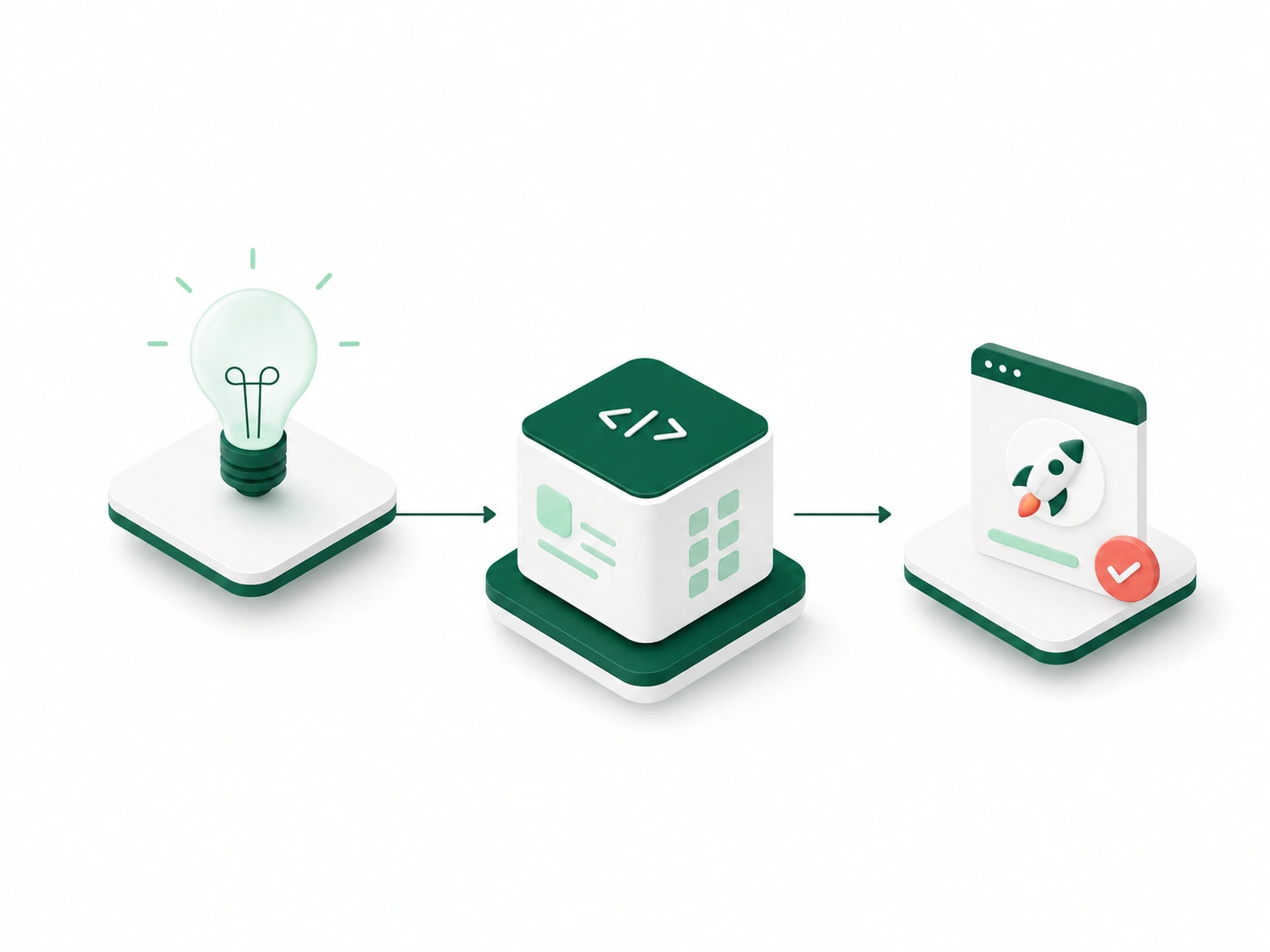
Workshops with your team to define users, roles, workflows, integrations and success measures.

Key screens and journeys designed in Figma and reviewed with your team before code is written.

Two-week sprints with a working staging build you can log in to and review after every sprint.

Automated and manual testing, performance checks and a security review under our ISO 27001 processes.

Production deployment with monitoring, then ongoing fixes, upgrades and new features.
Want a rough number before the call? Try our web application cost calculator.
Estimate your cost Fixed-Scope Project
Best for an MVP or a defined first release: agreed features, milestones and a fixed price after discovery.
 Projects start at $10,000 Most builds: $30,000 to $150,000 Milestone-based payments Code and IP transferred to you
 Dedicated Team
Best for an ongoing product roadmap: developers who work only on your application, under your direction.
160 hours a month per developer Monthly billing Scale the team up or down Named account manager Time & Materials
Best for evolving scope, audits and enhancements to an existing application, billed for actual hours.
Pay for hours used Change priorities anytime Weekly time reporting No long lock-inNot sure which model fits? Get a ballpark with the web application cost calculator first.
Estimate your costA senior team in India, a fixed quote after discovery, two-week sprints you can review, and source code that belongs to you.





 Transparency on every decision Talented Team of AI Engineers Smooth Collaboration & Reporting Efficient & Adaptive Workflow Strict Privacy Assurance with NDA 12 Months Free Post-Launch Support On-time Delivery, No Surprises ISO 27001 Certified Engineering
Most custom web applications we build cost between $30,000 and $150,000, and our engagements start at $10,000. A focused MVP or internal tool with a few user roles sits at the lower end. A multi-tenant SaaS platform with billing, complex integrations and an admin console sits at the upper end or beyond. The biggest cost drivers are the number of user roles and screens, third-party integrations, data migration and compliance needs. After a short discovery we give a fixed quote with milestones. For a first number, use our web application cost calculator.
The timeline depends on scope, and we fix it in the quote after discovery rather than guessing up front. A focused MVP with core workflows is the fastest route to a live product. Larger platforms with several user roles, integrations and data migration take longer and are usually released in phases. Work runs in two-week sprints, and you get a staging build to review after each one. That way scope changes are visible early and the launch date stays realistic. If speed matters most, we cut the first release down to the workflows that prove the idea.
An experienced Indian team gives you senior engineering at a lower cost than most US or UK agencies, without giving up process or security. VOCSO has built software from Faridabad, India since 2009, has delivered 600+ projects for clients in India, the US, Canada, the UK and the UAE, and is certified to ISO/IEC 27001 and ISO 9001:2015. You work directly with the engineers, in English, with meeting overlap agreed for your time zone. Code lives in your repository, and an NDA is signed before any detail of your product is shared.
We build SaaS products, customer and partner portals, internal tools and dashboards, marketplaces and listing platforms, learning management systems, and booking and workflow systems. Recent examples include the Colleges18 discovery platform on Next.js and Strapi, an enterprise learning management system with assessments and certification, and our own asset-tracking SaaS, StackRoom. We also modernise legacy applications and add AI features such as document search or assistants to existing web apps.
Our default stack is TypeScript, React and Next.js on the front end, with Node.js or Python (FastAPI or Django) and PostgreSQL behind it. We also maintain and extend Laravel and PHP applications. For content-heavy apps we add a headless CMS such as Strapi or Directus. We deploy to AWS or your own cloud with Docker, CI/CD, automated tests and monitoring. We pick the stack for your team and roadmap rather than habit. If your developers already know a framework well, staying with it is often the cheaper long-term choice.
A website mainly publishes information, while a web application lets users log in and do work: create records, run workflows, transact or collaborate. Websites are mostly pages and content; web applications add user accounts, permissions, business logic, databases and integrations. That is why a web app costs more and takes longer to build. Many projects sit in between, for example a marketing site with a customer portal behind a login. If you mainly need a marketing site, see our custom website design service instead.
Yes. You own the source code, designs and data of your web application, and ownership is written into the agreement before work starts. We sign an NDA at the first detailed conversation, and code is committed to a repository you control throughout the project, not only at handover. At launch we hand over credentials, infrastructure access and documentation, so any team can maintain the application later. Our ISO/IEC 27001 certification covers how we handle your code, credentials and data during the engagement.
Yes. After launch we offer ongoing support covering bug fixes, security patches, dependency and framework upgrades, monitoring, backups and new features. Smaller applications usually move to time-and-materials support billed for actual hours. Products with an active roadmap usually keep a dedicated team of one or more developers on monthly billing. We also take over applications built by other teams. That starts with a code and infrastructure audit, so you know the risks before we change anything.
Discover complementary services that enhance performance, improve user experience, and help your business build scalable digital solutions efficiently.

Certified, partnered and independently rated